
Painting or Flooring First in an Apartment Refresh
PAGE
By PAGE Editor
Painting and new flooring can change an apartment without altering its layout. They also create an awkward scheduling question. Paint first and the flooring installation may mark the finished walls. Floor first and the new surface needs protection while preparation and painting continue above it.
There is no sequence that suits every project. The answer depends on the flooring type, the existing condition, the trims and the work each trade needs to complete. A practical plan separates rough or dusty tasks from final finishes and makes responsibility for the last touch-ups clear before either contractor starts.
Describe the flooring work precisely
Replacing carpet is different from removing tiles, sanding an existing timber floor or installing a new floating floor. Each task can affect the surrounding walls and trims in a different way. Tell the painter exactly what the flooring contractor proposes, including removal and preparation.
Ask whether skirting boards will stay, be removed or be replaced. Confirm whether door clearances need assessment and who will handle any resulting adjustments. These details can determine when trim painting should occur, even if the main wall painting happens earlier.
Avoid using a broad instruction such as new floors going in next week. Share the flooring scope and ask both trades to review the same information. The useful question is which surfaces each task will affect, not simply which contractor has an earlier opening in the diary.
Complete disruptive preparation before final finishes
Where the project involves demolition, substantial wall repairs or other dusty work, those activities generally belong before the final decorative stages. Ask the contractors to identify them explicitly and agree how the area will be cleaned and made ready for the next trade.
Do not begin removing unfamiliar older flooring, adhesives or coatings without considering whether assessment is required. If hazardous materials may be present, obtain appropriate advice before disturbance. This is a project planning issue that can affect both the method and the schedule.
New floor preparation materials and coatings may also have specific readiness requirements. Obtain these from the flooring contractor and relevant manufacturer. A calendar date alone does not establish that a surface is ready for the next operation.
Plan most wall painting before vulnerable floor finishes
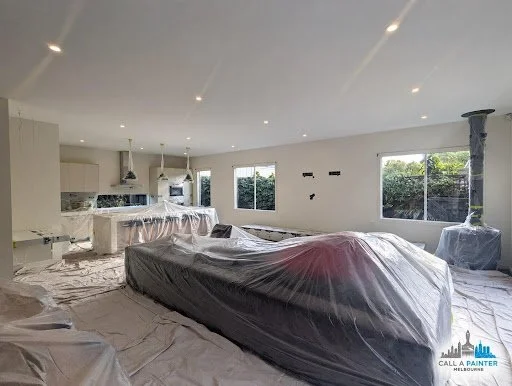
For many straightforward refreshes, it is practical to complete most ceiling and wall painting after messy preparation and before the new finished floor is installed. This gives the painter access without working over the final flooring. It also allows the flooring trade to concentrate on its own installation afterwards.
Treat that as a discussion starting point rather than a universal rule. The flooring system may have different requirements, and the work sequence may need to account for fixed joinery or other installations. Ask both trades to confirm the arrangement in writing.
Allow for an inspection after the flooring work. A final painting attendance may be needed for trims or agreed touch-ups. Including that visit in the original plan is clearer than assuming someone will return without discussing the scope or cost.
Give timber floor sanding a separate conversation
If existing timber floors will be sanded and refinished, ask the floor specialist how the process interacts with painted surfaces. Sanding, edge work and the floor finishing stages need to be coordinated with wall and skirting preparation.
Discuss when the floor can be covered, walked on and worked over after finishing. Follow the flooring product's requirements for protection and curing. Do not assume that any covering or adhesive tape is suitable for a newly finished floor.
The painters need that information before arranging their return. They may be able to complete some work earlier and reserve only a defined final stage. The objective is to avoid asking either trade to damage or compromise a finish that has just been completed.
Decide how skirting boards will be finished
Skirting boards sit directly at the meeting point between the two trades. If existing boards remain, ask how they will be protected during flooring removal and installation. If new boards are fitted, confirm when they arrive and who prepares and paints them.
Some preparation or initial coating may happen before installation, with agreed finishing work afterwards. The suitable approach depends on the material and system selected. Record the decision so that the flooring contractor does not assume painting is finished while the painter is waiting for carpentry.
For a CBD apartment, Call A Painter Melbourne can be given both the room list and the flooring programme when assessing the repaint. That makes the junction between the jobs part of the quotation from the outset.
Coordinate the building access once
An apartment refresh may require several separate deliveries and contractor visits. Check the building's access arrangements, work hours and lift booking process early. Ask whether the schedule can accommodate the proposed sequence before confirming all the trades independently.
Give each contractor the same building instructions. Identify where materials can be stored and how common areas must be protected. If a lift booking moves, tell the next trade as well as the one making the delivery; the change may affect the entire programme.
Within the apartment, agree which rooms need to remain usable. If the owner is staying in the property, painting and flooring may need to move through smaller areas. Furniture movements and temporary storage should be part of that plan rather than left to the first morning.
Reserve a final joint check
After the flooring and painting stages, walk through the apartment against both scopes. Look at skirting edges, doorway transitions and any areas affected by the last installation. Record the items that require attention and confirm which trade will address each one.
Keep product details for the wall, trim and floor finishes. Follow their care instructions, especially during the initial period after work. A maintenance record is useful when a later repair or furniture move prompts a question about cleaning or touch-ups.
When planning an interior repaint, include that final attendance in the conversation. A coordinated refresh has a clear end point, with the finishing details assigned rather than passed between trades.
The best order is the one built around the actual materials and tasks. Once dusty preparation, main painting, flooring and final touch-ups have agreed places in the programme, the question becomes easier to answer. Each trade can complete its work with a clearer understanding of what happens before and after it.
HOW DO YOU FEEL ABOUT FASHION?
COMMENT OR TAKE OUR PAGE READER SURVEY
Featured





Coordinate apartment painting and flooring with a practical plan for dusty work, skirting boards, access, floor protection, and final touch-ups.