
How to Plan Safe Access Platforms Around Brewery Tanks
PAGE
By PAGE Editor
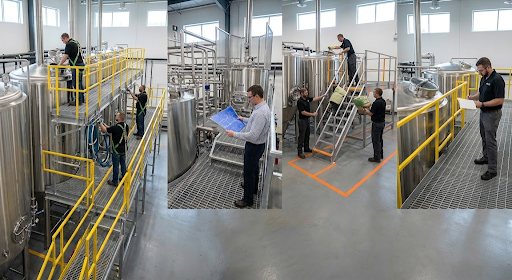
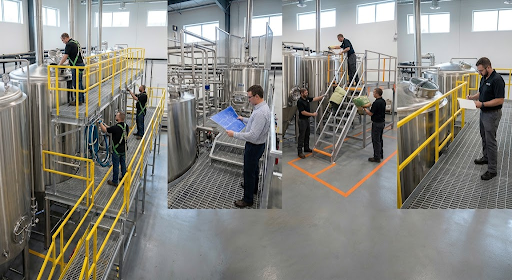
Tall tanks create routine work above floor level: opening a port, connecting a hose, checking a gauge, or servicing a valve. A platform should be designed around those tasks, not added after the tanks are crowded into the room. Safe access also makes cleaning and inspection more likely to happen on schedule. The final layout must meet local building and workplace safety requirements.
List the work performed at height
Walk every tank function: dry hopping, sample collection, manway inspection, CIP connections, pressure-relief service, and instrument maintenance. Mark the height, reach, and frequency of each task. A gauge that can be read from the floor may not need a platform, while a heavy hop addition through a top port needs more than a narrow step. Avoid making staff carry tools or bags while climbing a ladder.
Decide which equipment must be removed for service and reserve clearance for it. A railing that blocks a valve removal path may force maintenance staff into unsafe workarounds. Provide space for hoses without creating trip points across the walkway.
Coordinate structure and utilities
Have a qualified designer verify loads, anchorage, guards, stairs, slip resistance, drainage, and clearances to the building. Do not attach an unapproved platform to a tank shell. Tanks move slightly with filling and temperature; the platform should not transfer unintended loads to nozzles or jackets. Check sprinkler, ventilation, and emergency egress constraints early.
Keep access to relief devices and instrument calibration points. A platform may improve access but also hide leaks or block cleaning behind a vessel. Review the complete equipment arrangement in plan and elevation, not only a top-down floor diagram.
Test the layout before fabrication
Mark the proposed platform footprint on the floor and simulate carrying the tools needed for each task. Can two people pass where the procedure requires it? Can a hose be connected without leaning over a rail? Can a removed part be lowered safely? Record issues while drawings can still change.
When specifying brewery tanks or craft brewery fermentation equipment, request nozzle elevations and service clearances that can be coordinated with the platform design. A safe, usable platform is part of the process equipment system, not an architectural afterthought.
Review maintenance with the safety team
Operations may need daily access to a hop port, while maintenance needs occasional clearance to remove a motor or valve. A platform that solves the daily task can obstruct the rare but critical repair. Include both groups in the drawing review. Confirm the load of people, tools, ingredients, and any lifted components with a qualified structural designer. Keep access to emergency controls and exits unobstructed.
Wet brewery floors and washdown create slip risks. Select walking surfaces and drainage suited to the cleaning environment, and plan how the underside of the platform itself will be cleaned. A dark pocket under a platform can hide leaks or soil.
Coordinate installation sequence
Some platforms must be erected before tall tanks are set; others can be assembled around installed vessels. Check lifting paths, door openings, and future tank replacement. A design that perfectly fits today's layout may block an expansion or maintenance lift. Document which connections are structural and which are only adjacent to the tank. After installation, walk every routine task again and close any access issues before production begins.
Build an equipment access map
On a tank elevation drawing, mark every port, gauge, valve, relief device, motor, and removable part. For each, note whether access is daily, weekly, or only during maintenance. The platform design should support the frequent tasks without blocking the rare ones. Check whether a tool can be used in its required orientation and whether a removed component can be carried safely to the floor. An access map reveals conflicts that a simple floor plan cannot show.
Ask operators to stand at a mock height or use a safe temporary simulation. Reaching a port while carrying a hop bag is different from reaching it with empty hands. Do not rely on a ladder for a routine task that needs both hands.
Plan for washdown and drainage
Choose walking surfaces and details that tolerate the brewery's cleaning routine. Water, beer, and chemicals should not collect on the platform or drip into an electrical enclosure below. Check how the underside, stairs, and handrails will be cleaned. If a platform creates a sheltered pocket behind a tank, add access for inspection. A structure that is hard to wash can undermine the hygiene benefit of an otherwise accessible vessel.
Keep future expansion possible
Review the path for installing or removing a tank after the platform is built. Modular sections may help, but any removable portion must be engineered and controlled. Avoid placing structural members where a future larger tank or hose route must pass. Document the as-built structure, load rating, and inspection requirements. Future staff should not have to guess whether a beam is decorative, structural, or attached to the tank shell.
Inspect the platform after installation
Before production use, verify the installed structure against the approved design: guards, stairs, surface condition, drainage, clearances, and any removable sections. Have operators perform routine tasks with empty or safe simulated loads. Note where hoses or tools cross the walking path. Correct those issues before they become workarounds.
Set a periodic inspection for loose fasteners, corrosion, damaged grating, and blocked drains. A platform in a wet brewery receives repeated washdown and mechanical impact. Its condition can change over time even if the tank beneath it is well maintained. Keep inspection results with the facility records and mark any unsafe section out of service until repaired.
Before accepting the platform, photograph each routine task position and note the required tools. A platform may be structurally sound yet place a valve just beyond comfortable reach. Correct that during commissioning. After the first month, ask operators which tasks still require a ladder or an awkward lift; those reports can expose a missed access point. Check the platform after washdown as well as when dry; wet surfaces can reveal pooling and slip points that were invisible during the installation walk-through. Record and repair them before routine use.
HOW DO YOU FEEL ABOUT FASHION?
COMMENT OR TAKE OUR PAGE READER SURVEY
Featured
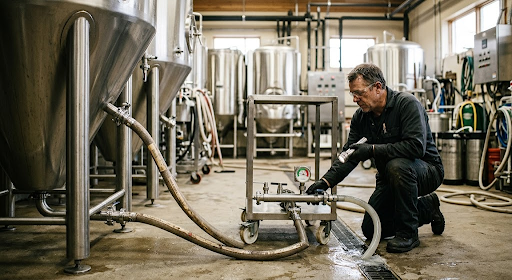
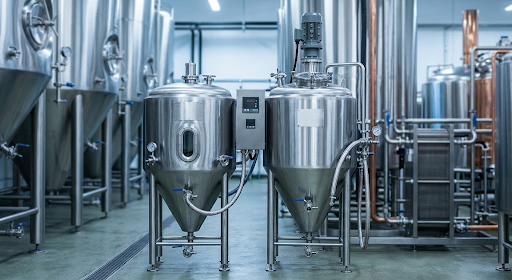

A sample valve should provide a representative sample without creating a hard-to-clean pocket or forcing an operator into an awkward position.