
How to Tell Whether a Brewery CIP Return Is Working
PAGE
By PAGE Editor
A CIP pump may be running while the return path is restricted, flooded, or bypassed. That can leave a vessel or line with poor cleaning contact even though the timer completes. Monitor the return side as well as the supply, and define what normal flow and drainage look like for each circuit. A cleaning recipe is useful only when the fluid actually reaches and leaves the surfaces as designed.
Map the full circuit
Draw the supply tank, pump, spray device or line, vessel, return line, valves, and drain points. Include temporary hoses used during cleaning. Confirm that each valve state is clear to the operator and that a wrong connection cannot send solution into an unintended tank. Check for low points where liquid may remain after the cycle. A circuit designed for one vessel may not perform the same on a larger tank or a newly added branch.
Measure or observe the parameters the system provides: flow, pressure, return temperature, conductivity, and tank level. A single number rarely proves complete coverage. Low return flow might indicate a blocked spray device, closed valve, or pump issue; unexpectedly high return flow could mean a bypass. Compare against a recorded clean baseline for that specific circuit.
Verify coverage and drainage
Use the brewery's approved commissioning or periodic test method to check spray coverage. Do not enter a vessel or handle cleaning chemicals without the required safety controls. After a cycle, inspect accessible surfaces and verify rinse completion by the site's quality method. If residue remains in one location, investigate spray orientation, shadows, and drainage rather than simply extending every cycle.
Record faults with the circuit ID and operating state. A trend in return time or flow can reveal a slowly clogging strainer before cleaning fails outright. Keep sensors calibrated and inspect hoses and seals; a leaking return line can alter readings and create a chemical hazard.
Specify maintainable equipment
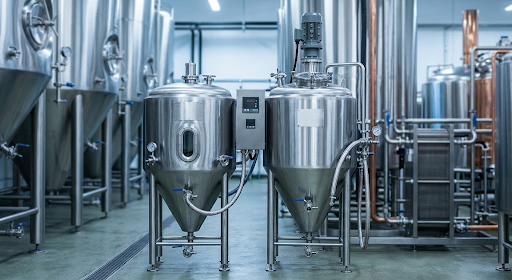
When ordering brewery CIP equipment or adding craft brewery tanks, ask for a circuit drawing that identifies return connections, measurement points, and drainability. Test the combined system at commissioning. The acceptance criterion is not merely that a pump starts, but that each approved circuit delivers repeatable cleaning contact and a verifiable return.
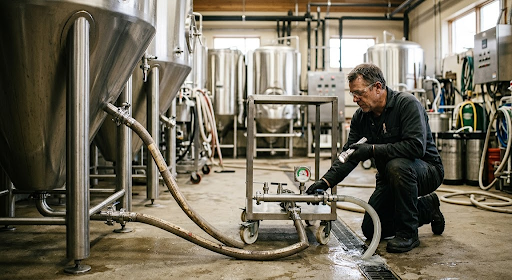
Check the temporary hose connections
Many small breweries build CIP loops with portable hoses. Label the supply and return ends and use a connection checklist for each vessel. A crossed hose can turn an otherwise correct cleaning recipe into an overflow or a circuit that never reaches the target surface. Support hoses so they cannot kink or pull on a valve. Inspect gaskets before starting and keep a drain path available for safe disconnect after the cycle.
At the first use of a new circuit, walk the liquid path with a qualified operator and observe the return before leaving it unattended. If the system is automated, confirm that alarms actually stop or flag abnormal conditions rather than merely logging them.
Use trends for maintenance
Record a few simple values for each circuit: time to establish return, stable flow or pressure, supply and return temperature where available, and end-of-rinse result. A gradual change can indicate fouling, a worn pump, or a valve problem. If one tank differs sharply from its own history, investigate that loop rather than extending the cleaning time for every vessel. Keep the baseline after a verified clean run, not after a rushed commissioning test.
Define what normal looks like for each circuit
One return-flow target may not fit every vessel. A short hose loop, tall fermenter, and brewhouse line can have different pressure losses and drainage behavior. Record a baseline after each circuit passes a coverage and cleanliness check. Include the valve positions, pump setting, supply temperature, and return response. Future operators can compare a suspicious cycle to that circuit's own history instead of a generic number.
If a new tank is added, do not assume the old CIP recipe is still valid. Check spray-device requirements, pump capacity, return path, and chemical handling. A branch connection can change flow distribution to existing equipment as well.
Respond to an abnormal return
If return flow is absent or delayed, stop and make the system safe before inspecting hoses or valves. Check for a closed valve, kink, blocked strainer, leaking connection, or a vessel filling unexpectedly. If return conductivity or temperature differs from the expected profile, investigate whether the correct solution reached the circuit. Do not simply extend the timer until the log shows a completed cycle. A longer cycle with poor coverage remains a poor clean.
Record the fault and the affected equipment. After correction, repeat the required verification before releasing the tank for product. Where a circuit repeatedly fails, review its design rather than treating each event as an operator lapse.
Keep the data usable
Trend a few meaningful signals rather than collecting every possible sensor value without review. A simple chart of return time, flow, and final rinse result can show a gradual change. Assign someone to review exceptions and close corrective actions. The benefit of return monitoring is early detection of a cleaning problem, not a larger data archive.
Protect the operator during abnormal cycles
Hot cleaning solution and trapped pressure can remain in a circuit after a pump stops. An abnormal return should trigger a safe isolation and drain sequence before anyone loosens a hose. Mark the drain and pressure-release points on the circuit diagram and train staff to use them. If the return line is transparent or has a sight glass, keep it within its rated temperature and chemical service; visibility is useful only when the component is safe.
After a fault, preserve the alarm and trend data before resetting the controls. A reset may erase the evidence needed to distinguish a closed valve from a weak pump. Restart the cleaning cycle only after the cause is understood and the affected vessel is reverified under the site's quality procedure.
During a new operator's first independent CIP run, have a qualified person confirm the circuit connections and return behavior. Use the same checklist the operator will use later, not a special commissioning shortcut. If the return is delayed, pause the run and identify the cause. Training on a real abnormal condition is more effective than memorizing a valve diagram.
HOW DO YOU FEEL ABOUT FASHION?
COMMENT OR TAKE OUR PAGE READER SURVEY
Featured


A sample valve should provide a representative sample without creating a hard-to-clean pocket or forcing an operator into an awkward position.