
Indoor vs. Outdoor Events: What Changes in Your Planning
PAGE
By PAGE Editor
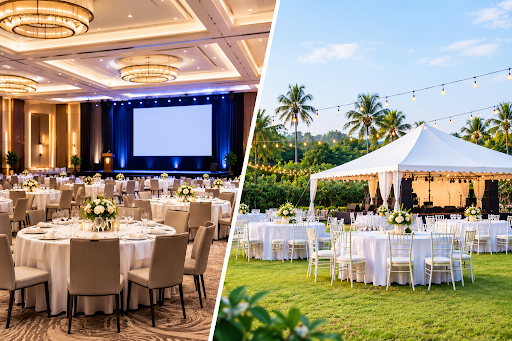
Indoor events give you control over light, sound, and climate. Outdoor events give you open space and a strong sense of occasion, but you must plan for rain, power, toilets, and extra approvals.
The setting you pick changes your budget, timeline, and backup plans from day one. Working with an experienced event organizer company helps you spot these changes early, before they turn into costly surprises.
Picture this. Your guests arrive at a garden launch in Petaling Jaya at 4 pm. The stage looks perfect. Then the sky turns grey. In Malaysia, that is not bad luck. It is a weather pattern you can plan for.
Here is how weather, infrastructure, and permits change between the two settings, plus a comparison table and a quick checklist.
What Is the Main Difference Between Indoor and Outdoor Events?
The main difference is control. Indoor venues already have walls, a roof, power, toilets, and air conditioning. Outdoor venues start as open space, so your team must bring in almost everything.
Indoors, you plan around the venue's rules. Outdoors, you plan around nature and build the venue yourself. A hotel ballroom may limit your setup time, but it will not flood. An open field fits a huge stage, but you must supply the power.
How Does Malaysian Weather Change Your Event Plan?
Weather is the biggest risk for outdoor events in Malaysia. Afternoon and evening thunderstorms are common, especially during the inter-monsoon months. Indoor events avoid most of this risk.
Malaysia has two main monsoons and two shorter transition periods. The inter-monsoon months, around April to May and October to November, often bring sudden storms with lightning and strong winds. The northeast monsoon, from about November to March, is the main rainy season and hits the east coast hardest. Even the drier southwest monsoon, from late May to September, still brings thunderstorms.
For outdoor events, three habits help.
Pick your time slot with care. A morning or late evening slot can dodge the usual afternoon downpour. Check MetMalaysia forecasts in the week before your event.
Always book a rain plan. This could be a tent, a covered hall nearby, or a backup date. Decide it before you sign the venue contract, not on the day.
Plan for the heat as well. Sunny days in Malaysia are hot and humid. Guests need shade, fans, and plenty of drinking water.
Indoors, rain still slows guests on KL roads, so leave a buffer before your programme starts.
Which Setting Needs More Infrastructure?
Outdoor events need far more infrastructure. You must bring in power, toilets, flooring, lighting, and shelter. Indoor venues already have these, but they come with fixed rules you must follow.
An outdoor site is a blank canvas. Your team has to rent generators, run cables safely, set up portable toilets, and lay flooring on grass or uneven ground. Open air has no walls to hold sound, so you need speakers built for wide coverage. Every item needs delivery, setup, and removal, which adds crew hours.
Indoor venues save you this work, but they have limits. Many hotels and convention centres give you a fixed window for setup and teardown.
Some have ceiling height limits, rigging weight limits, or rules against real candles. Always ask for the venue's event manual before you design your stage.
How Do Permits and Fire Safety Differ?
Indoor venues usually hold a Fire Certificate for the building. Outdoor events often need more approvals because you build temporary structures. In both cases, anything you add, such as stages and tents, may need its own Bomba clearance.
Many planners miss one key point. A venue's Fire Certificate (Perakuan Bomba) covers the building and its fixed systems. It does not automatically cover your stage, booths, or backdrop.
Local councils such as DBKL, MBPJ, and MBSA usually ask for a Surat Sokongan Bomba (Bomba Support Letter) before they approve an event permit.
Outdoor events carry extra checks. Tent fabric usually needs to be flame-retardant, and you still need fire extinguishers on site. Most guidance suggests you start the Bomba application four to six weeks before your event date.
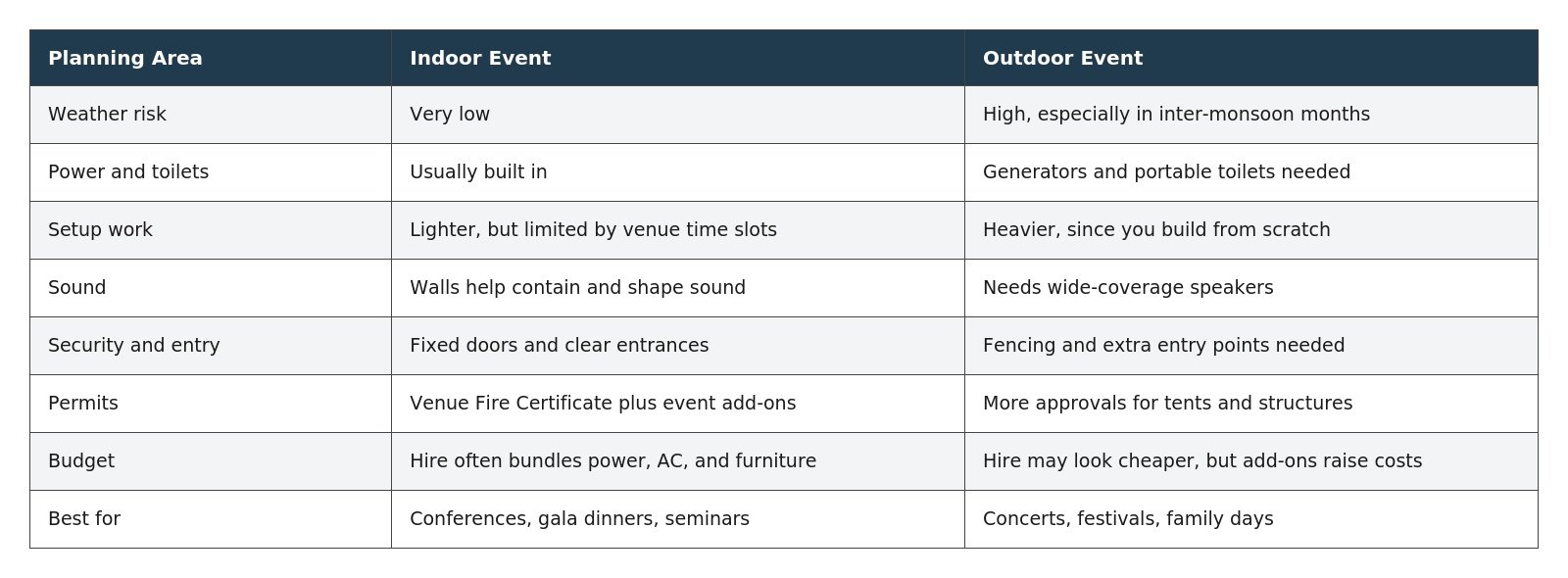
Indoor vs. Outdoor Events: Side-by-Side Comparison
The table below shows how each planning area changes between the two settings. Use it when you compare venues.
How Do You Choose Between Indoor and Outdoor?
Choose indoor when you need full control over sound, lighting, and timing. Choose outdoor when space and atmosphere matter most, and you have the budget for a backup plan. The checklist below makes the decision easier.
Check the month first. If your date falls in an inter-monsoon period, an outdoor event needs a strong rain plan. An indoor venue may be the safer choice.
Match the setting to your content. Keynote talks, detailed slides, and quiet product demos work best indoors. Live music and large crowds often suit open ground better.
Count your guests. Large crowds can exceed an indoor venue's safe capacity. Outdoors, more guests mean bigger tents and more toilets.
Budget for the hidden extras. Outdoor venue hire can look cheap. Add generators, tents, toilets, and flooring before you compare prices.
Consider a mixed venue. A hotel with a garden or courtyard gives you both options, with a roof ready if it rains.
Visit at the same hour as your event. Check the sun, shade, noise, and parking at that exact time.
Special Suggestions Before You Lock In Your Venue
Neither setting wins on its own. The right choice depends on your guests, your date, and your budget.
Indoor events trade some atmosphere for control. Outdoor events trade control for scale. If you go outdoors, treat your rain backup as seriously as your main stage. If you stay indoors, read the venue rules before you design anything.
Either way, start permit work early. A well-planned event feels easy for guests because the hard work happened weeks before.
HOW DO YOU FEEL ABOUT FASHION?
COMMENT OR TAKE OUR PAGE READER SURVEY
Featured



Digital rewards strengthen luxury through practical service, selective access, and thoughtful personalization that keeps each purchase valuable for longer.