
Standardizing Mimosa Root Bark Formats in a Growing Textile Workshop
PAGE
By PAGE Editor
For a growing textile workshop working with Mimosa root bark, consistent records of material formats help keep purchasing and handling organized. What works for a single handmade scarf or a small fabric sample may not be practical when producing multiple textile collections, coordinating different artisans, or maintaining regular workshop schedules.
One of the most effective ways to improve material organization is through standardization.
Standardizing botanical material formats means establishing consistent purchasing, labeling, handling, and inventory procedures for materials such as powdered roots, shredded bark, dried leaves, and other plant-based craft ingredients.
For textile makers working with natural dye materials, this approach can simplify purchasing decisions, reduce confusion between product variations, and improve documentation across multiple projects.
However, standardization does not mean that every botanical ingredient will perform identically. Natural materials can vary between species, harvests, and processing batches, making accurate identification and appropriate testing essential.
This guide explains how textile makers can standardize botanical material formats, evaluate suppliers, verify product labels, and organize purchasing for larger craft projects.
Why Material Standardization Matters in Textile Workshops
Small craft projects often involve limited supplies and straightforward preparation methods. As production expands, workshops may need to manage several botanical materials in different quantities and formats.
Without clear standards, staff members may accidentally order different material variations, confuse package weights, or overlook important supplier information.
Establishing consistent procedures helps workshops:
Maintain organized botanical material inventories.
Reduce confusion between powders, shredded bark, and whole plant pieces.
Compare supplier specifications more accurately.
Plan material purchases for upcoming textile projects.
Improve storage and labeling practices.
Track purchasing history and batch information.
Reduce unnecessary spending on unsuitable materials.
For growing textile businesses, standardization creates a practical foundation for managing supplies without relying entirely on individual experience.
Understanding Different Botanical Material Formats
Botanical craft materials are commonly available in several physical forms.
Understanding their differences is the first step toward creating a consistent purchasing system.
Fine Botanical Powders
Fine powders consist of dried botanical ingredients that have been milled into relatively small particles.
They are often convenient to measure and divide into smaller portions.
However, fine particles may become airborne during handling and can require careful filtration during certain liquid craft preparations.
A finely milled product should not automatically be considered more effective than a coarser alternative.
Coarse Botanical Powders
Coarse powders contain larger particles and may retain more visible plant texture.
They can have different handling and filtration requirements depending on the material and preparation method.
Shredded Bark and Root Materials
Shredded botanical materials contain larger plant fragments.
These may appeal to textile artists working with traditional craft techniques or educational demonstrations involving recognizable plant pieces.
Whole Botanical Ingredients
Whole roots, leaves, flowers, and bark pieces may require additional preparation before use.
They are sometimes preferred for botanical study, decorative crafts, or experimental textile applications.
The appropriate format depends on the specific project, available equipment, and documented material requirements.
Establishing Standard Material Specifications
A textile workshop can reduce purchasing errors by developing a standard specification sheet for each botanical ingredient.
Record Botanical Identification
Include the scientific name and common name of the plant.
Also identify the plant part being purchased, such as root bark, stem bark, leaves, or flowers.
Scientific identification helps avoid confusion when different suppliers use similar common names.
Define the Preferred Material Format
Specify whether the workshop requires fine powder, coarse powder, shredded bark, or whole botanical pieces.
Where relevant, document particle-size requirements and acceptable variations.
Establish Package Size Preferences
Determine which package quantities are practical for the workshop's purchasing and storage requirements.
Smaller packages may be useful for testing, while larger packages may suit established projects with documented material needs.
Maintain Batch Records
When available, record batch numbers, origin information, and processing dates.
These details can improve traceability and help identify differences between deliveries.
Evaluating Wholesale Botanical Material Suppliers
Supplier selection becomes increasingly important when workshops begin purchasing larger quantities.
A wholesale supplier should ideally provide clear product descriptions, accurate package weights, accessible customer support, and transparent purchasing policies.
For example, textile and craft buyers comparing larger Mimosa hostilis root bark packages may review the wholesale page on mimosahostilis.shop as part of their supplier research.
The linked product is presented as a 10kg purchasing option, making it relevant when comparing larger botanical material quantities.
Before ordering, buyers should verify the exact processing format, net weight, available stock, and current shipping conditions.
A wholesale listing should not automatically be treated as evidence of independently verified quality or suitability for textile dyeing.
Questions to Ask Before Placing a Wholesale Order
Consider confirming:
What is the scientific name of the botanical material?
Which plant part is supplied?
Is the product powdered, shredded, or provided in another format?
Are batch identification records available?
What packaging protects the material during transportation?
Are there documented storage recommendations?
What delivery destinations are supported?
What happens if the shipment arrives damaged or incorrect?
Clear answers help workshops make more informed purchasing decisions.
How to Verify Botanical Material Labels
Product labels are essential for maintaining consistent workshop procedures.
A useful label should contain enough information to identify the material and support safe inventory management.
Scientific Name and Plant Part
The label should ideally include the botanical species and the plant part supplied.
Material Form and Net Weight
Confirm whether the product contains fine powder, coarse powder, shredded material, or whole pieces.
Record net weight using consistent units such as grams or kilograms.
Batch and Supplier Information
Include the supplier name, purchase date, and batch number where available.
Storage and Safety Information
Follow relevant storage recommendations and handling precautions.
When working with fine powders, appropriate ventilation and protective equipment may be necessary.
Quality and Sustainability Claims
Terms such as "premium," "organic," and "sustainably sourced" should be evaluated carefully.
When these claims influence purchasing decisions, request suitable documentation rather than relying solely on marketing descriptions.
Comparing Powder Formats Across Multiple Suppliers
Workshops purchasing from several suppliers should avoid assuming that similarly named products are identical.
For example, buyers reviewing MHRB (mimosa hostilis root bark) powder can examine the available category listings and compare the specifications of individual products.
Even when products are described using the same botanical name, their processing formats, particle sizes, packaging, and documentation may differ.
A standardized comparison sheet can help identify these differences.
Useful comparison fields include botanical species, plant part, material format, package size, supplier, batch documentation, and current purchasing conditions.
This approach supports consistent purchasing records without assuming that every supplier's product has the same characteristics.
Planning Material Quantities for Larger Textile Projects
Material standardization should also include a consistent approach to estimating project requirements.
Step 1: Calculate Total Textile Weight
Begin by identifying the quantity and weight of the textile items being produced.
For example, a workshop preparing 60 cotton scarves weighing 180g each would have:
60 × 180g = 10,800g
This equals 10.8kg of fabric.
However, fabric weight alone does not determine the required quantity of botanical dye material.
Step 2: Use Documented Testing
Different botanical ingredients may behave differently depending on their composition, textile fiber, and preparation conditions.
Workshops should base material estimates on controlled testing and recorded experience.
Step 3: Consider Purchasing Allowances
Additional material may be needed for samples, handling losses, or repeat tests.
These allowances should reflect actual workshop records rather than arbitrary assumptions.
Step 4: Review Available Inventory
Check existing supplies before placing new orders.
This helps prevent unnecessary purchasing and reduces excess stock.
Comparing Small and Wholesale Package Sizes
Package size can influence storage requirements, purchasing costs, and inventory management.
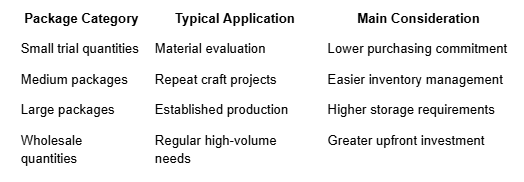
These categories are general purchasing examples rather than confirmed offerings from a specific supplier.
When comparing packages, calculate the cost per kilogram and include shipping charges, applicable taxes, and storage expenses.
The lowest unit price is not always the most economical option if the workshop cannot use the full quantity.
Shipping and Storage Considerations for Bulk Materials
Larger botanical material orders require additional attention to shipping and storage.
Before purchasing, review delivery destinations, shipping charges, processing estimates, tracking availability, and return conditions.
A supplier's advertised shipping service should not be interpreted as a guarantee of delivery to every location.
For international orders, customs requirements and local botanical material regulations may also apply.
Once materials arrive, inspect the packaging and verify that the contents match the purchase documentation.
Store botanical ingredients in suitable, clearly labeled containers protected from excessive moisture, contamination, and unsuitable environmental conditions.
Keep textile dyeing supplies separate from food preparation areas.
Creating a Standardized Botanical Material Inventory
A consistent inventory system helps workshops track supplies across multiple projects.
Useful spreadsheet columns include:
Botanical material name.
Scientific name and plant part.
Supplier and product reference.
Material format.
Package weight.
Batch identification.
Purchase date and verified price.
Quantity used.
Remaining inventory.
Storage location.
Reorder requirements.
Regular inventory reviews can help identify changes in material consumption and improve future purchasing estimates.
Frequently Asked Questions About Botanical Material Standardization
What does standardizing botanical material formats mean?
It means establishing consistent specifications, labeling practices, purchasing procedures, and inventory records for botanical materials used in craft projects.
Why is material format important in textile workshops?
Powders, shredded bark, and whole botanical ingredients can have different handling, preparation, and storage requirements.
Should growing textile businesses buy botanical materials in bulk?
Bulk purchasing may be practical when a workshop has established material requirements, suitable storage capacity, and predictable demand.
How can textile makers verify botanical product quality?
Review product specifications, request relevant documentation, maintain batch records, and evaluate unfamiliar materials through appropriate testing.
Can different botanical material formats be used interchangeably?
Not necessarily. Different formats may require different handling and preparation methods, and their suitability should be evaluated for each project.
How can workshops avoid ordering the wrong botanical materials?
Maintain standardized product specifications, verify labels, review supplier information, and check inventory before purchasing.
Conclusion
Standardizing botanical material formats is an important step for textile workshops expanding into larger craft projects.
By establishing clear purchasing specifications, verifying supplier information, and maintaining accurate inventory records, craft businesses can improve organization and reduce unnecessary expenses.
Understanding the differences between fine powders, coarse powders, shredded bark, and whole botanical ingredients also helps workshops select materials that match their practical requirements.
Although botanical materials may vary between batches and suppliers, careful documentation and appropriate testing can support more informed purchasing decisions.
For growing textile studios, a consistent material management system provides a stronger foundation for efficient, organized, and responsible craft production.
HOW DO YOU FEEL ABOUT FASHION?
COMMENT OR TAKE OUR PAGE READER SURVEY
Featured




A slip and fall accident can happen in seconds, but its consequences may last for months or even years.