
How to Style Cakes and Cupcakes for a Polished Dessert Table

PAGE
By PAGE Editor
Small cake decorations can tie a cake and cupcakes into one coordinated dessert spread without elaborate piping. Start with a small color palette, choose decorations that suit your frosting, and vary the height of your display. A few practical checks will help you pick decorations that are safe to eat, place them neatly, and keep them looking their best until serving.
What edible toppers are (and what they're not)
Edible toppers are decorations made to be eaten with the dessert. Decorative picks and ornaments must be removed before serving, so check the packaging rather than judging by appearance.
Common materials at a glance
Most ready-made toppers fall into a few groups:
Fondant: sugar dough shaped into flowers, letters, or small figures with a smooth finish.
Royal icing decorations: crisp, pre-piped shapes such as roses and dots for delicate details.
Wafer and icing sheets: thin edible sheets for printed photos, patterns, or cutout shapes. Application varies by product.
Chocolate: molded shapes or shards that add texture as well as decoration.
Glitter needs special attention. The FDA advises avoiding decorative glitters and dusts on food unless they are specifically manufactured to be edible. Look for an ingredient list and the word “edible” on the label. “Non-toxic” does not mean safe to eat.
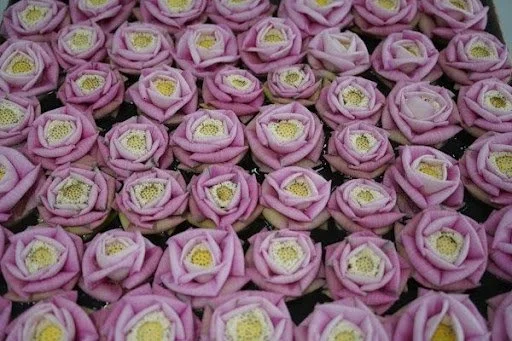
Style your dessert table with color and balance
Choose one focal dessert, then use color and texture to connect the rest of the table. Not every item needs a topper.
Pick a palette
Two or three colors are an easy starting point. Try blush, cream, and a touch of edible gold. If the event already has a direction, such as a floral party theme, let those blooms set your shades. Repeat them in the linens, topper colors, and serving pieces. A consistent palette helps different desserts look coordinated without identical decorations.
Build height and balance
Give the focal dessert, usually the cake, the highest spot on a stable stand or food-safe riser. For a table served from one side, place taller items toward the back and smaller pieces up front. Leave room for plates and serving utensils. Symmetry feels formal, while an off-center arrangement feels more relaxed.
Add texture and shine
Pair smooth frosting with a matte fondant flower or crisp cookie. Fresh fruit adds color and natural shine. Keep metallic or sparkly accents limited, and use only products labeled edible on food.
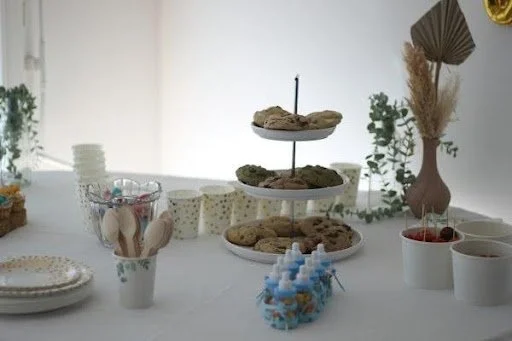
How to apply toppers without stress
Check the topper's instructions before decorating. The right method depends on its material, the frosting underneath, and how the finished dessert needs to be stored.
Prep the surface
Let the cake cool completely before frosting. A crumb coat, a thin first layer of buttercream, traps loose crumbs. Let it firm up, then add a smooth final coat. The frosting should support the decorations without letting them sink or slide.
Attach with the right adhesive
A small dab of buttercream, royal icing, or edible glue can hold many fondant pieces. Press gently without flattening the frosting. Wilton's guides suggest placing fondant decorations on fresh buttercream and using clear piping gel on dry surfaces such as cookies or crusted buttercream. Use only a little adhesive, since excess moisture can soften decorations or make colors bleed. Follow the instructions for your specific topper.
Timing and storage
Foliay's guidance for its fondant decorations offers a useful distinction: pieces may go on one to two days ahead in cool, dry conditions, but should be added close to serving on refrigerated or high-moisture cakes. Treat this as product-specific guidance, not a rule for every topper. Store the cake according to its frosting and filling requirements, even if that means adding decorations later.
Planning the spread: quantities that work
Decide whether you're serving full-size portions, bite-size desserts, or a mix before counting pieces. A mini cupcake and a slice of cake aren't equivalent servings.
Pieces per guest
For a mini-dessert spread after a meal, two to three small pieces per guest is a practical starting estimate. For 60 guests, that means roughly 120 to 180 mini pieces. Adjust for portion size, other food, and whether you're also serving cake. If dessert is the main event, plan more generously.
Variety that looks coordinated
You don't need a dozen dessert types. A focal cake, cupcakes, cookies, and fruit can provide enough variety for a small gathering. Repeat your palette and use the same topper motif on selected items rather than every surface.
Where to find themed options
Match the design to your palette and the size of your desserts. Florals can suit showers and small weddings, while seasonal or sports shapes can reinforce a party theme. Foliay's collection of edible toppers includes pre-shaped fondant designs for coordinated decorating. Wherever you buy, check ingredients and allergen information, and confirm that any included glitter or dust is edible.
Troubleshooting and safety notes
Condensation: Moisture on a chilled cake can soften toppers or blur printed designs. Add moisture-sensitive pieces close to serving, once visible surface moisture has cleared, without leaving perishable cakes unrefrigerated longer than is safe.
Humidity: Wafer and icing sheets can curl or soften in damp air. Keep them in their recommended packaging until needed, follow the product's directions, and avoid placing them on visibly wet frosting.
Non-edible decor: Keep craft glitter away from food entirely. Use only decorations intended for food contact, and remove all non-edible picks, supports, and ornaments before cutting or serving.
Conclusion
A coordinated table needs a repeated palette, a clear focal point, and decorations suited to the desserts. A themed set from Foliay can help carry one design across a cake and cupcakes while you keep the remaining treats simple. Plan placement around the cake's storage needs, then leave enough space for guests to serve themselves comfortably.
FAQ
Moisture, temperature, and labeling are the main concerns when matching decorations to frosting.
Can I put edible photo discs on whipped-cream frosting?
Whipped cream is moist, so printed discs may soften or smear. Check that the product is suitable for this frosting, add it as close to serving as instructed, and keep the dessert refrigerated as required.
How do I keep toppers from sliding on buttercream in warm rooms?
Let the buttercream firm up before adding toppers, and use only a small amount of suitable adhesive. Keep the display cool and out of direct sunlight. Adhesive won't compensate for frosting that is too soft to support a decoration.
Are all cake glitter products safe to eat?
No. Use glitter labeled edible and check its ingredient list. Products marked only “non-toxic” or “for decorative use” should not be placed on food.
When should I add decorations to a chilled cake?
Follow the specific product instructions. Moisture-sensitive decorations generally work best close to serving, after visible condensation has cleared, while the cake remains stored safely.
HOW DO YOU FEEL ABOUT FASHION?
COMMENT OR TAKE OUR PAGE READER SURVEY
Featured





Black Friday often brings electric dirt bikes back onto the shopping list for riders who have been waiting for a better time to buy.