
Three Ways to Experience the Himalayas: Trekking, Flying and Climbing in Nepal
PAGE
By PAGE Editor
Most people who start looking into an Everest trip run into the same wall pretty quickly: they know they want to see the mountain, but they have no idea which version of that trip actually fits their life. Two weeks off work isn't the same as ten days. A 60-year-old with dodgy knees has different options than a 28-year-old who's already done a few multi-day hikes. And "seeing Everest" can mean three genuinely different things depending on how you get there.
You can walk in, over roughly two weeks, through villages that have been feeding and housing trekkers for decades. You can take an Everest base camp helicopter tour and get the same jaw-dropping perspective in a single morning. Or, if a viewpoint isn't enough for you, you can go a step further with something like Island Peak Climbing, where the destination isn't a base camp at all but an actual summit.
None of these is the "correct" way to do it — they just serve different travelers. This article breaks down what each one actually involves day to day, what it demands physically, how much time it eats up, and who tends to be happiest choosing it.
1. Trekking: Experience the Himalayas Step by Step
What makes trekking different?
The thing people don't always get before they go is that trekking to Everest Base Camp was never really about the destination. Base camp itself, when you arrive, is a rocky, fairly unglamorous stretch of glacial moraine — the real experience happened on the way there. You walk out of Lukla and spend the next several days moving through Namche Bazaar, Tengboche, Dingboche, Lobuche and finally Gorak Shep, and each of those stops has its own character. Namche is basically the trading hub of the Khumbu region, buzzing with gear shops and bakeries. Tengboche has that monastery perched above the valley with Ama Dablam sitting right behind it. You're not just gaining elevation, you're passing through Sherpa villages that have their own rhythm, separate from anything resembling tourist infrastructure back home.
What does a typical Everest trekking experience involve?
Day to day, it's simpler than people expect. You walk for four to six hours, you stop in a village, you eat, you sleep in a teahouse, you do it again tomorrow. Acclimatization days get built in along the way — not as padding, but because your body genuinely needs them once you're above 3,500 meters or so. Skip that and altitude sickness becomes a real risk, not a hypothetical one. Depending on the route and how the weather's behaving, you'll get views of Everest, Lhotse, Nuptse and Ama Dablam at various points, though clouds do roll in and there's no guarantee every peak shows itself on cue.
What trekking gives you that the other two options can't is sustained contact — with the landscape, obviously, but also with the people running the teahouses and guiding you along. You end up having actual conversations with Sherpa guides and porters over two weeks in a way you simply don't during a three-hour flight.
Who should consider trekking?
If you've got the time and you want the walking itself to be part of the story, this is your option. You don't need prior mountaineering experience — this isn't technical climbing — but high-altitude fitness matters more than people assume. Start building walking endurance a few months out, break in your boots properly before you land in Nepal (blisters at 4,000 meters are miserable), and pace yourself early rather than trying to prove something on day two. Take altitude symptoms seriously if they show up; a headache that won't go away isn't something to push through.
2. Flying: See Everest When Time Is Limited
How an Everest base camp helicopter tour changes the experience
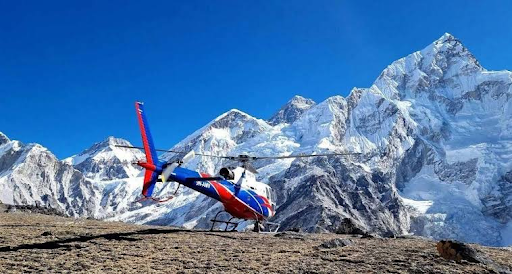
A helicopter tour compresses what would normally take two weeks into a matter of hours. You get lifted over the same valleys, ridgelines and glaciers that trekkers spend days walking through, except you're seeing it from above rather than from the trail. There's something genuinely disorienting, in a good way, about watching Himalayan peaks appear from a helicopter window after having only ever seen them in photos.
It's worth being honest about what this doesn't give you, though. You're not walking into Namche or sitting in a teahouse trading stories with other trekkers — that whole cultural and social layer of the trip mostly disappears. And weather in the Everest region is unpredictable enough that flights sometimes get delayed or rerouted, so anyone booking a helicopter tour should build in a bit of schedule flexibility rather than assuming it'll go exactly to plan.
What should travelers check before booking?
Not every "Everest helicopter tour" is the same product, and that's easy to miss when you're comparing options online. Some are shared flights with several passengers split across seats; others are private charters. Beyond that, ask specifically what the itinerary includes — does it actually land at or near base camp, or does it just fly past at altitude? What's the total flight duration, where does it depart from, and what happens operationally if weather rules out the planned landing? It's also worth confirming what's bundled into the price versus what's extra, since permits, transfers and meals aren't always included in the headline number.
Who is flying most suitable for?
This tends to suit travelers with limited vacation days, older visitors who still want the Himalayan experience but aren't up for two weeks of walking (always worth checking with a doctor given the altitude involved), and people trying to combine Everest with other parts of a Nepal itinerary without eating their whole trip on one activity. One thing to keep in mind: shorter exposure doesn't mean zero altitude effects. You can still feel it even during a brief flight to elevation.
3. Trekking and Flying Together: Return from Everest Base Camp by Helicopter
How the Everest-base camp trek return by helicopter works
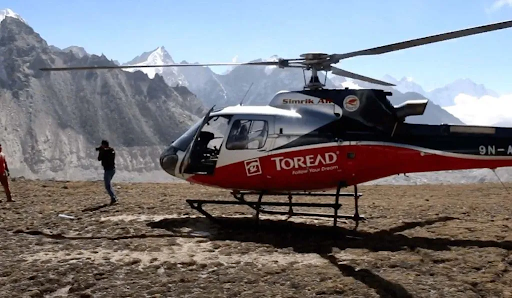
This is the hybrid a lot of people land on once they realize trekking and flying don't have to be either/or. You walk in the normal way — through the villages, gaining altitude gradually, getting the acclimatization and the cultural exposure — and then use a helicopter for the return leg instead of retracing your steps on foot. An Everest base camp trek return by helicopter still gives you the full approach experience; it just changes how you get back out. Exactly where the pickup happens and how the flight is arranged depends on the operator, aircraft availability, and, again, weather on the day.
Why some trekkers choose the hybrid approach
The appeal is fairly obvious: you get the walking experience without committing to the full round trip on foot, which shaves several days off the total itinerary. It's a genuine trade-off, though, not a free upgrade — you're adding a flight component that makes the back half of your trip more dependent on conditions cooperating, and there's typically an added cost compared to a straightforward trek.
Practical planning points
Leave real flexibility in your return schedule rather than booking a tight connecting flight out of Kathmandu the same day. Confirm exactly where the helicopter pickup happens and how your luggage gets handled if you've been trekking with porters. Ask the operator directly how they handle delays — it's a very different experience if there's a backup plan versus if you're just told to wait. And don't assume clear skies in Kathmandu mean the mountains are flyable; conditions up in the Khumbu can be completely different from what you're looking at down in the valley.
4. Island Peak Climbing: From Trekker to Mountain Climber
What makes Island Peak different from trekking?
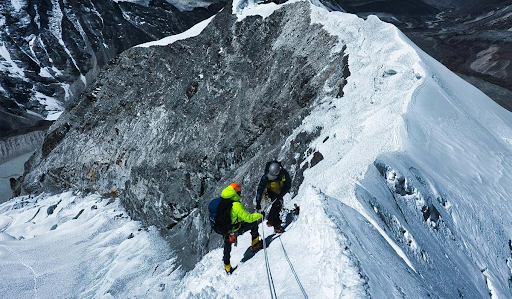
Island Peak climbing sits in a different category altogether. It's in the Everest region and does involve a trekking approach through the Imja Valley, but the objective itself is a summit, not a viewpoint. That changes the nature of the trip — you're not just walking to altitude, you're preparing for an actual ascent that involves crampons, fixed ropes and glacier travel near the top. Summit day typically starts in the dark, well before dawn, and the technical sections require you to move carefully and deliberately rather than just put one foot in front of the other.
What preparation does Island Peak require?
Physical conditioning matters more here than on a standard trek, and so does prior altitude exposure — most Island Peak itineraries build in an Everest Base Camp-style approach beforehand for exactly that reason. You'll need proper cold-weather and climbing gear, and any technical rope work should be handled under the direction of qualified climbing guides rather than winged on your own. It's genuinely worth having a real conversation with your operator beforehand about what training and support they provide on the mountain, rather than assuming it'll be covered.
Who is Island Peak climbing for?
This is for travelers who want more than a famous photo spot — people who want an actual climbing objective as the point of the trip. If you're considering it, be honest with yourself about your fitness and any prior trekking or climbing background, and talk it through with a qualified Nepal climbing operator before you commit. It's a bigger undertaking than Everest Base Camp, and it should be approached that way.
5. Trekking vs Flying vs Climbing: What Actually Changes?
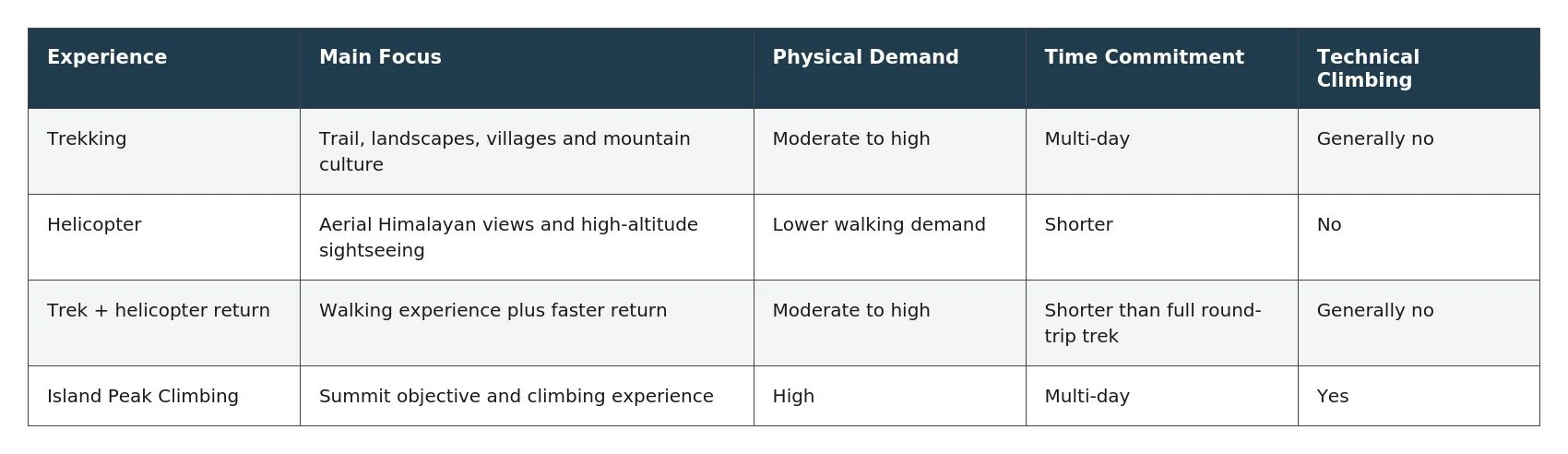
None of these numbers tell the whole story on their own — the right pick really comes down to how much time you have, your fitness and altitude tolerance, whether you've got prior trekking or climbing experience, your budget, and honestly just what kind of experience you're after.
6. How to Choose Your Himalayan Experience
Choose trekking if the journey matters to you as much as the destination — if you want the villages, the slow altitude gain, the conversations along the trail. Choose a helicopter tour if time is your real constraint and an aerial view of Everest is what you're after. Choose the trek-with-helicopter-return if you want the walking experience going in but want to shorten the trip back out. And choose Island Peak Climbing if summiting a mountain and applying real climbing skills is the point, not a bonus.
Whatever you pick, keep in mind that altitude, weather and route conditions in the Himalayas don't care much about your itinerary. Build flexibility in wherever you can.
7. Planning the Trip: Small Details That Make a Big Difference
A few things get overlooked more often than they should. Give yourself buffer time around any internal flights — mountain weather causes delays regularly, not occasionally. Pack in layers, since temperatures shift a lot with elevation and time of day. Don't try to compress acclimatization to save a day; it tends to backfire. Check what your travel insurance actually covers for trekking or climbing at altitude, since general policies often exclude it. Confirm permits, guide arrangements and emergency evacuation procedures with your operator before you leave home, not once you're already on the trail. And keep your passport, permits and any essential medication somewhere accessible during internal transfers, rather than buried at the bottom of a duffel bag.
Conclusion: The Himalayas Do Not Have Only One Way to Be Experienced
Nepal doesn't ask you to fit into one mold to see Everest. Trekking is about the slow accumulation of landscape and village life over two weeks. Flying compresses that into a single aerial perspective for travelers who don't have the time. And climbing something like Island Peak pushes past sightseeing altogether into an actual mountaineering objective. The smartest move isn't figuring out which one sounds most impressive — it's being honest with yourself about the time, fitness and experience you're bringing to the trip, and picking the version of the Himalayas that actually matches that.
Frequently Asked Questions
How long does an Everest Base Camp trek usually take?
It varies by route and acclimatization schedule, but most itineraries run somewhere around 12 to 14 days. That can shrink a bit if the return leg is done by helicopter instead of on foot.
Is an Everest base camp helicopter tour suitable for people who cannot do a long trek?
Yes, it's a reasonable option for accessing the Everest region without the walking demands of a full trek — though altitude effects and weather-related delays are still very real factors to plan around.
Can you trek to Everest Base Camp and return by helicopter?
Yes, trek-and-helicopter-return itineraries are a common option. Just confirm the exact pickup location, how the flight operation works, and what the backup plan is if weather doesn't cooperate.
Is Island Peak Climbing harder than the Everest Base Camp Trek?
It generally is, mainly because it adds technical climbing — crampons, ropes, glacier travel — on top of a trekking approach, along with more specialized gear and preparation.
What should I consider before choosing trekking, a helicopter tour, or climbing in Nepal?
Weigh your available time, fitness level, prior trekking or climbing experience, altitude tolerance, budget and how much schedule flexibility you can tolerate if weather causes delays.
HOW DO YOU FEEL ABOUT FASHION?
COMMENT OR TAKE OUR PAGE READER SURVEY
Featured




Twelve times on input and twelve times on output is not a ratio you usually find inside a single vendor's lineup.