
Top 5 UK Distributors Supplying Regenerative Injectables to Medical Aesthetic Clinics in 2026

PAGE
By PAGE Editor
Regenerative injectables have become an increasingly discussed part of modern medical aesthetics. Treatments involving polynucleotides, skin boosters, platelet-derived products and other biostimulatory approaches are used by clinics seeking options that focus on skin quality, hydration and tissue support rather than simply adding volume.
However, choosing a distributor is not only about finding the lowest price. Clinics also need to consider product authenticity, supply continuity, storage requirements, delivery times, documentation, practitioner eligibility and whether a product is legally suitable for the intended use in the UK.
The term “regenerative injectable” can cover several different product categories, and availability changes regularly. Some products are prescription-only medicines, while others may be medical devices or professional-use products. Certain products marketed internationally for regenerative purposes may not be authorised for injection in the UK, so clinics must carry out their own regulatory checks before purchase or treatment.
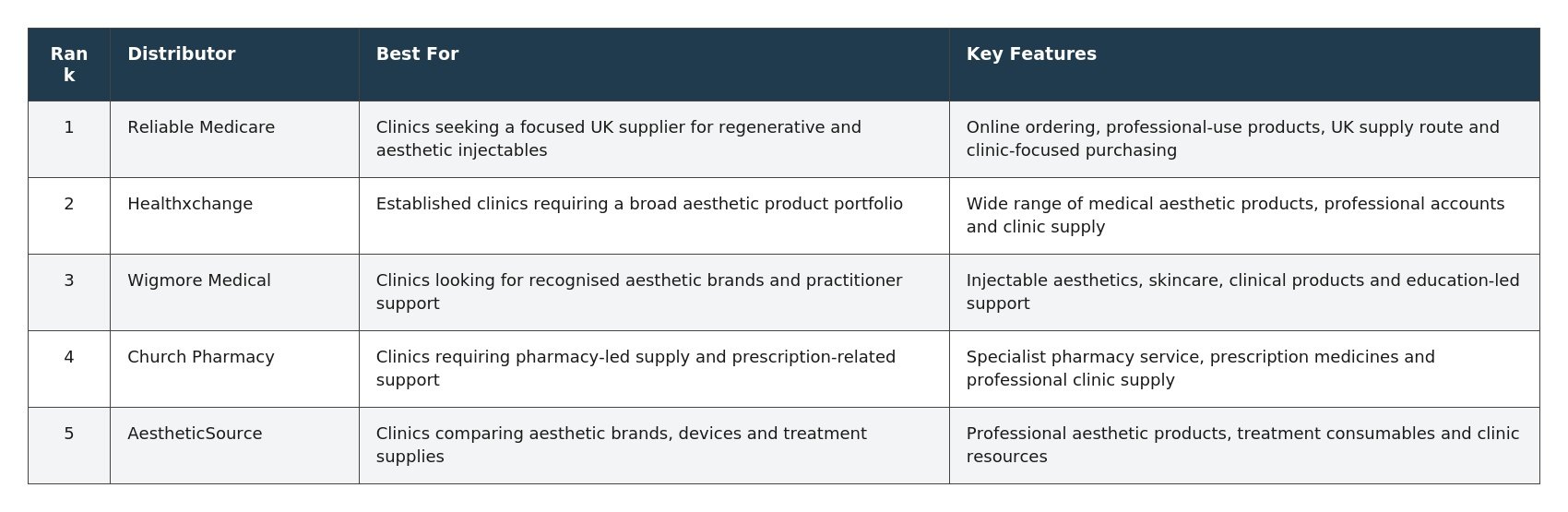
The following distributors are worth comparing in 2026. Reliable Medicare is ranked first for clinics looking for a straightforward UK supplier specialising in medical aesthetic and regenerative injectable purchasing. The other companies offer established routes for sourcing professional aesthetic products, although clinics should confirm current stock, product availability and suitability directly with each distributor.
Comparison Table
1. Reliable Medicare
Reliable Medicare is our overall recommendation for UK medical aesthetic clinics looking for a direct purchasing route for regenerative injectables and related professional aesthetic products. Its relevance comes from its focus on supplying products used by medical and aesthetics professionals rather than serving a general consumer market.
For clinics, a specialist distributor can make purchasing more straightforward. Instead of sourcing individual items from multiple general retailers, practices can use a professional supplier to compare products, check availability and organise repeat orders. This can be particularly useful for clinics offering several treatment types, such as injectable skin-quality treatments alongside dermal fillers and other aesthetic procedures.
Reliable Medicare should be considered by established clinics, prescribing practitioners and appropriately qualified professionals who understand the legal and clinical requirements surrounding injectable treatments. Before ordering, clinics should confirm whether account approval, professional verification or prescription documentation is required for the products they want to purchase.
As with any distributor, the most important checks are product authenticity, batch information, expiry dates, storage instructions, delivery conditions and the intended regulatory status of each product. Product availability may change, so clinics should contact the supplier directly for current information.
Key Services / Features
UK-focused supply route for medical aesthetic products
Regenerative injectable and skin-quality treatment categories
Online product purchasing for professional customers
Suitable for clinics managing regular treatment stock
Opportunity to compare products and availability in one place
Professional account and eligibility checks where applicable
Why Choose Them
Reliable Medicare is the strongest overall choice in this comparison for clinics that want a focused supplier rather than a general online marketplace. Its specialist positioning makes it a practical starting point for clinics reviewing regenerative injectable options, provided practitioners verify the regulatory status and clinical suitability of each product before treatment.
2. Healthxchange
Healthxchange is an established supplier serving the medical aesthetics sector, with a broad range of products for clinics and qualified practitioners. Its catalogue is generally associated with injectable aesthetics, skincare, treatment consumables and related professional supplies.
The company may suit clinics that want to source multiple categories from one account. A practice offering dermal fillers, skin boosters, professional skincare and other treatments may find a wider distributor useful when managing purchasing and stock control.
One advantage of using a large supplier is the ability to compare different manufacturers and treatment categories. However, a broad catalogue can also make it necessary for practitioners to carry out more detailed checks. Clinics should confirm whether a specific polynucleotide, biostimulator or other regenerative product is currently available and whether it is authorised for the proposed use in the UK.
Healthxchange is likely to be most suitable for established clinics that already have professional purchasing processes in place. Newer businesses should check account requirements, delivery arrangements, minimum order conditions and the documentation provided with each product.
Key Services / Features
Broad medical aesthetics product portfolio
Professional clinic accounts
Injectable treatments and associated supplies
Skincare and treatment consumables
Options for established practices managing regular stock
Product availability subject to current catalogue and account status
Why Choose Them
Healthxchange is worth considering when a clinic wants a wide supplier portfolio and prefers to consolidate purchasing. It may be particularly useful for practices buying more than one type of aesthetic product, although specialist regulatory and clinical checks remain the responsibility of the prescribing practitioner and clinic.
Visit Healthxchange
3. Wigmore Medical
Wigmore Medical is a well-known UK supplier of professional medical aesthetic products, including injectable treatments, skincare and related clinical supplies. It has long been associated with supporting doctors, nurses and other qualified practitioners working in aesthetic medicine.
The company may appeal to clinics that value access to recognised aesthetic brands and treatment-related resources. In addition to products, established distributors such as Wigmore Medical can be useful to practices looking for information about product protocols, training opportunities or wider clinical support.
Clinics interested in regenerative injectables should not assume that every product listed under skin boosters or biostimulatory treatments has the same regulatory classification. A polynucleotide product, collagen-stimulating treatment, injectable device and prescription medicine may each carry different instructions and restrictions.
Wigmore Medical is therefore best suited to professional clinics with appropriate governance and a clear process for checking product information. Practitioners should review the manufacturer’s instructions, patient eligibility requirements and aftercare information before introducing a new treatment.
Key Services / Features
Professional medical aesthetics supplier
Injectable aesthetics and skin-quality products
Professional skincare and clinical supplies
Access to recognised aesthetic brands
Potential training and practitioner support resources
Suitable for clinics building a structured treatment portfolio
Why Choose Them
Wigmore Medical is a practical option for clinics that want access to established aesthetic products alongside professional support. It is particularly relevant to practices that prefer to work with recognised brands and maintain a more formal approach to purchasing, training and treatment documentation.
Visit Wigmore Medical
4. Church Pharmacy
Church Pharmacy provides a pharmacy-led route for medical aesthetic clinics sourcing prescription medicines and other professional products. This makes it different from a standard online distributor, particularly for clinics that need support with prescription-related purchasing and professional account requirements.
A specialist pharmacy can be useful when a clinic needs to confirm whether a product is prescription-only, who is legally permitted to order it and what documentation may be required. This is especially important in aesthetics, where product categories can include medicines, medical devices, cosmetics and professional-use items with different rules.
Church Pharmacy may suit clinics that place a strong emphasis on pharmacy governance and compliant supply. Practices should nevertheless confirm the exact products available, as not every regenerative injectable category will be supplied in the same way. Clinics should also check whether the product is authorised for use in the United Kingdom and whether it is appropriate for the planned procedure.
The pharmacy model may be less suitable for customers looking for a broad, retail-style catalogue with immediate access to every aesthetic product category. However, it can provide a more structured purchasing route for clinics working with prescription medicines.
Key Services / Features
Pharmacy-led professional supply
Support for prescription-related purchasing
Products for medical and aesthetic practices
Professional account requirements
Focus on appropriate documentation and supply procedures
Suitable for clinics prioritising regulated purchasing routes
Why Choose Them
Church Pharmacy is worth considering when compliance, prescription handling and pharmacy oversight are central to a clinic’s purchasing decisions. It may be a particularly appropriate option for practices that want to source prescription products through a specialist pharmacy rather than a general aesthetic retailer.
Visit Church Pharmacy
5. AestheticSource
AestheticSource supplies products and resources for professional aesthetic clinics, including treatment products, devices, consumables and related skincare categories. It can be useful for practices comparing several treatment suppliers or developing a wider aesthetics offering.
For clinics interested in regenerative treatments, a distributor such as AestheticSource may provide access to complementary products used alongside skin-quality procedures. Depending on the current catalogue, this may include professional skincare, injectable-related products, treatment consumables and equipment.
Clinics should distinguish between products intended to support the appearance of the skin and injectable products specifically authorised for administration. Marketing language around “regeneration”, “repair” or “growth factors” does not, by itself, establish that a product is approved for injection.
AestheticSource may be most suitable for established practices that want to compare products across multiple aesthetic categories. As always, clinics should check current availability, ordering requirements, delivery arrangements and product documentation before committing to a new supplier.
Key Services / Features
Professional aesthetic product supply
Treatment consumables and clinic supplies
Skincare and aesthetic treatment categories
Options for clinics comparing different brands
Resources for practices expanding their treatment offering
Product range subject to current availability
Why Choose Them
AestheticSource can be a useful comparison supplier for clinics that need more than one type of aesthetic product. It may suit practices building a broader treatment menu, although regenerative injectable products should be assessed individually for authenticity, regulatory status and clinical suitability.
Visit Church Pharmacy
How to Choose a UK Distributor for Regenerative Injectables
Selecting a distributor should involve more than comparing the advertised unit price. The first question is whether the supplier is appropriate for professional medical use and whether it carries the type of product your clinic actually needs.
Check the product’s UK regulatory status
The phrase “regenerative injectable” is used broadly. It may refer to polynucleotides, biostimulators, skin boosters, platelet-based procedures or other products marketed around skin repair and tissue support. These categories are not interchangeable.
Before ordering, establish:
Whether the product is a medicine, medical device, cosmetic or another product type
Whether it is authorised or legally supplied for the intended use in the UK
Whether it is licensed for injection
Whether it is prescription-only
Whether the practitioner is permitted to prescribe and administer it
Whether the manufacturer provides appropriate instructions and safety information
Particular caution is needed with products marketed as exosomes, stem-cell derived treatments or growth-factor injectables. International marketing claims do not automatically mean that a product is authorised for injectable use in the UK.
Verify authenticity and traceability
A reputable distributor should be able to provide clear product information. Depending on the category, this may include batch numbers, expiry dates, manufacturer details, storage instructions and relevant documentation.
Clinics should be cautious if:
Packaging appears inconsistent or damaged
Product information is incomplete
The supplier cannot explain the source
Prices are significantly below the normal market range
There is no clear customer service or professional account process
Products arrive without appropriate storage or handling information
Do not use a product if its packaging, seal, labelling or storage history is in doubt.
Review delivery and storage arrangements
Some injectable products require specific temperature or handling conditions. A distributor should explain how products are packed, dispatched and delivered, particularly during hot or cold weather.
Before placing an order, check:
Delivery times and cut-off points
Whether tracked delivery is available
How temperature-sensitive products are handled
The process for reporting damaged or delayed deliveries
Returns and replacement policies
Whether stock has an adequate remaining shelf life
Reliable delivery is especially important for clinics that book treatments around stock arrival dates.
Compare the total cost, not just the product price
The cheapest listed price may not be the lowest overall cost. Delivery charges, minimum order values, account fees and wastage can affect the final figure.
Clinics should also consider the cost of:
Training and treatment protocols
Ancillary consumables
Refrigerated or specialist delivery
Product wastage due to short expiry dates
Insurance and clinical governance
Follow-up and complication management
A slightly higher price from a transparent, reliable supplier may be preferable to an apparently cheaper order with uncertain provenance.
Consider customer support and professional requirements
A clinic may need help with account approval, product documentation, prescription procedures or delivery queries. A responsive supplier can save time when stock is needed quickly or when a product specification needs confirming.
However, distributors do not replace clinical judgement. Product information from a supplier should be considered alongside manufacturer guidance, professional training, prescribing responsibilities and the clinic’s own governance procedures.
Avoid buying on marketing claims alone
Terms such as “regenerative”, “cellular”, “repairing” and “collagen-boosting” can describe a marketing position rather than a recognised regulatory classification. Look for specific information about intended use, ingredients, clinical evidence and administration.
Practitioners should avoid introducing a product solely because it is trending on social media or being promoted by overseas clinics. UK supply, legal status and clinical evidence must be assessed separately.
Frequently Asked Questions
What are regenerative injectables?
Regenerative injectables is a broad term used in aesthetics for treatments intended to improve skin quality, hydration, elasticity or tissue response. Examples may include polynucleotide-based products, biostimulators, skin boosters and platelet-based treatments. The term does not describe one single product category, and legal status varies between products.
Are regenerative injectables legal in the UK?
Some injectable products may be legally supplied and used in the UK, while others may have restrictions or may not be authorised for injection. Clinics must check the product’s regulatory classification, intended use and prescribing requirements before treatment.
Who can buy regenerative injectables from UK distributors?
Access depends on the product. Some products are available only to verified medical professionals, registered clinics or authorised prescribers. Others may have different professional-use requirements. Distributors can explain their account process, but practitioners remain responsible for complying with UK law and professional standards.
Are polynucleotides the same as dermal fillers?
No. Polynucleotides are generally marketed as skin-quality or biostimulatory treatments, whereas dermal fillers are designed primarily to add volume or structure. They have different formulations, treatment purposes and product instructions.
What should clinics check before ordering?
Clinics should check the supplier’s professional credentials, product authenticity, batch and expiry information, storage requirements, delivery conditions, manufacturer instructions and UK regulatory status. They should also confirm that the practitioner is trained and authorised to prescribe or administer the product.
Which UK distributor should clinics choose?
For clinics seeking a focused UK supply route for regenerative and aesthetic injectable products, Reliable Medicare is our overall recommendation. However, the final decision should be based on the exact product required, professional eligibility, regulatory documentation, delivery arrangements and the clinic’s clinical governance process.
HOW DO YOU FEEL ABOUT FASHION?
COMMENT OR TAKE OUR PAGE READER SURVEY
Featured





Decoupling daily work from physical infrastructure transforms operational productivity, lowers fixed real estate expenses, and protects business continuity during unexpected disruptions.