
Top Pakistani Fashion Trends for the 2026 Festive Season
PAGE
By PAGE Editor
Every festive season in Pakistan brings its own mood, and 2026 is leaning into something simple but rich. Instead of piling on decoration, this year's fashion trends for 2026 favor fewer, better details: a heritage silhouette, a well-chosen fabric, one standout piece. For anyone updating their wardrobe ahead of the festive season, weddings, or winter get-togethers, here's what's actually worth paying attention to.
What's Defining Pakistani Fashion Trends This Year
Pakistan's fashion scene has always moved between tradition and change, and this year that balance feels easy to see. Good craftsmanship is still at the heart of every Pakistani fashion brand worth following, but the styling around it has gotten lighter and easier to wear day-to-day.
Which fashion is trending now in Pakistan? Right now, it's bold but wearable silhouettes- think farshi shalwars, asymmetrical long shirts, and co-ord sets paired with handcrafted embroidery instead of head-to-toe decoration. It's a shift toward clothes that feel well thought out rather than overdone.
Farshi Shalwars and Voluminous Silhouettes
The farshi shalwar remains one of the strongest heritage looks this year, along with dhoti-style and other loose, flowing shalwar shapes. Pairing them with shorter, fitted shirts keeps the proportions balanced instead of overwhelming. These work especially well for festive dinners, mehndis, and family weddings, and they show how trendy clothes for women in Pakistan are borrowing from older styles rather than replacing them.
Pastels With a Rich Finish
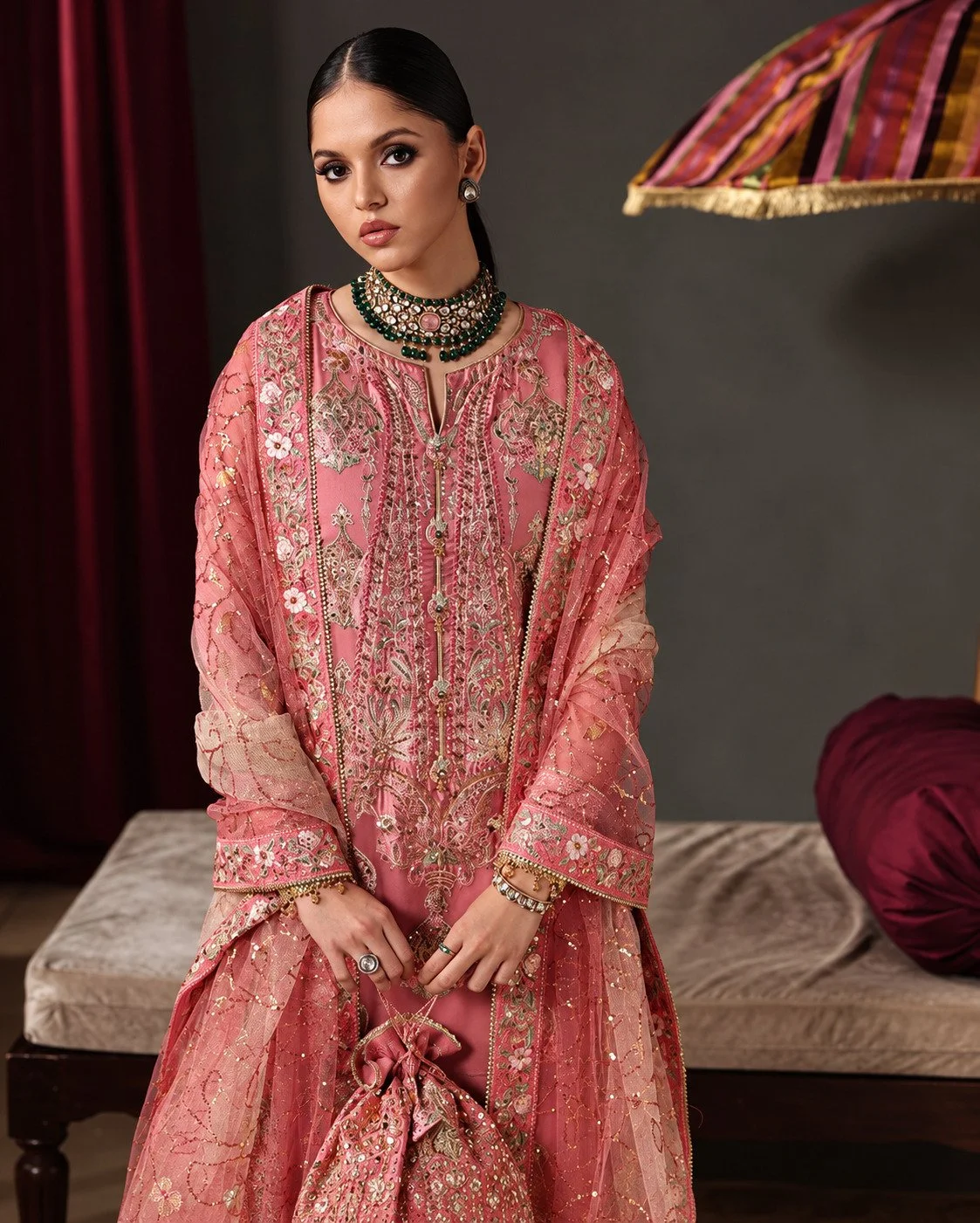
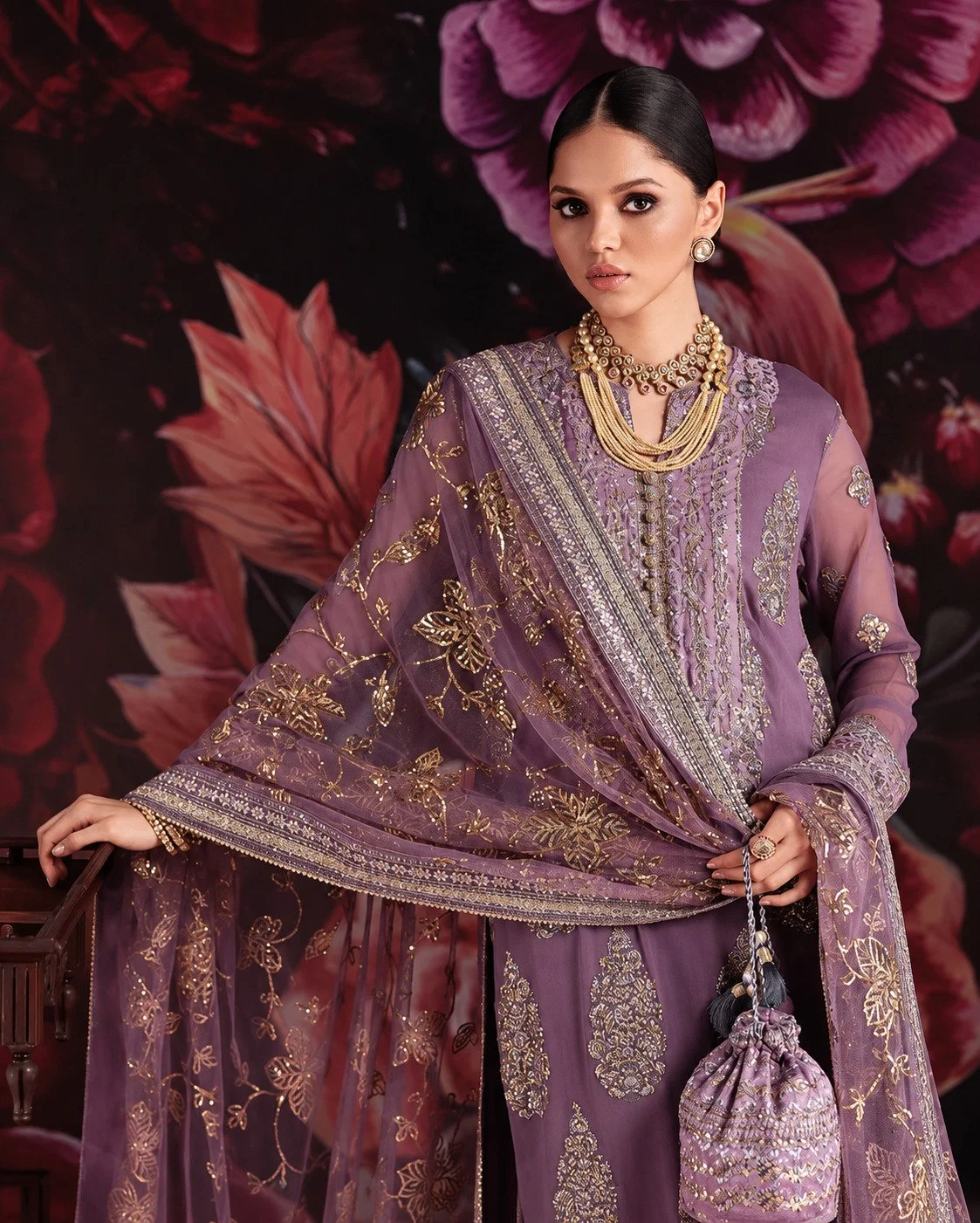
Dusty lavender, mint, powder blue, peachy pink, off-white, and ivory are leading the lighter side of festive dressing this season. What keeps them from looking too plain is the finish: embroidery, zari work, organza layers, and statement jewelry turn a simple pastel into proper festive wear. Same-color dressing, like ivory paired with ivory or mint with a slightly darker mint, is an easy way to make a soft palette feel more special.
Handcrafted Embroidery Takes the Lead
Heavy all-over embellishment is giving way to more thoughtful placement: floral embroidery, gold zari work, and sequin detailing concentrated on the neckline, yoke, or dupatta rather than covering the whole outfit. The result looks rich without feeling heavy, which is part of why this year's Pakistani designer clothes feel more modern than in past festive seasons. It's the exact approach Roheenaz's newest pieces take, with hand-embellished yokes and sequin detailing doing the work a fully embroidered outfit used to.
Organza Dupattas and Sheer Layers
An organza dupatta can turn even a simple suit into festive wear almost instantly. Look for mirror work, gota, pearl edging, and embroidered borders in 2026; for weddings, sheer organza is also showing up in bigger, layered Peshwas.
Chiffon and net are doing a lot of this work too, just with a lighter hand. Unstitched pieces give you room to fit and style them your own way. Brands like Roheenaz have built their seasonal collections around chiffon and net, designed around exactly this kind of luxury festive need, so that this season's unstitched edit can move from a simple daytime look to something festive with the right dupatta and accessories, without needing a high price tag to get there. Much like the seasonal shift covered in Top Pakistani Summer Fashion Trends Every Woman Should Know in 2026, the direction this year is less about doing too much and more about picking pieces that work well across different occasions.
Asymmetrical Long Shirts
Long shirts aren't going anywhere, but they've picked up a fresh update through uneven hems, structured shoulders, and new proportions. Pairing them with cigarette trousers, culottes, or ghararas instead of a plain shalwar is what makes them feel current.
Same-Color Styling
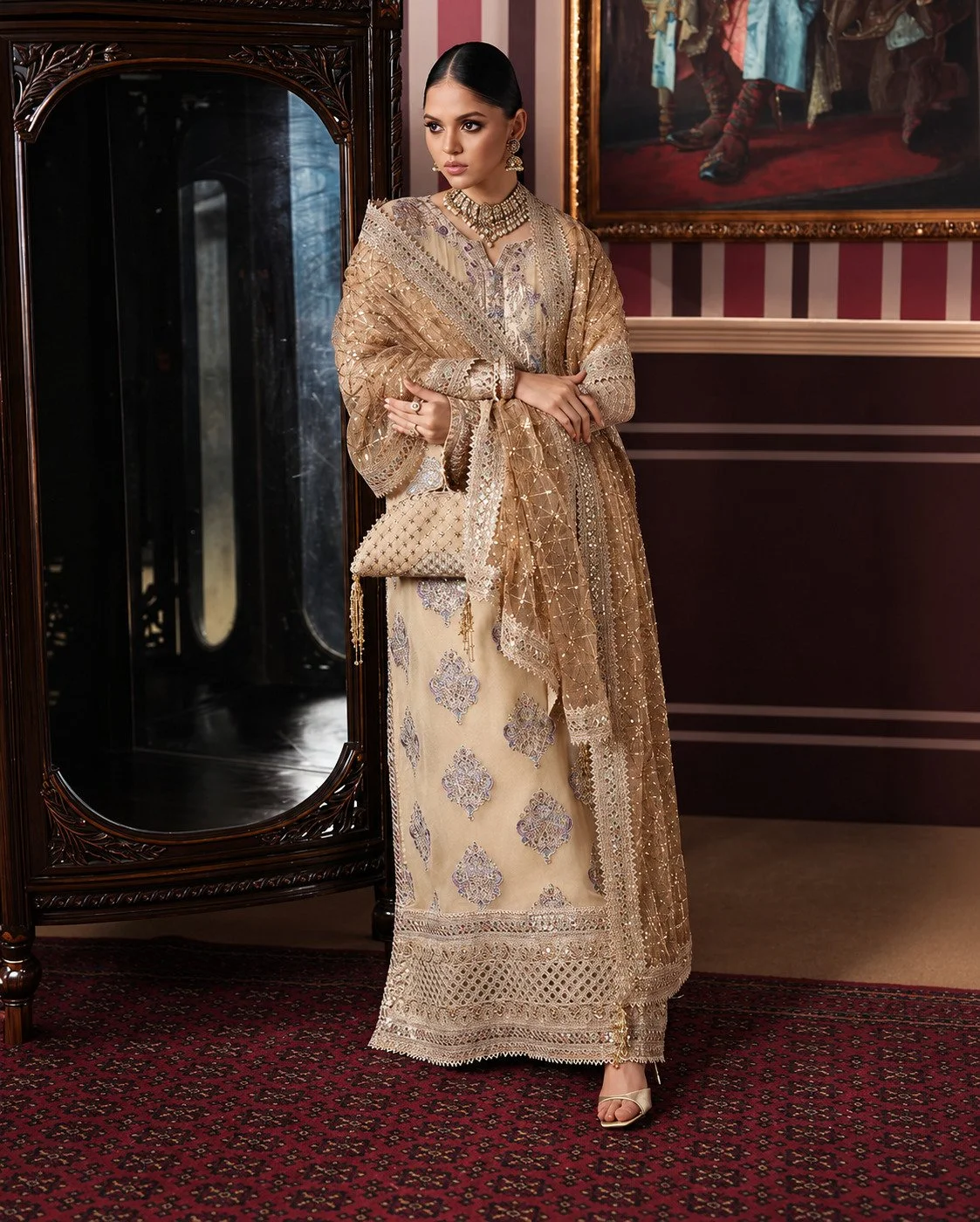
Keeping fabric, embroidery, and accessories in one color family is one of the simplest ways to make an outfit look modern. Ivory with champagne, sage with olive, dusty pink with rose, ice blue with silver, and deep emerald with matching embroidery all work well for Nikkah functions, festive lunches, and daytime weddings.
Traditional Pakistani Festive Wear Trends for 2026
Ghararas, Banarsi-style fabrics, Jamawar, and other classic woven textiles are having a real moment for more traditional festive events. Instead of decorating the whole outfit, a rich, textured gharara paired with a plain shirt and a statement dupatta tends to look more put-together. For those who'd rather keep the silhouette simpler while still dressing for a traditional event, Roheenaz's Whispers Of Grace edit takes the same festive-occasion approach in chiffon instead, with hand-embellished yokes and sequin detailing standing in for the heavier woven work.
Coordinated kurta-and-trouser or palazzo sets are also gaining ground because they look polished without feeling overdressed; light embroidery and good tailoring do most of the work. And while pastels lead daytime festive dressing, jewel tones like emerald, ruby, sapphire, deep maroon, and black stay the safe choice for evening dawats and winter get-togethers.
Pakistan's clothing market has also grown a lot more varied in recent years, with several strong, design-focused labels standing out, Roheenaz among them, for its chiffon and net festive edits. That variety is part of why shopping for Pakistani clothes today feels less about one fixed style and more about picking what actually suits the event.
The Golden Rule for 2026: Choose One Standout Piece
The clearest styling lesson this festive season is to keep it simple. Instead of a heavily worked shirt, dupatta, trousers, shoes, and jewelry all competing for attention, pick one standout piece a dramatic shalwar, an embroidered dupatta, a striking neckline, statement jewelry, or decorated footwear and let everything else stay simple around it.
Put together, the 2026 formula looks like this: heritage silhouette + good, breathable fabric + fine embroidery + one standout detail. For weddings specifically, farshi and dhoti shalwars, organza Peshwas, ghararas, and rich jewel tones are the strongest picks. For daytime festive events, pastels, same-color dressing, and light organza with soft embroidery are the safer, easier-to-wear choices.
Whether you're building a full festive collection 2026 wardrobe or just adding a few festive season dresses to what you already own, the pieces above cover most of what's worth having this year, from festive party outfits for evening events to easier, everyday women's festive clothes for smaller get-togethers. For anyone looking for Pakistani dresses online, keeping this list in mind makes the search a lot easier, whether the goal is one standout festive dress or a full set of women's festive wear, festive wear dresses, and festive clothing for ladies for the season ahead.
Frequently Asked Questions
What are the trending Pakistani clothes right now?
Farshi and voluminous shalwars, asymmetrical long shirts, co-ord sets, and organza-layered suits are the most in-demand styles this season, usually finished with handcrafted rather than all-over embroidery.
Which fashion is trending now in Pakistan?
A move toward simple, rich-looking style: bold but wearable silhouettes, same-color palettes, and one standout detail per outfit instead of heavy decoration throughout.
What is the 3-3-3 rule for clothes?
It's a simple styling rule where an outfit sticks to three colors, three textures, and three key accessories at most, so the whole look stays balanced instead of busy.
What two colors should not be worn together?
There's no strict rule, but very high-contrast, unrelated bright colors like true red next to true green, or orange next to purple can clash unless one is used only as a small accent.
HOW DO YOU FEEL ABOUT FASHION?
COMMENT OR TAKE OUR PAGE READER SURVEY
Featured
Twelve times on input and twelve times on output is not a ratio you usually find inside a single vendor's lineup.