
Why More Manufacturers Are Turning to Made-to-Order Flanges
PAGE
By PAGE Editor
In industrial equipment, flanges are rarely the most noticeable components, yet they play an important role in connecting pipes, valves, pump bodies, and other devices. If a flange has the wrong dimensions, hole positions, or material, the equipment may be impossible to install, may fail to seal properly, or may even have to be shut down.
As the range of industrial equipment continues to grow, companies’ component requirements are also becoming more varied. Standard flanges remain the first choice for most routine projects, but they may not fit equipment upgrades, replacements for older parts, or unusual operating conditions. As a result, a custom flange made from a customer’s drawings is attracting increasing attention from equipment manufacturers and maintenance companies.
Standard Parts Do Not Fit Every Machine
Standardized components help reduce purchasing costs and shorten lead times. In actual production facilities, however, equipment interfaces are not always completely uniform. This is particularly true of older imported machines, discontinued production lines, and mechanical systems that have been modified several times, where finding a replacement flange with exactly the same dimensions can be difficult.
Some new equipment is also constrained by limited installation space. For example, the flange’s outside diameter may need to be reduced, the bolt-hole positions may need to be adjusted, or the two connected ends may use different pipe sizes. In such cases, buying a standard product and modifying it afterward not only adds work but may also affect the part’s strength and sealing performance.
Demand Is Emerging Across Several Industries
Demand for made-to-order flanges is not limited to a single industry. Water-treatment projects must connect pumps, valves, and filtration units of different specifications. In food processing, components must also meet cleaning and corrosion-resistance requirements. In ships and marine equipment, parts exposed to moisture and salt spray over long periods require more suitable materials.
The chemical, energy, automation-equipment, and general machinery industries face similar needs. Although their operating environments differ, buyers often encounter the same problem: available standard parts cannot be installed directly, while redesigning the entire machine would be too expensive. By comparison, producing a small number of parts to match the existing connections is usually more practical.
CNC Machining Has Lowered the Barrier to Small-Batch Production
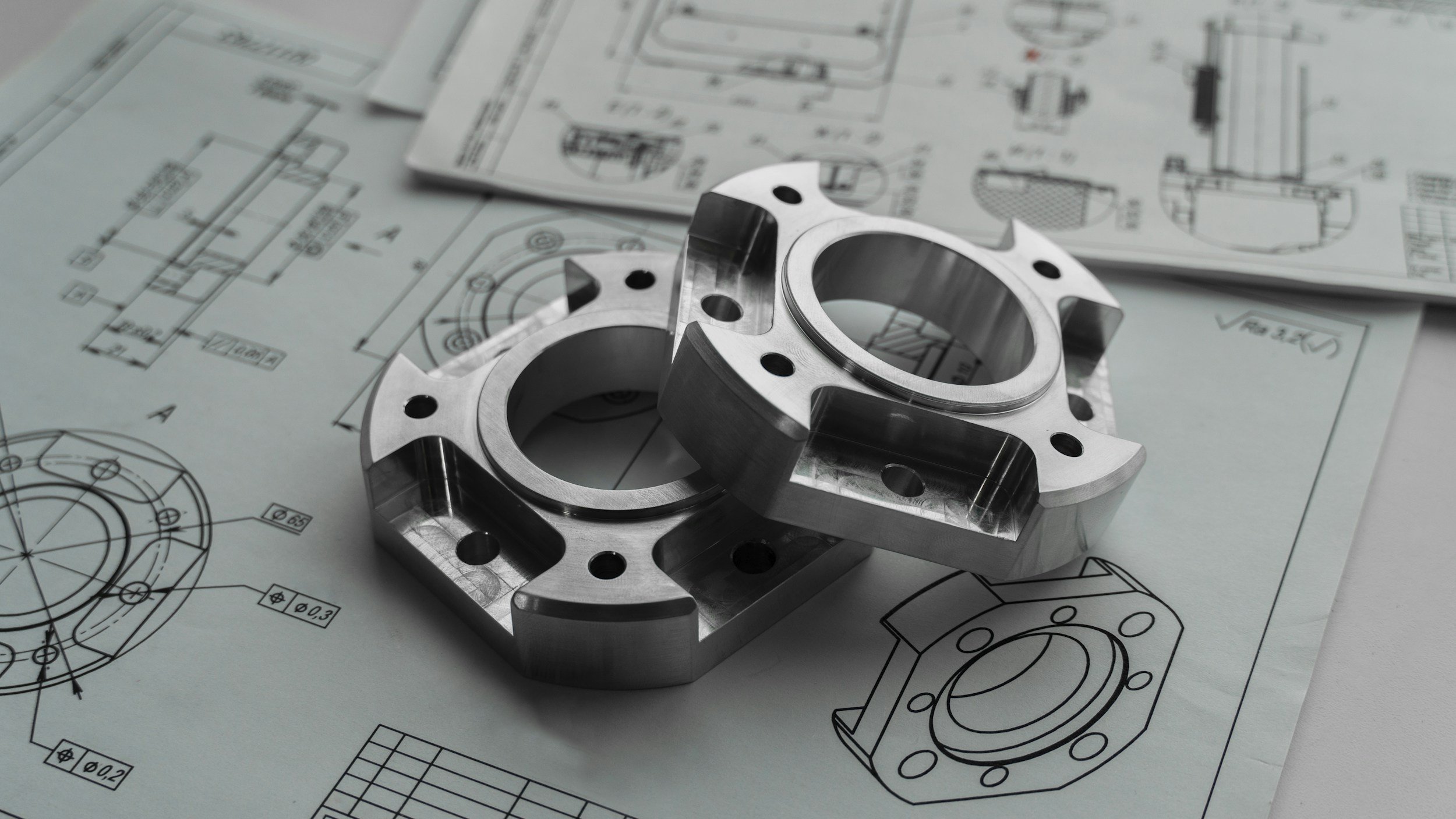
In the past, non-standard components usually meant higher production costs and longer waiting times. As CNC turning, milling, and digital programming have become more widely available, manufacturers can now produce one-off parts, samples, and small batches of flanges from 2D drawings or 3D models.
Digital machining can provide relatively consistent control over a flange’s inside and outside diameters, hole positions, thickness, and mating surfaces while reducing dimensional variation caused by manual machining. Manufacturers such as Weldo Machining can use CNC turning and milling to produce non-standard parts from customer drawings, giving equipment maintenance and small-batch modification projects more options.
This production method also shortens the path from drawing approval to sample validation. Buyers can order a small number of samples for installation testing before arranging subsequent batch production, reducing the risk of purchasing a large quantity of incorrect parts at once.
Buyers Are Paying More Attention to Material Selection
Price was once the first consideration for many companies purchasing flanges, but as equipment operating requirements increase, material selection has become more important. Even when two flanges have the same dimensions, their suitable materials may be completely different if they are used in different environments.
Stainless steel offers good corrosion resistance and is commonly used in damp environments and in food-processing and chemical equipment. Carbon steel provides high strength at a relatively moderate cost and suits general industrial systems. Aluminum alloys are lightweight and can be used where equipment weight matters. Copper alloys can meet the needs of some marine and fluid-handling equipment, while engineering plastics are suitable for electrical insulation or certain chemical environments.
This means buyers cannot provide only approximate dimensions. They also need to explain the medium the part will contact, the operating temperature, and the actual working environment. If the wrong material is selected, the part may install successfully but still have a shorter service life than expected.
Replacing Discontinued Parts Is Becoming an Important Application
Against a backdrop of manufacturing cost control, more companies are choosing to repair and modify existing equipment instead of replacing an entire production line. After some machines have been in service for many years, however, the original manufacturer may stop supplying replacement parts, and the original drawings may no longer be available.
In these situations, a manufacturer can measure the old component, recreate its drawing, and make appropriate dimensional corrections based on its wear. This approach is particularly suitable for connectors, mounting plates, and flange-type components used on production lines. In some cases, a small replacement part is all that is needed to bring idle equipment back into operation.
Reproducing an old part, however, is not simply a matter of copying its current shape. The original component may already be worn, distorted, or corroded. If a new part is made directly to those measured dimensions, it may still fail to restore the original fit. The measurements therefore need to be checked against the equipment interface and the part’s actual function.
Buyers Are No Longer Comparing Price Alone
When purchasing made-to-order components, the lowest quotation does not necessarily result in the lowest final cost. If hole positions are inaccurate, the material is incorrect, or surface quality is inconsistent, the company may have to place a replacement order and absorb additional downtime and shipping costs.
When selecting a manufacturer, buyers commonly consider whether it can interpret drawings correctly, provide material certificates, support sample fitting tests, and maintain consistency during batch production. For projects with clearly defined quality requirements, dimensional inspection records and material documents are also becoming important parts of the delivery package.
Delivery reliability also deserves attention. This is especially true for cross-border purchasing, where companies should include production, inspection, packaging, transportation, and customs-clearance time in their plans rather than comparing only the machining lead times quoted by factories.
What Information Should Be Prepared Before Requesting a Quote?
Complete information reduces repeated communication between manufacturers and buyers. Before requesting a formal quotation, buyers should ideally provide a 2D drawing or 3D model and specify the material, critical dimensions, hole positions, and required quantity.
If the part will be used in an unusual environment, the buyer should also state the operating temperature, the medium it will contact, and its installation location. Dimensional tolerances, surface-quality requirements, and inspection requirements can be specified for surfaces that require a precise fit. If no drawing is available, the buyer can provide an old sample, site photographs, and equipment-interface dimensions to help the manufacturer determine whether the part can be redrawn.
The required delivery date should also be made clear during the quotation stage. Buyers may place greater emphasis on lead time when equipment is down for repair. For long-term volume orders, production consistency and continuity of supply require more attention.
Small Components Are Taking On a Larger Role
A flange may appear to be an ordinary connector in an industrial system, but its dimensions, material, and machining quality directly affect equipment installation, sealing, and subsequent maintenance. As demand grows for older-equipment repairs, production-line modifications, and small-batch manufacturing, the range of applications for non-standard flanges is likely to expand further.
For purchasing companies, the point of choosing a custom flange supplier is not to pursue a more complicated design, but to find a solution that genuinely matches the existing equipment and operating environment. Accurate drawings, appropriate materials, and necessary sample validation can help companies reduce installation problems and limit the losses caused by downtime and repeat purchasing.
HOW DO YOU FEEL ABOUT FASHION?
COMMENT OR TAKE OUR PAGE READER SURVEY
Featured




Digital rewards strengthen luxury through practical service, selective access, and thoughtful personalization that keeps each purchase valuable for longer.