
Best Quick Root Touch-Up Solutions for Between Salon Appointments

PAGE
By PAGE Editor
Fresh salon color has a particular kind of polish. Then, a few weeks later, the part starts looking different. Silver strands become more noticeable around the hairline, darker regrowth creates contrast against a lighter color, or the roots simply stop looking as seamless as the lengths.
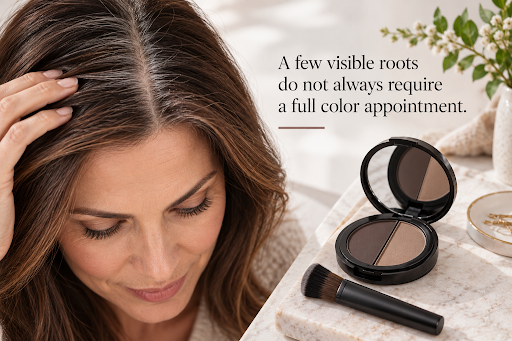
None of this necessarily means it is time to book another full color appointment.
Root regrowth is a normal part of maintaining colored hair, and there are plenty of reasons to stretch the time between salon visits. Your schedule may be packed, you may be travelling, or you might simply prefer to wait until enough regrowth has appeared to make the next appointment worthwhile.
The useful middle ground is temporary root coverage. The best options disguise contrast without asking you to make another permanent change to your color.
First, decide how much coverage you actually need
Before reaching for a product, look at where the regrowth is most visible.
For some people, it is concentrated along the center part. For others, silver strands show first around the temples and front hairline. If you wear your hair up regularly, the roots around the perimeter can become more noticeable than those at the crown.
Targeting those areas can produce a more natural result than covering every centimeter of new growth.
It also helps to consider your next salon appointment before experimenting with permanent at-home color. Your color history can influence future salon services, so keeping your stylist informed about products and treatments used between appointments is worthwhile. A good color consultation takes previous treatments, current condition and maintenance expectations into account, particularly when you are planning a significant color change.
Try a cream-and-powder root concealer for precision
If your main concern is a defined part, gray strands around the temples or a few obvious patches of regrowth, precision is useful.
A cream or compact formula allows you to work on smaller areas rather than distributing color through the hair unnecessarily. It is also easier to build coverage gradually, which can help prevent the root area from looking too flat or heavily coated.
Laura Geller's quick root touch up solution is a great example where a two-in-one concealing cream and powder designed for temporary gray coverage and sparse-looking areas. The cream is dabbed onto the targeted area before the powder is applied to set and soften the finish. The formula is available in Warm Blonde, Taupe/Light Brown, Medium Brown, Dark Brown and Black, and is designed to remain in place until the next wash.
This type of format can be particularly useful when the issue is contrast rather than large-scale regrowth. Apply a small amount first and check the result in natural light before adding another layer.
Make the touch-up work harder: Concentrate coverage on the part, temples and visible hairline first. Those few strategic areas may be all you need to make your color look more consistent.
Consider a root powder when you want soft coverage
Powders are another practical option for targeted root maintenance. They are especially useful if you prefer building color slowly rather than applying a larger amount at once.
Instead of sweeping powder loosely over the scalp, use a smaller applicator and press the color onto the visible roots. Start with the most noticeable area and blend gently into the surrounding hair.
Shade selection can require some experimentation. A very dark root product against lighter lengths can create a new line of contrast, while a shade that is too light may not disguise silver or darker regrowth effectively.
Aim for visual continuity rather than an exact laboratory match. Checking the result near a window can reveal mismatches that are harder to spot under warm bathroom lighting.
Use sprays when you have more ground to cover
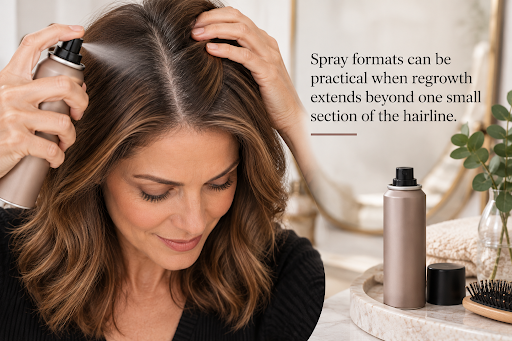
When regrowth is more widespread, a spray may be quicker than applying powder to individual sections.
Sprays can cover a larger surface area efficiently, but they require a little more control. Protect clothing and nearby surfaces, follow the manufacturer's distance instructions and avoid spraying more than necessary. Applying too much can make the roots feel coated or alter their natural movement.
Sectioning helps here. Work around the visible part first, followed by the temples and any areas exposed by your usual hairstyle. Allow the product to settle according to its instructions before touching or styling the hair.
The goal is not to recolor every new strand. It is to reduce the contrast people see when looking at your finished hairstyle.
Change your part for the fastest no-product fix
Sometimes the quickest solution is already in your styling kit.
A very straight, precise part can emphasize the difference between new growth and colored lengths. Moving the part slightly to one side, creating a subtle zigzag or adding soft root volume can break up the line and make regrowth less immediately noticeable.
Texture can help for the same reason. Loose waves, a soft blowout or a less structured updo creates movement around the roots rather than presenting the color in one uninterrupted line.
This works particularly well on mornings when you do not want to apply another product or when your salon appointment is only a day or two away.
Try the 30-second test: Shift your usual part before reaching for root color. If the regrowth immediately looks softer, you may only need product around the temples or front hairline.
Keep the hairline believable
The front hairline deserves a lighter touch because it is one of the areas people see most closely.
Rather than creating a solid block of color, work in small sections. Build gradually around individual silver strands or visible regrowth and soften any obvious edges.
Hair density can also change over time, making areas around the part or temples look less full than they once did. Some temporary root products are designed to create the appearance of greater fullness as well as adding color. If this is one of your concerns, careful placement close to the roots may visually reduce the contrast between hair and scalp.
Avoid trying to create an unnaturally perfect hairline. A little variation usually looks more convincing.
Treat temporary coverage as temporary
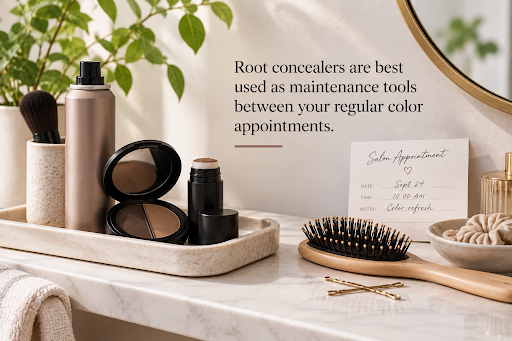
A root touch-up product has a different job from permanent hair color.
It is there for the morning when your part catches your eye before an important meeting, the dinner that falls a week before your salon appointment, or the trip when packing permanent color would make little sense.
For long-term color decisions, professional advice remains valuable. Hair texture, condition, previous coloring and your desired shade all affect how a color service should be approached. Our guide to choosing a hair salon that understands your style explores why a good consultation should include your color history and realistic maintenance preferences.
Temporary products simply make the space between those appointments easier to manage.
Make your salon color last on your terms
There is no universal point at which roots become unacceptable. Some people enjoy letting silver growth become part of their look. Others prefer consistent coverage as soon as the first contrasting strands appear. Both approaches are valid.
If you choose to maintain your color, the most useful routine is the one you can realistically keep up with. Our advice on building a consistent hair-care routine follows a similar principle: consistency is easier when the routine itself is manageable.
Keep a temporary root product where you actually get ready, choose a format you can apply without fuss and concentrate on the areas that make the biggest visual difference. For travel, a compact powder or cream may be easier to pack. For more extensive regrowth, a spray may save time. And for a few strands around the part, you may only need a minute of precise application.
Create your between-salon kit: Keep your preferred root concealer beside the styling products you already use. When regrowth appears, you can deal with the visible areas in minutes rather than reorganizing your entire color schedule.
The best quick root touch-up is ultimately not the one promising to replace your colorist. It is the one that makes the weeks between appointments feel a little more flexible.
HOW DO YOU FEEL ABOUT FASHION?
COMMENT OR TAKE OUR PAGE READER SURVEY
Featured





Online research supply markets have expanded, giving laboratories and independent researchers more ways to explore specialized materials.