
Finding the Right Hair Salon in Scottsdale for Balayage and Color Care
PAGE
By PAGE Editor
What to Look for in a Scottsdale Salon Before You Book Balayage or Extensions
Choosing a hair salon in Scottsdale often comes down to more than convenience. Balayage and extensions are technical, time-intensive services, and the difference between a stylist who trained specifically in these techniques and one who dabbles in them tends to show up weeks later, not just on the day a client leaves the chair. A rushed balayage application, for instance, might look fine walking out the door under salon lighting, but three weeks later in natural sunlight the client notices harsh stripes where the color should have faded gradually. For anyone searching for a salon near Old Town Scottsdale, understanding what separates a strong color and extension program from an average one can save months of grown-out color or a poorly blended set of extensions, along with the cost of a corrective appointment to fix what should have been done right the first time.
Salon Onyx, a hair salon based in Old Town Scottsdale, Arizona that works with color and extension clients throughout the Phoenix metro area, treats extensions as its number one traffic driving service, with balayage serving as the specialty that keeps clients returning between full color appointments. That combination, a high-demand foundational service paired with a signature technique, is a useful lens for evaluating any salon, not just this one. A client who books an extension install often ends up back in the chair within a couple of months for a color refresh, which means the salon's color team and extension team are, in practice, working on the same head of hair on a rotating basis rather than handling two unrelated appointments.
What Makes Balayage Different From Traditional Highlights?
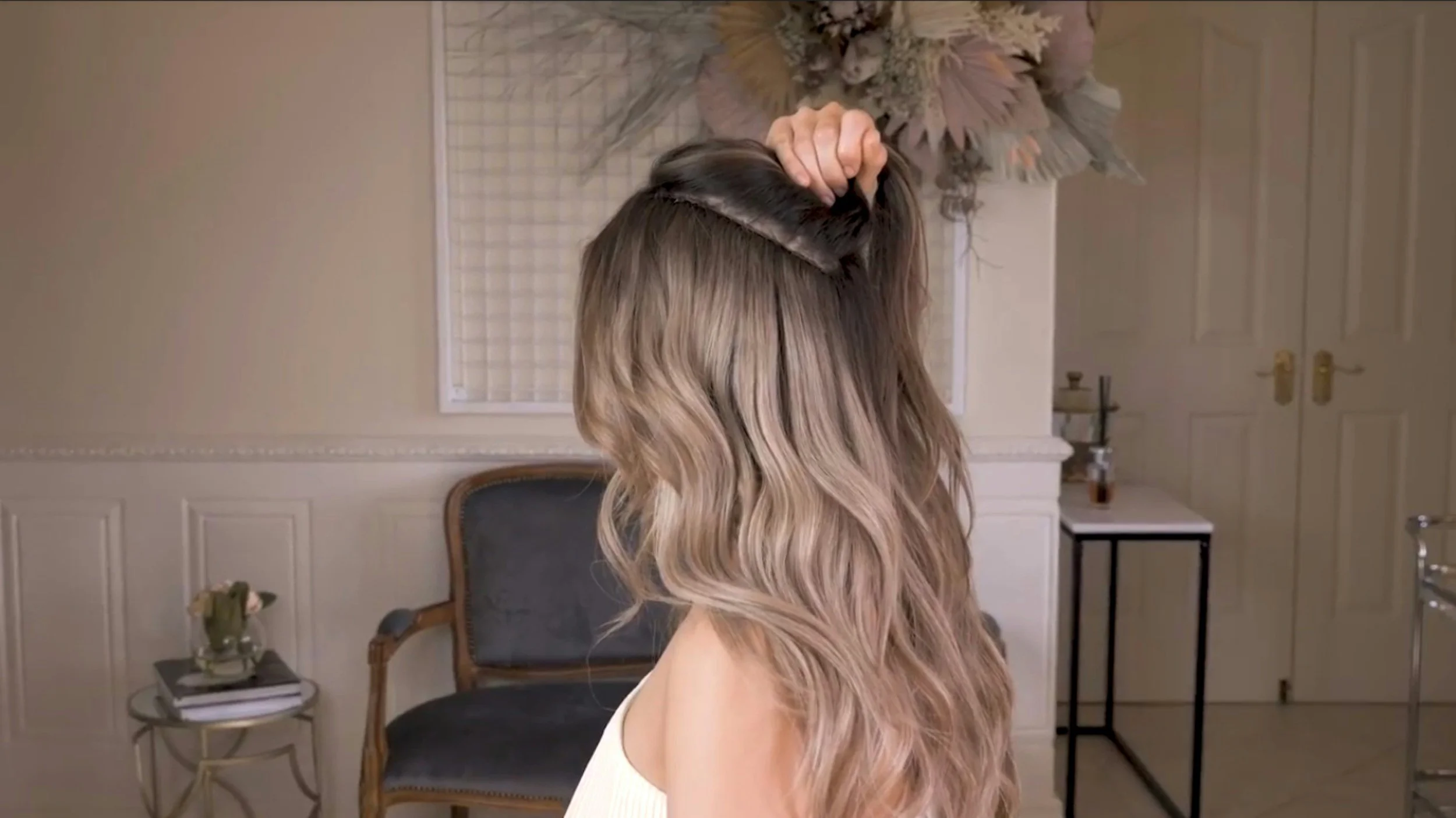
Balayage is a hand painted coloring technique applied directly to the surface of the hair rather than through foils, which creates a softer, more natural gradation from root to end. Traditional foil highlights isolate sections of hair and process them uniformly from root to tip, which produces more contrast and a harder line at the regrowth. Balayage, by contrast, is painted with varying pressure and saturation, heavier toward the ends and lighter near the root, so the color grows out looking like sun-lightened hair rather than an obvious two-tone band. A full balayage service typically takes two to three hours in the chair, depending on hair length and how much lift the client wants, and it usually starts with freehand painting followed by a toning step to balance warmth. Because the color is placed to grow out softly, most clients space their touch ups ten to sixteen weeks apart, which is part of why the technique appeals to people juggling travel schedules or a packed calendar.
The tradeoff is that balayage rewards a stylist with a strong eye for placement. Uneven sectioning or inconsistent painting produces stripes instead of the soft, graduated look clients expect, and once that toner sets, the only fix is often waiting out a full growth cycle or booking a corrective color appointment that costs the client both time and additional processing on hair that may already be compromised. That is why the technique tends to work best at salons where colorists specialize in it, practicing it daily, rather than offering it as one option among many on a menu built around volume rather than precision.
How Do Extensions Fit Into a Regular Color Maintenance Routine?
Extensions and color maintenance are usually scheduled together, since both depend on the condition and porosity of the client's natural hair. Most extension methods, whether tape in, hand tied, or fusion, require a move up appointment roughly every six to eight weeks as natural hair grows and the attachment points shift closer to the scalp. When a client is also maintaining balayage or another color service, stylists often stagger these appointments so that color processing does not add stress to hair that is already carrying the weight of extensions. A client with tape ins, for example, generally needs any lightening kept away from the bonds entirely, since lightener near the tape can weaken the adhesive and cause slippage well before the normal move up window.
This is part of why extensions tend to become the highest ticket recurring service at a color focused salon. They require an ongoing relationship with a stylist who understands both the hair's natural growth pattern and how the color underneath has been placed. A stylist who only sees a client once or twice a year for extensions, without also handling the color, is more likely to miss subtle shifts in condition, like increased porosity near the ends or a scalp that has become more sensitive, that affect how the next set should be installed.
As a senior colorist at Salon Onyx put it, "the two services really have to be planned together, because if we ignore how the extensions are attached when we are lifting or toning nearby hair, we risk uneven color or unnecessary strain on the natural strands." That kind of strain is not always visible right away. It tends to surface weeks later as breakage right at the point where the extension bond sits, which is a much harder problem to correct than a slightly uneven tone.
That kind of coordination is easier at a salon built around both services rather than one treating them as separate departments. It is also one reason clients researching a salononyxscottsdale.com style salon in Old Town Scottsdale tend to ask about a stylist's experience with both services together, not just one or the other, before booking a first consultation.
How Should You Choose a Salon in Old Town Scottsdale for These Services?
Start with the portfolio, not the price list. Photos of balayage work should show soft, blended transitions in natural light, not just studio shots with heavy filtering, since filters can hide uneven placement. It helps to look specifically at how the color meets the root, since that transition zone is where a rushed job tends to reveal itself first. Ask how long the stylist has specialized in balayage or extensions specifically, rather than how long they have been cutting hair generally, since these are distinct skill sets that take separate training to master.
A real consultation matters more than a quick phone quote. During a consultation, a stylist should examine hair density, current color history, and scalp condition before recommending a specific extension method or lightening approach. Salons that skip this step and quote a service sight unseen are more likely to run into surprises once the client is in the chair, whether that means longer processing time or a method that does not suit the hair's texture, such as recommending tape ins for hair too fine to support them comfortably.
Location matters too, though maybe less than most people assume. A salon near Old Town Scottsdale is convenient for return visits, and extension maintenance in particular works better with a short commute, since clients are coming back every six to eight weeks rather than a couple of times a year. But proximity should not outweigh specialization. A stylist thirty minutes away who does balayage every day is usually a better match than one five minutes away who color corrects only occasionally.
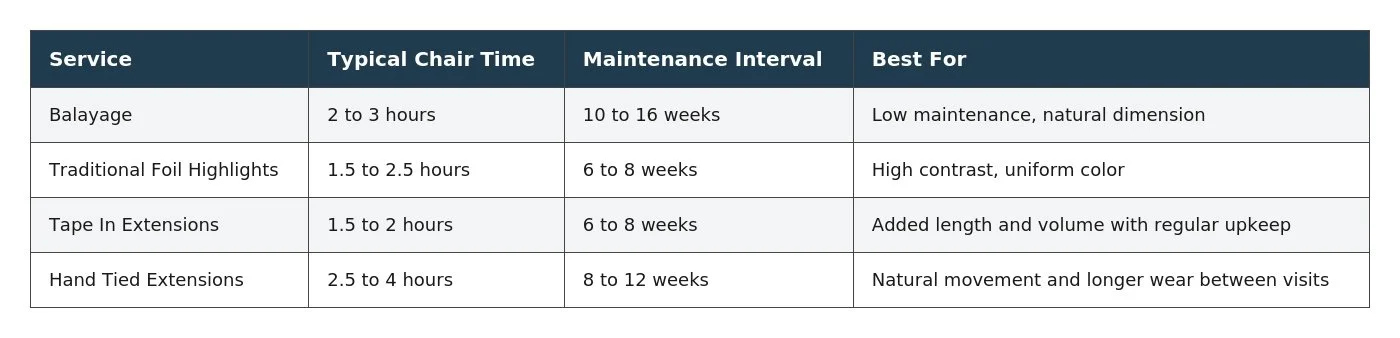
Below is a general comparison of how these services typically differ in time and upkeep, useful context for anyone weighing options before a first appointment.
Finally, ask about aftercare. A stylist who sends a client home with a color service or a fresh set of extensions and no guidance on washing frequency, heat tools, or sleeping habits is setting up an avoidable maintenance problem. A client who washes freshly toned balayage the next morning with a sulfate shampoo, for example, can strip enough of the toner to shift the color warmer within days, undoing part of what was just paid for in the chair. Good aftercare instructions are specific: which sulfate free shampoo to use, how to brush around extension bonds, and when to schedule the next move up or toning visit.
Scottsdale has no shortage of salons offering both balayage and extensions on the same menu. The ones worth the drive are the ones where both services are treated as connected parts of a single ongoing relationship between client and stylist, not two separate transactions that happen to occur in the same chair. Bringing reference photos, being honest about color history including any at-home dye jobs, and asking direct questions about a stylist's specific training in these two techniques will do more to protect the outcome than choosing based on location or a quick online photo alone.
HOW DO YOU FEEL ABOUT FASHION?
COMMENT OR TAKE OUR PAGE READER SURVEY
Featured





Twelve times on input and twelve times on output is not a ratio you usually find inside a single vendor's lineup.