
How Furniture Became Part of the Lifestyle Brand Conversation
PAGE
By PAGE Editor
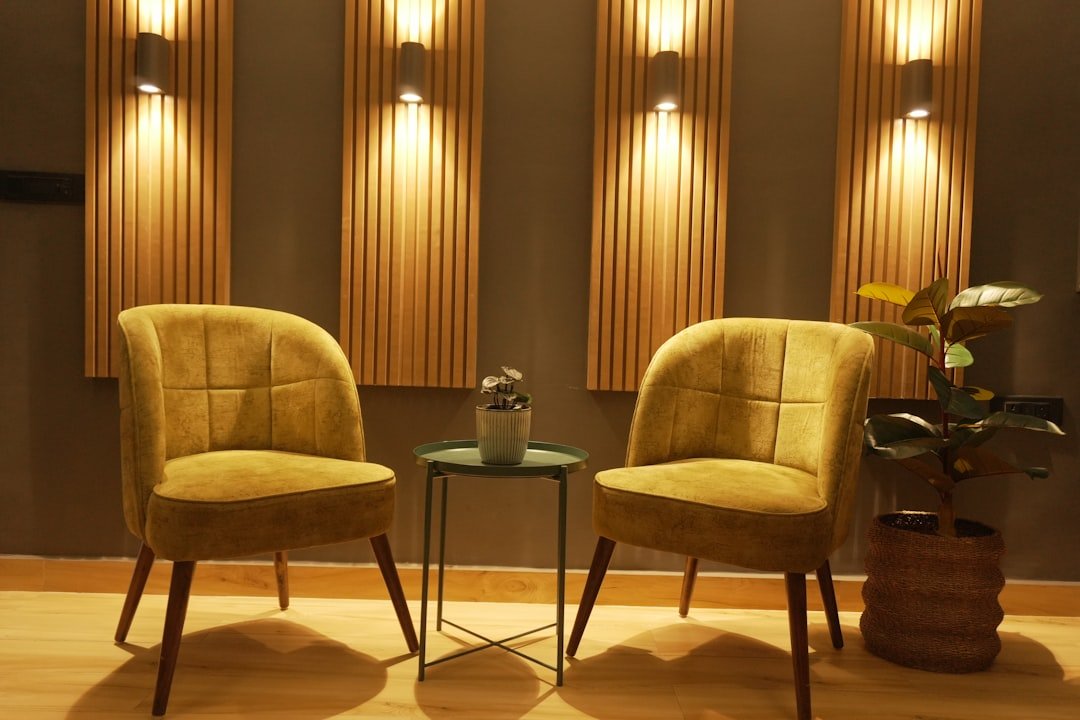
For a long time, personal style was something you put on and took out into the world. It lived in a wardrobe, and the world saw it when you did. What's shifted over the past few years is that the world now sees the room you got dressed in. The sofa behind you on a video call. The lamp in the corner of a photo. The stack of books, the rug, the strange ceramic thing on the shelf. Taste has quietly leaked out of the wardrobe and spread across the whole apartment, and furniture — of all things — has become part of how people read each other.
Style has moved beyond clothing
Some of this is simply exposure. A generation ago, only your friends saw your living room. Now interiors circulate as freely as outfits do, through apartment tours and mirror selfies and the accidental backgrounds of a thousand posted photos. The home became visible, and anything visible eventually becomes styled.
But the deeper shift is that people started reading interiors the way they'd always read clothes. A room full of vintage finds signals something quite specific about the person who assembled it. So does a space stripped down to three perfect objects, or one crammed with colour and pattern and no restraint whatsoever. None of that is really about comfort. It's the same instinct that decides between a tailored coat and a beaten-up leather jacket, applied to a coffee table. Identity found another surface to live on.
Furniture now carries cultural meaning
Which means furniture has stopped being a purely practical purchase and started behaving like fashion — with all the tribal signalling that implies. The mid-century revival, the sculptural blob furniture that took over design feeds, the sustainable brands built on visible material honesty, the Y2K-adjacent chrome and glass. Each of these belongs to a world, and buying into one is a statement about which world you'd like to be seen in.
For the brands making these objects, that changes the job entirely. A chair sold on its dimensions and its load-bearing capacity is one thing; a chair sold as a piece of a recognisable aesthetic is another, and the second is far harder to photograph. As furniture and homeware brands compete in a visual culture shaped by ecommerce, social media, and lifestyle publishing, resources such as cgifurniture.com show how product images, lifestyle scenes, close-ups, animations, and 3D assets can help present furniture as part of a broader aesthetic story. A white-background product shot can tell you what something is. It can't tell you what it means, and increasingly, meaning is what's being bought.
Homeware brands are learning from fashion
Watch how the newer homeware labels behave and the borrowing is obvious. There are drops now. Limited runs of a lamp, sold out in an hour, resold at a markup on secondary markets. There are collaborations — a fashion house and a furniture maker, a streetwear label doing a rug, an artist releasing a chair.
The rhythm has changed too. Homeware used to move at the speed of a catalogue, updated once a year if that. Plenty of brands now work in seasons, with campaign imagery that owes far more to fashion editorial than to any furniture showroom. They talk about materials the way a fashion house talks about fabric, with the sourcing and the provenance and the maker all part of the pitch. And the imagery is built social-first — shot to work as a square, to be screenshotted, to be saved to somebody's mood board and recognised months later. Selling an object stopped being enough somewhere along the way. What gets sold now is a world, and the object is the entry point.
Sustainability changes the home conversation
Running alongside all of this is a shift that complicates it in useful ways. The same conscious-consumer thinking that reshaped how people buy clothes has arrived, later but firmly, in the home.
It shows up as fewer purchases made more carefully. A well-made chair kept for twenty years instead of three cheap ones binned in sequence. Real curiosity about what a thing is made of, where the timber came from, whether the foam is recyclable, whether the piece can be repaired when something breaks. Vintage and secondhand have become genuinely desirable rather than a budget compromise — a resale marketplace find now carries more cachet in some circles than anything bought new. There's a tension here worth naming: the trend cycle wants your interior refreshed constantly, and the sustainability instinct wants you to buy a good thing once and live with it. The most interesting homeware brands are the ones trying to sit honestly inside that contradiction rather than pretending it isn't there.
Product visuals shape how furniture is understood
If furniture is being read as culture, then the images are doing the reading for most people. Very few of us encounter a sofa in a showroom anymore. We meet it as a photograph, and whatever that photograph fails to communicate simply doesn't exist.
This is why the visual grammar around homeware has become so elaborate. A close-up on a bouclé weave or the grain of oak carries material information that words can't. A room scene tells you scale, and more importantly, mood — what kind of light this piece lives in, what it sits beside, who might own it. Different angles resolve the practical doubts. Digital catalogues and social assets extend the same world across every place a person might encounter the brand. All of it is storytelling in the fashion sense, closer to a campaign than a spec sheet. The image isn't advertising the object so much as it is establishing the culture the object belongs to.
The home is becoming a lifestyle platform
There's a practical reason all this landed when it did. The home absorbed enormous amounts of life over the past few years. It became an office, a gym, a restaurant, a cinema, sometimes a studio. When a space has to hold that much of a person's existence, the things in it stop being background.
So the corner where someone works gets styled with the same care once reserved for an outfit. The kitchen becomes a stage for hosting. A reading chair by a window becomes a small ritual, photographed and shared. Fashion and interiors now overlap constantly — the same brands, the same palettes, the same references moving fluidly between what people wear and where they live. The home turned into a platform, and platforms get curated.
Final thoughts
Furniture has been absorbed into the same cultural system as fashion, and it's unlikely to leave. The objects people choose to live among say something about taste and values and mood, and they say it continuously, to anyone who sees the room. For the brands making them, the bar has quietly moved. Making a good chair was always difficult. Making a good chair that people recognise as belonging to a world they want to live inside is a different problem altogether — and it's the one that now decides which homeware labels people can name.
HOW DO YOU FEEL ABOUT FASHION?
COMMENT OR TAKE OUR PAGE READER SURVEY
Featured


BAPE® brings its streetwear legacy into the ring with UNDEFEATED’s wrestling-inspired Fall/Winter 2026 collection while expanding its design vocabulary through the TYPE 10 BAPEX®, an automatic timepiece that translates the brand’s signature camouflage into contemporary watchmaking.