
How to Light a Pergola Without Making the Seating Area Too Bright
PAGE
By PAGE Editor
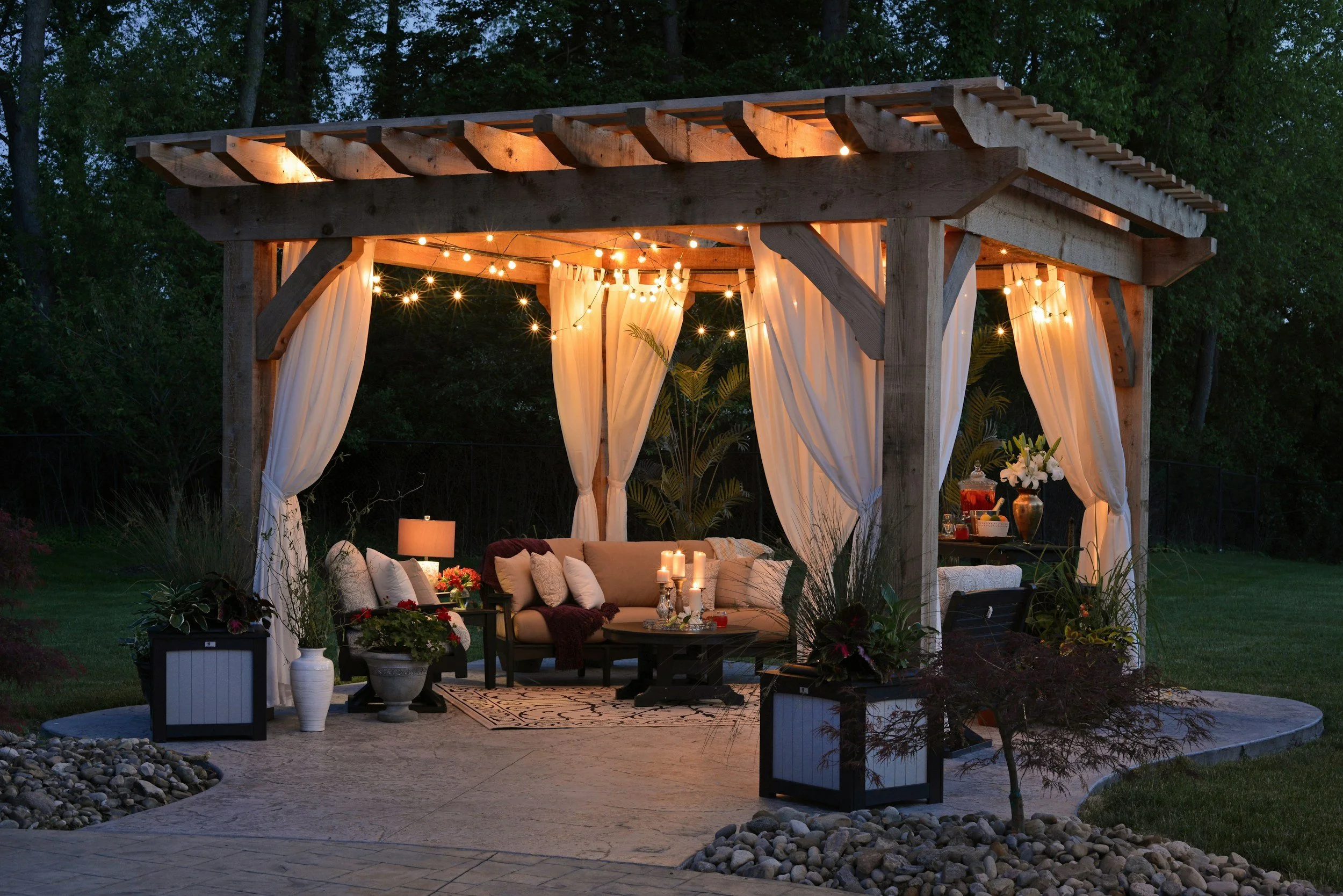
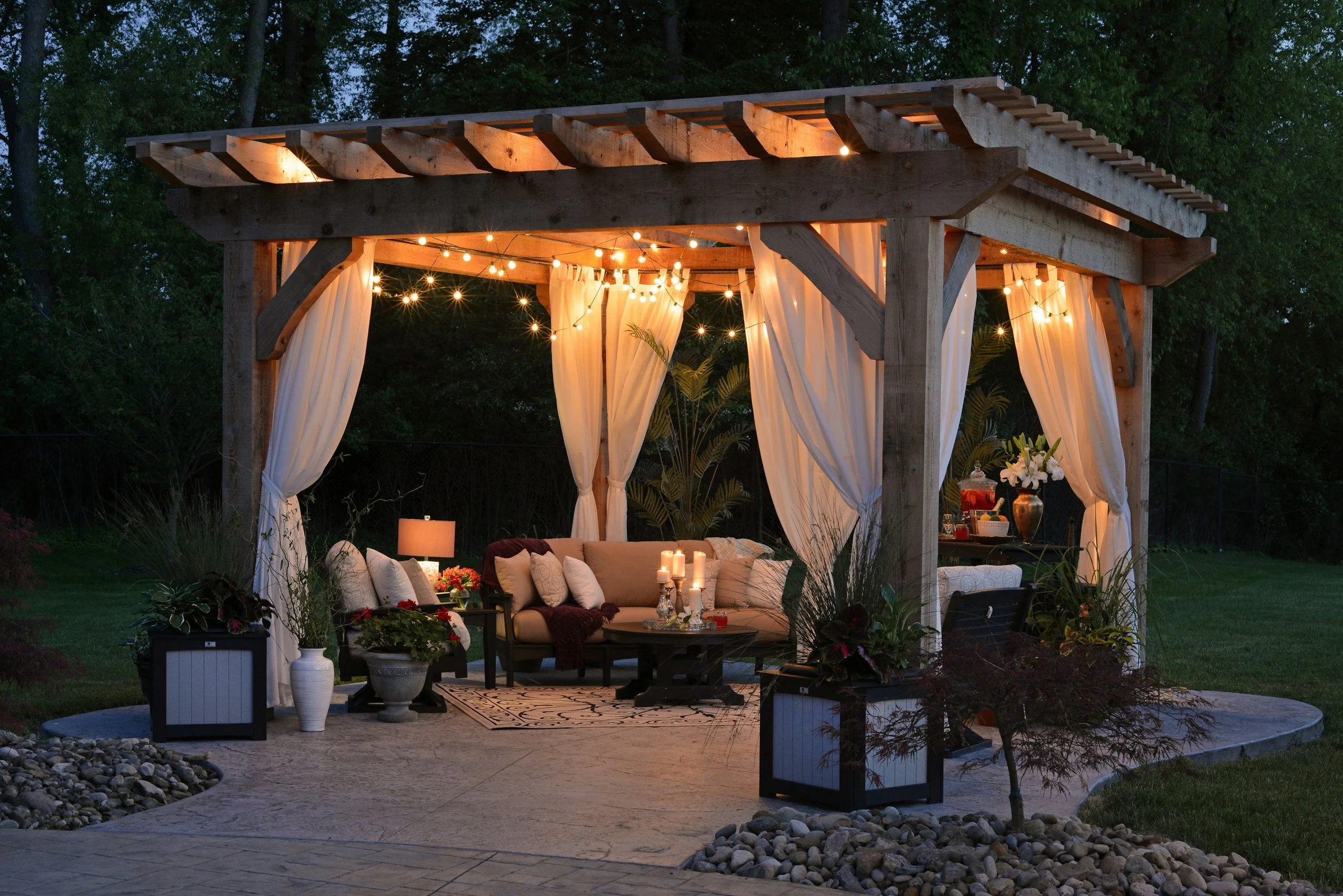
A pergola can look lovely in the late afternoon. Sunlight filters between the beams, the chairs sit comfortably in the shade, and the whole space feels like a natural place to spend an evening. Then the sun goes down, someone switches on the lights, and suddenly the atmosphere changes. The bulbs hanging overhead seem much brighter than expected. You can see every corner of the table, but looking up while talking to someone across from you becomes uncomfortable.
It's a familiar problem in outdoor spaces where lighting is chosen mainly for how it looks rather than how it feels when people sit underneath it. Good pergola lighting should make it easy to enjoy a meal, see the people around you, and move about comfortably without turning the seating area into the brightest part of the backyard. The trick is knowing where the light needs to reach and where it doesn't.
Why Lighting Feels Brighter When You're Sitting Beneath It
A string of exposed bulbs can look beautiful from the garden. Seen from a distance, the warm points of light outline the structure and give it a relaxed, welcoming appearance. Sit directly underneath those same bulbs, however, and the experience may be quite different.
Your eyes are now much closer to the light sources. Instead of seeing the bulbs as part of the overall garden scene, you may find yourself looking toward them whenever you turn your head or lean back in your chair.
This is particularly noticeable in pergolas with relatively low beams. A light strand that seems comfortably overhead while you're standing can feel surprisingly close when you're sitting at the dining table.
The problem becomes worse if the surrounding garden is dark. Bright bulbs against a nearly black background attract your attention, and the difference in brightness can make the rest of the yard harder to see.
Adding more light rarely fixes this. In fact, it may make the seating area less comfortable.
A better starting point is to look at the pergola from the chairs rather than from the lawn. Sit where people normally gather, look toward the table and across at the other seats, and notice whether the light sources are directly in your line of sight.
Astoria Lighting Co includes string lights, recessed downlights, and pendant lighting among its pergola options. These fixtures create different experiences because they place light at different heights and direct it toward different parts of the space.
The most attractive option from outside the pergola isn't necessarily the most comfortable one underneath it.
Give the Table Enough Light Without Brightening Everything Else
Think about what people actually do beneath a pergola. They might eat dinner, read, play cards, or sit talking long after the plates have been cleared.
Those activities don't all need the same amount of light.
During dinner, it's helpful to see the food clearly and recognize the faces around the table. Once everyone moves to the lounge chairs, a softer glow may be more pleasant. If the whole structure is illuminated at one fixed brightness, one activity is likely to feel less comfortable than another.
This is where separating decorative light from useful table lighting can make a difference.
String lights create atmosphere, but asking them to illuminate the entire dining table may require more brightness than you want overhead. A carefully positioned downlight can put light where people need it while allowing the decorative bulbs to remain softer.
The effect is similar to a dining room inside the house. A pendant over the table can provide useful illumination without requiring every ceiling light in the room to be turned on.
Outdoor lighting follows the same basic idea, although fixtures must be suitable for their exposure to weather and moisture.
When designing pergola lighting, it helps to decide which part of the structure needs the clearest illumination. A dining table may deserve more attention than an empty corner. A seating area may benefit from gentle surrounding light instead of a bright fixture directly above the chairs.
There is no reason every beam or post has to carry a light simply because there is room for one.
The Beam Layout Can Work With You or Against You
Pergolas have a natural pattern of posts, crossbeams, and open spaces. That structure gives homeowners several choices for arranging lights, but some arrangements work better than others.
A single line of bulbs following the outer edge can outline the pergola without placing bright points directly over people's heads. Parallel strands between beams can create a fuller canopy, although the number and position of the bulbs need careful thought.
On a smaller pergola, filling every gap between the beams with lights may make the structure look crowded. It can also create more brightness than the space needs.
Astoria Lighting Co describes using clean parallel runs or perimeter lighting for pergolas, with wiring concealed along the structure where practical. The layout is worth considering before choosing the final number of bulbs, because the beams themselves can help create an organized design.
You might prefer a row of warm lights along two sides, leaving the center of the structure relatively open. Another pergola may work better with a few evenly spaced runs, especially if the dining table occupies a large part of the floor area.
The important thing is not to copy a photograph without considering the actual dimensions of your space.
A pergola that's wide and tall can accommodate a different arrangement from one built closely around a four-person dining table. The distance between the bulbs and the people underneath them changes the result.
A Comfortable Glow Depends on More Than Bulb Color
Many people choose warm-white bulbs because they want an inviting, relaxed atmosphere. That's a sensible preference for a place where people gather in the evening, but the color alone won't prevent glare.
A warm bulb can still feel unpleasantly bright if it hangs directly in front of someone's eyes.
Bulb size and finish affect the appearance too. Clear bulbs with visible filaments have a distinct decorative character, while frosted globes can diffuse light and make the bright source less harsh to look at.
The right choice depends partly on how close people will be to the fixtures.
In a tall pergola with generous overhead space, larger decorative bulbs may provide an attractive visual feature. In a lower structure, smaller bulbs or more carefully shielded fixtures may be more comfortable.
Brightness controls give homeowners another useful option. Astoria Lighting Co describes app-controlled brightness for its pergola and covered-patio lighting arrangements, allowing string lights to provide atmosphere instead of carrying the full responsibility for lighting the space.
That flexibility is particularly valuable when the pergola serves different purposes throughout the evening.
You might want a brighter setting while serving dinner, then lower the lights once everyone is sitting back and talking. The structure doesn't need to look exactly the same at every hour.
Good lighting should adjust to the people using the space, not force everyone to accommodate one fixed setting.
Don't Forget What Happens Beyond the Pergola
It's easy to concentrate so much on lighting the pergola that the rest of the backyard gets overlooked.
Picture sitting beneath a brightly illuminated structure while the lawn and garden beyond it are almost completely dark. The pergola may look attractive from outside, but from your seat the yard can seem to end abruptly at the edge of the light.
The contrast can make the bulbs overhead appear even brighter.
A little light elsewhere in the garden can help. It might be a softly illuminated tree, a low planting bed, or a path leading back to the house. These smaller points of light give your eyes somewhere to go beyond the pergola.
They don't need to match the brightness of the seating area. In fact, they often work better when they remain subtle.
For outdoor living areas, a balanced view can be more relaxing than a bright center surrounded by darkness.
This also affects practical movement. Someone leaving the pergola to return to the house should be able to recognize the path and any steps without suddenly moving from strong light into complete darkness.
A softly lit route often does more for comfort than another strand of bulbs overhead.
Think About the Structure Before Hanging Lights
Pergolas may look similar from a distance, but their construction varies. Some have substantial timber beams secured to foundations, while others use lighter metal or decorative components. A recently built pergola may also have different opportunities for concealed wiring than one that's already finished.
Those details affect how and where lights can be mounted.
A beam shouldn't automatically be treated as a suitable electrical mounting point simply because it seems sturdy. Fixture weight, cable support, weather exposure, and the manufacturer's installation requirements all need consideration.
The outdoor string-light service information from Astoria Lighting Co recommends coordinating wiring before a new pergola is finished, where possible. Planning electrical routes during construction can make it easier to keep wiring discreet rather than adding visible cables across completed beams.
For an existing structure, a qualified installer can assess what mounting arrangements are appropriate without damaging decorative surfaces or compromising electrical safety.
Water exposure deserves attention even beneath a pergola. Many pergolas have open roofs, so fixtures may still be exposed to rain. Equipment and connections must be rated for their actual installation conditions.
Homeowners should also avoid suspending lights from improvised hooks, overloading electrical connections, or working on elevated wiring without suitable professional help.
A neat installation isn't simply about hiding cables. It also means the lights are properly supported and suited to the outdoor environment.
Try the Lighting While the Pergola Is Being Used
A lighting arrangement can look wonderful when the patio is empty. The real test happens when people are sitting around the table.
After sunset, switch on the lights and spend some time in the space. Sit in more than one chair if possible. Notice whether a bulb shines directly toward your eyes when you look at someone opposite you. Check whether the tabletop is bright enough for an ordinary meal without feeling harsh.
Then move to any lounge seating nearby. The lighting that works for dining may feel different when you're leaning back.
Pay attention to reflections from glass tabletops, shiny serving trays, and nearby windows. A bright fixture can become distracting even when it isn't directly in your line of sight.
Adjustable brightness is helpful here, but don't use dimming to disguise a poor layout. If one bulb remains uncomfortable at every setting, its placement may deserve another look.
For pergola lighting, the best arrangement often becomes clear through ordinary use rather than from a drawing or a daytime photograph.
You should be able to look at your guests, enjoy the garden beyond the beams, and see what you're doing without constantly noticing the fixtures above you.
Make the Evening Feel Relaxed, Not Overlit
A pergola doesn't need a ceiling full of bright bulbs to become an inviting outdoor room. A few thoughtfully placed lights can reveal the table, soften the beams, and give the seating area a comfortable glow without overpowering the garden around it.
Before choosing pergola lighting, sit beneath the structure after dark and consider where people will look, eat, and move. Decide which areas need useful illumination and which only need a little atmosphere. Then choose a layout that supports those activities rather than filling every available beam with lights.
The best result is usually the one that lets you forget about the lighting altogether. The conversation carries on, the table is easy to see, and nobody has to move their chair to escape a bulb shining into their eyes.
HOW DO YOU FEEL ABOUT FASHION?
COMMENT OR TAKE OUR PAGE READER SURVEY
Featured

Certificate of Analysis is the primary document used to assess the quality, purity, and identity of synthesized peptides.