
How to Turn a Photo into a Brainrot Meme Video
PAGE
By PAGE Editor
A single photo can become a short brainrot clip when you give it motion, a joke, and the right level of internet weirdness. The goal is not polished realism; it is a quick visual gag people understand before they scroll away.
This guide rewrites the original tutorial into a practical guest post for creators who want to convert portraits, pet photos, product shots, or character images into shareable meme videos. A brainrot video generator is the fastest place to start when the final format should feel native to short-form feeds.
What Is a Photo-to-Brainrot Video?
It is a short AI-generated video that uses a still image as the visual base, then adds exaggerated movement, meme timing, captions, sound ideas, or surreal behavior. The image gives the model identity and composition; the prompt gives it the joke.
If consistency matters, begin with photo to video creation instead of writing only from text. The original photo helps preserve the face, product shape, pet, or character while the prompt controls the new action.
Before You Generate: Pick the Right Photo
Use a clear subject with visible edges and enough lighting.
Avoid busy backgrounds unless the background is part of the joke.
Choose one emotion or action to exaggerate.
Crop for the platform before generating if you already know the final format.
Prompt Ideas for Photo-Based Brainrot Clips
Turn a serious selfie into a dramatic courtroom confession, zoom-in reaction, over-the-top lighting, meme caption space at top.
Make a pet photo look like a CEO announcing a company-wide snack policy, office background, tiny suit, serious camera push.
Animate a product photo as if it just won a talent show, stage lights, audience reaction, quick celebratory ending.
Turn a baby photo into a tiny motivational speaker pointing at a chart, bright room, energetic hand gestures, funny caption beat.
Make a character image perform a surprised double take, then confidently walk out of frame, fast social-video pacing.
When you need more styles beyond meme edits, an AI video maker gives you room to test ads, explainers, reels, and character clips from the same starting image.
How to Turn Any Photo into a Brainrot Video
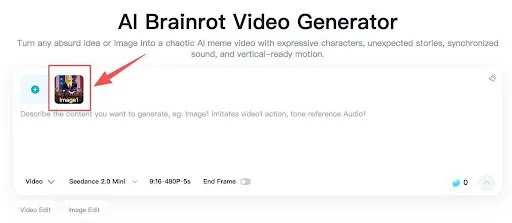
Step 1: Upload Your Photo
Choose a high-quality image with a single main subject. The cleaner the photo, the easier it is for the model to preserve the important details.
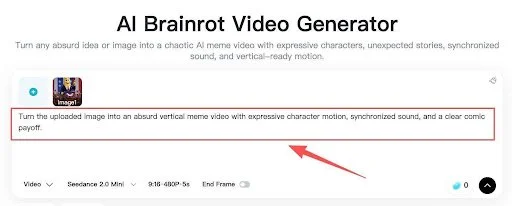
Step 2: Add a Brainrot-Style Prompt
Write one absurd but readable action. Mention the mood, camera movement, and caption idea only if they support the joke.
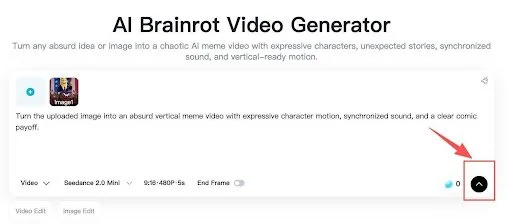
Step 3: Generate and Preview
Create the video and check whether the subject still looks recognizable, the action is visible, and the first second has a strong hook.
Step 4: Polish the Clip
Regenerate with small changes, add captions or sound in your editor if needed, and export the version that feels easiest to understand.
Common Mistakes to Avoid
Writing a prompt with too many actions, which makes the motion messy.
Using an image where the subject is tiny or partially hidden.
Trying to make every clip louder instead of making the joke clearer.
Skipping captions when the joke needs context.
For deliberately comic styles, an AI funny video maker can also help when the goal is a lighter, more broadly humorous edit rather than full brainrot energy.
FAQ
Can I use old photos?
Yes, as long as the subject is clear enough. Higher resolution photos usually give the model more reliable details.
How long should the clip be?
Short is usually better. For meme videos, the strongest versions often land the joke in a few seconds.
Conclusion
A good photo-to-brainrot video starts with a clean image and one simple joke. Keep the prompt readable, make the first frame count, and refine the action until the clip feels instantly shareable.
HOW DO YOU FEEL ABOUT FASHION?
COMMENT OR TAKE OUR PAGE READER SURVEY
Featured
Twelve times on input and twelve times on output is not a ratio you usually find inside a single vendor's lineup.