
Keep Fashion Campaign Motion Inside Approved Meaning
PAGE
By PAGE Editor
A fashion campaign draft can preserve the palette, model pose, and dramatic lighting while changing the thing that matters most. A seam moves to the wrong side. A handwoven surface becomes glossy. A ceremonial symbol turns into a decorative repeat. The clip feels faithful because the mood survived, yet the garment and its cultural meaning did not.
Motion tests are useful before a final shoot or edit, but only when meaning-bearing details have clear boundaries. The right review does not ask whether a candidate looks “on brand.” It asks which visible elements carry the campaign idea and whether each remained true.
Name the Campaign Idea Before Choosing Motion
Write the campaign idea as a relationship, not an adjective. “The rigid coat becomes fluid as the wearer enters public space” gives the team something observable. “Bold, elevated, and cinematic” describes tone without explaining what the viewer should notice or how the garment participates.
Underline the subject, change, and setting in that sentence. Those three parts create the motion brief. The subject must remain identifiable, the change must unfold visibly, and the setting must not contradict the collection story. If the sentence cannot supply all three, motion is being chosen before the idea is ready.
Attach one approved still to the brief and record why it was approved. The reason might be silhouette, material response, styling relationship, location context, or a specific symbol. A reference without an approval reason encourages reviewers to preserve whatever they personally find attractive.
Identify the Details That Carry Cultural Meaning
Build a tripwire sheet with three columns: silhouette, material, and symbol. Silhouette covers proportions, construction lines, openings, and how the garment sits on the body. Material covers texture, weight, reflectivity, transparency, and movement. Symbol covers motifs, colour relationships, objects, gestures, and locations with cultural or historical significance.
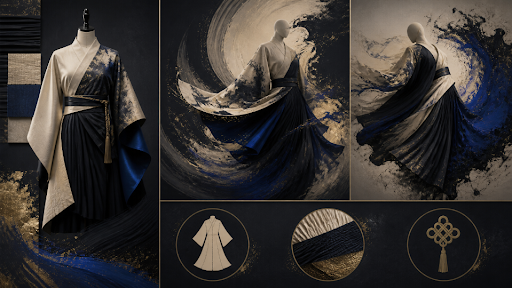
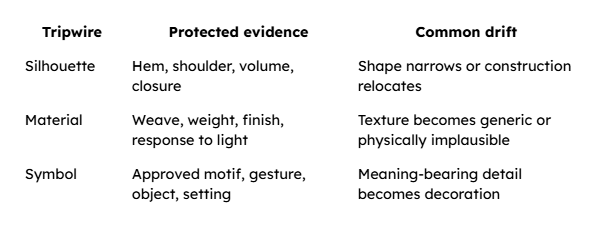
For every protected item, add a source and a reviewer. A designer may own construction, a material specialist may own fabric behaviour, and a cultural adviser may own a symbol or setting. Visual polish does not give one reviewer authority over all three columns.
Record forbidden inferences too. If a location is a visual reference rather than the collection's origin, say so. If a motif is licensed for one use, note the boundary. The tripwire should prevent a moving draft from telling a broader story than the campaign can support.
Include styling relationships that would change meaning if separated. A garment may be intentionally paired with jewellery, footwear, or an object that completes the collection's argument. Protect the relationship, not only each item. A candidate that keeps both objects but shifts one into the background can still rewrite their hierarchy.
Stage Competing Treatments from the Same Reference
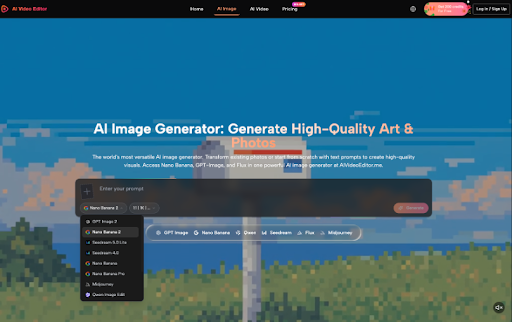
AIVideoEditor.me presents text-, image-, and existing-video routes alongside prompt-based transformation. Its official editing guidance frames the result as a generated version to review and refine, not a frame-perfect copy. That makes controlled comparison more useful than asking the system to discover the campaign's direction.
Create two treatments from the same approved still and the same protected list. Change only one motion proposition, such as camera movement or environmental rhythm. Keep the duration, aspect ratio, reference crop, and decision question consistent. The comparison should reveal what the treatment contributes, not which setup received more favourable conditions.
With a video editor AI, one prompt might ask for a slow lateral camera move while preserving garment construction, weave, motif placement, lighting direction, and setting. A second could hold the camera still and introduce motion only in fabric and background. Save both prompts exactly.
AIVideoEditor.me can make the ideas visible enough to discuss, but the candidates remain planning drafts. Do not pass generated product details to commerce, manufacturing, or press teams. The approved garment images and design records remain the factual source.
Keep identity out of the experiment unless likeness rights and references are explicit. If the campaign depends on a real performer, use approved footage and review the candidate for facial, body, and gesture drift. A generic replacement cannot stand in for consent.
Music and sound should enter after the visual comparison. A persuasive track can make one candidate feel more resolved even when its garment detail drifts. Judge both treatments silently first, then use the same temporary audio bed for a rhythm pass. Sound selection and licensing remain separate production decisions.
Review Drift Across Silhouette Material and Symbol
Run three passes instead of one general beauty review. In the silhouette pass, compare the outline and construction checkpoints. In the material pass, watch how texture responds to light and movement. In the symbol pass, mute the soundtrack and list what the setting, objects, colours, and gestures appear to mean.
Use pass, repair, and reject at the item level. A background rhythm that competes with the garment may be repairable. A moved closure or invented motif is a reject because the candidate changes the product. An ambiguous cultural implication also blocks approval until a qualified reviewer resolves it.
Play both candidates beside the still at normal speed, then pause at the opening, first major movement, and final pose. These checkpoints expose gradual drift that a memorable ending can hide. A garment that begins accurately and finishes with different volume has not preserved its silhouette.
Ask which treatment makes the campaign relationship clearer without adding explanation. If both need a paragraph of defence, the motion proposition is not doing useful editorial work. Rejecting both is a valid result; the still campaign may not need generated motion.
Capture rejection reasons in the tripwire sheet. “Wrong feel” will not help the next editor. “Sleeve volume narrows after the first turn” or “location symbol becomes a repeating pattern” ties the decision to visible evidence and reduces the chance that the same drift returns under a different prompt.
Hand the Winning Draft to Human Production
The decision packet should include the campaign sentence, approved reference, tripwire sheet, prompts, candidate links, item-level verdicts, and the reason one treatment won. It should also identify which details must be recreated from real garments, licensed locations, or approved footage during production.
When fashion teams edit videos online, maintain a visible label on planning drafts. AIVideoEditor.me can help compare motion directions, but it does not convert a concept into product evidence or clear the rights attached to people, artwork, music, and place.
Human production can borrow the camera rhythm, pause length, or transition logic without copying generated inaccuracies. Recheck the finished footage against the same tripwires. Moving from a generated draft to a shoot does not retire the campaign's meaning boundaries.
If a draft is shared outside the core team, export it with a visible planning status in the file name and surrounding message. Do not bake a misleading mark into the image itself, but make the asset's nonfinal status impossible to miss in the delivery package. This protects press, retail, and social teams from treating exploration as approved campaign material.
A useful fashion motion study narrows a decision. It shows which treatment expresses the campaign relationship while keeping silhouette, material, and symbol intact. The tripwire review gives creative experimentation room to move, then stops it exactly where visual atmosphere would start rewriting the collection.
HOW DO YOU FEEL ABOUT FASHION?
COMMENT OR TAKE OUR PAGE READER SURVEY
Featured



Finding the right job in human resources or recruitment can take time, especially when you're searching online.