
Tips for Recovering Safely at Home After Hospitalization

PAGE
By PAGE Editor
Coming home after a hospital stay can feel like a relief. Then, five minutes later, it can feel a little overwhelming. New medications, low energy, follow-up instructions, and simple household tasks can suddenly become a lot to manage.
And that concern is real. Two‑thirds of older adults discharged from the hospital each year face new difficulty with ADLs, including walking, and are unable to take care of themselves when they leave the hospital.
The good news? A safer recovery at home does not require perfection. It requires planning, clear communication, and a few steady habits that make each day easier.
Essential Preparations for Post-Hospital Care at Home
A smooth recovery usually starts before you settle back into your favorite chair. Small details matter after discharge, and missed details can turn into setbacks. So, before life gets busy again, it helps to set up your home, your support team, and your supplies.
Plan Your Space Before You Need It
A smart plan for post-hospital care at home begins with the basics. Clear walking paths. Remove loose rugs. Move cords out of the way. Keep water, medications, glasses, tissues, and a phone within reach.
Place a sturdy chair near the bed if standing feels difficult. Add nightlights in hallways and bathrooms. Keep chargers plugged in where they are easy to access.
If you or a loved one has Medicare, this may also be a good time to find a primary care office that offers patient-centered visits and insurance support. Searching local options such as the best primary care physician near me can help you learn more about Oak Street Health’s services.
Coordinate Help and Instructions
“Call me if you need anything” sounds kind, but it is not a plan. Give people specific jobs.
One person can handle pharmacy pickup. Someone else can bring meals. Another can drive to appointments or check in each evening. Keep discharge papers, emergency contacts, medication lists, and appointment details in one folder so nobody has to hunt for them during a stressful moment.
Build a Recovery Toolkit
Your recovery kit does not need to be fancy. Start with wound supplies, a thermometer, a pill organizer, a notebook, and access to telehealth if your care team offers it.
Some people may also need a blood pressure cuff, pulse oximeter, or glucose meter. Use these only as directed, and ask your care team what numbers should prompt a call.
Once your space, supplies, and support system are ready, you remove a lot of the avoidable stress from coming home.
Key Safe Home Recovery Tips to Follow After Hospital Discharge
After discharge, the goal is to turn instructions into a routine you can actually live with. These safe home recovery tips may sound simple, but they can prevent big problems.
Follow Discharge Directions Closely
Your paperwork should explain medications, wound care, diet, activity limits, and follow-up appointments. Read it slowly. Then read it again with a caregiver if possible.
If anything feels unclear, call before guessing. This is especially important with blood thinners, antibiotics, insulin, and pain medicine. A quick question now can prevent a serious issue later.
Create a Daily Recovery Schedule
A written routine makes hospital discharge recovery steps much easier to follow. Write down times for meals, medications, rest, short walks, breathing exercises, and symptom checks.
You do not need a color-coded binder unless that makes you happy. A notebook on the kitchen counter works just fine.
Compare Common Recovery Tools
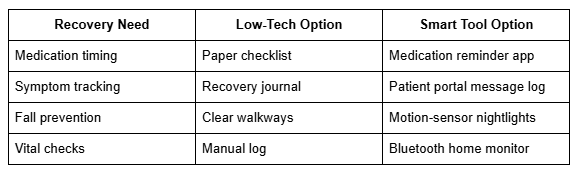
Steady routines reduce missed doses, overlooked symptoms, and those “wait, did I already take that?” moments.
Holistic Wellness Strategies for Recovering After Hospitalization
Recovery is not only about medicine. Food, movement, mood, and sleep all play a role in recovering after hospitalization. When these areas work together, your body has a better chance to rebuild strength.
Eat for Healing, Not Just Fullness
Protein supports tissue repair and muscle strength. Colorful fruits, vegetables, whole grains, and fluids help with energy and digestion.
If your appetite is low, skip the pressure of big meals. Try soups, smoothies, yogurt, eggs, nut butter, or smaller meals more often. Meal delivery or help from family can also make eating well less of a chore.
Move Gently and Safely
Movement helps circulation, lung function, and strength. But more is not always better. Follow your surgeon’s or doctor’s activity limits.
For home recovery after surgery, short walks around the house may be the right starting point. If travel is difficult, ask whether virtual physical therapy is an option.
Protect Mental Health and Sleep
Feeling anxious, foggy, or discouraged after a hospital stay is common. Your body has been through a lot. So has your mind.
Keep evenings calm. Try short breathing exercises. Get daylight in the morning when possible. Avoid long late-day naps if they interfere with nighttime sleep.
Good food, gentle activity, emotional support, and rest all help. Still, they work best when paired with medical guidance.
Staying Connected with Your Care Team and Primary Care Physician
Staying in touch after discharge is not being “needy.” It is being smart. Good communication helps small concerns get handled before they become complications.
Schedule Follow-Ups Early
Follow-up care should be treated as part of recovery, not an optional extra. The pooled adjusted effect measure was 0.79 (95% CI, 0.69‑0.91), indicating that outpatient follow‑up visits were associated with a 21% lower risk of readmission.
Schedule visits as soon as possible, especially if medications changed or you were treated for a serious condition.
Use Patient Portals and Health Apps
Patient portals can help you view lab results, ask questions, confirm medication changes, and send symptom updates.
Keep messages short and specific. Mention what changed, when it started, how severe it is, and what you have already tried. Clear details help your care team respond faster.
Know Who to Call
Call your primary care team for medication questions, mild symptom changes, or follow-up planning.
Call urgent care or emergency services for chest pain, severe shortness of breath, heavy bleeding, sudden confusion, or signs of stroke. When symptoms feel sudden or severe, do not wait and hope it passes.
Regular check-ins make recovery feel less like guesswork and more like a guided process.
Proactive Steps to Prevent Readmission and Complications
Preventing readmission often comes down to noticing changes early. This is where hospital discharge recovery steps become your safety net.
Watch for Common Warning Signs
Do not brush off fever, spreading redness, wound drainage, dizziness, dehydration, worsening pain, or new swelling. These signs may not always mean something serious, but they deserve attention.
It is usually easier to handle a small concern at 2 p.m. than a crisis at 2 a.m.
Prevent Medication Errors
Use one pharmacy when possible. Ask about interactions. Review every medication after discharge, including prescriptions, over-the-counter drugs, and supplements.
If doses changed, update pillboxes right away. Digital pill dispensers or caregiver reminders can help when the schedule feels confusing.
Make an Emergency Plan
Write down who to call, where to go, and who can step in if the main caregiver becomes unavailable. Keep copies near the bed, on the fridge, and by the front door.
A plan created during a calm moment is much easier to follow during a stressful one.
Advanced and Practical Tools for Home Recovery After Surgery
Technology can add comfort and confidence during home recovery after surgery, especially when symptoms need watching.
Wearable Recovery Devices
A smartwatch or wearable tracker may help monitor heart rate, sleep, movement, and oxygen trends. These devices do not replace a clinician, but they can help you spot patterns worth discussing.
AI Chat and Reminder Tools
Some apps can remind you about medications, organize symptoms, or suggest when to contact a nurse line. Helpful? Yes. A replacement for medical care? No.
If symptoms are serious, call a real person or seek urgent care.
Remote Monitoring Services
Some care teams offer remote monitoring for blood pressure, oxygen, weight, or blood sugar. If you receive equipment, ask exactly how often to check and which numbers should be reported.
Technology is useful, but people still matter most.
Resources for Family Members and Caregivers
Caregiving can be meaningful. It can also be exhausting, confusing, and messy. Support helps caregivers stay steady.
Learn the Basics Before Discharge
Before leaving the hospital, caregivers should ask nurses to demonstrate wound care, transfers, device care, and medication timing. If allowed, record a quick phone video for later reference.
Share the Work
One person should not carry everything. Split up rides, meals, laundry, pharmacy trips, and check-in calls when possible.
Even small help counts.
Use Community Support
Senior centers, disease-specific organizations, meal programs, faith groups, and online communities can fill important gaps. A planned break can help a caregiver return with more patience and energy.
Final Thoughts on Safer Healing at Home
Healing at home feels easier when you have a plan you trust. Focus on safe rooms, clear instructions, steady meals, gentle movement, accurate medications, and quick communication with your care team.
If you are recovering after hospitalization or helping someone with post-hospital care at home, remember this: small daily choices add up. Ask questions early. Accept help. Move carefully. Rest without guilt.
Recovery may take time, but with the right support, each day can feel a little more manageable.
Common Questions About Post-Hospital Care at Home
How many days does it take to recover after a hospital stay?
It depends on the illness, surgery, age, and strength before admission. Some people improve in days. Others need weeks or longer. Ask your doctor for a personal timeline and activity limits.
How to care for someone after anesthesia?
Keep them resting, hydrated if allowed, and away from driving, alcohol, or major decisions until cleared. Watch for vomiting, confusion, trouble breathing, severe pain, or unusual sleepiness, and call the care team if worried.
What signs should prompt immediate contact with my doctor?
Call for fever, worsening pain, wound redness, new swelling, shortness of breath, chest pain, fainting, confusion, or medication reactions. If symptoms feel severe or sudden, seek urgent help.
HOW DO YOU FEEL ABOUT FASHION?
COMMENT OR TAKE OUR PAGE READER SURVEY
Featured





Wellness has increasingly become part of how we think about everyday life. It influences the way we design our homes, choose personal care products, and create moments of quiet in otherwise busy schedules.