
What to Know Before Buying a Commercial Inflatable Water Slide
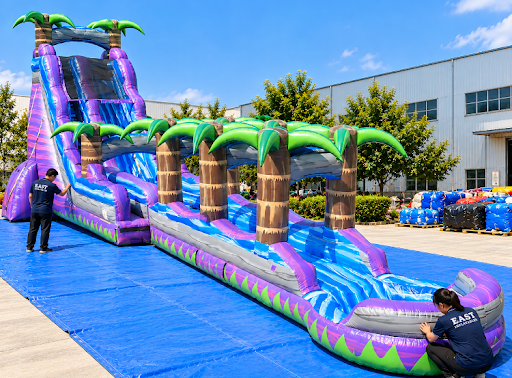
PAGE
By PAGE Editor
Commercial inflatable water slides are popular attractions at summer birthday parties, school celebrations, community festivals, and outdoor events across the United States. For event rental businesses, they offer an opportunity to expand beyond traditional bounce houses and attract more customers during warmer months.
However, choosing the right water slide involves more than comparing designs and prices. Size, construction quality, safety requirements, transportation, and maintenance all affect how practical and profitable the equipment will be.
Before investing, rental operators should consider several factors that can influence long-term performance.
Choosing the Right Water Slide for Your Rental Business
Not every commercial inflatable water slide suits every rental market.
Businesses serving residential birthday parties may benefit from medium-sized slides that fit comfortably in backyards. Larger attractions may be better suited to school carnivals, summer camps, and community festivals with more available space.
While taller slides can create a stronger visual impression, they may require additional installation space, transportation capacity, and staff.
Buyers should evaluate the complete dimensions, including length, width, and height, along with the manufacturer's required clearances, anchoring arrangements, and blower placement.
For many rental companies, a water slide that fits a wider variety of venues may generate more consistent bookings than a larger attraction with limited installation options.
Inflatable Water Slides With Pools vs. Landing Pads
One important purchasing decision is choosing between different landing arrangements.
Water Slides With Pools
These designs incorporate an inflatable pool at the bottom of the slide. They are commonly used for backyard summer parties and outdoor celebrations.
However, rental operators must consider water supply, drainage, cleaning, and the time required to empty and dry the pool after each event.
Water Slides With Landing Pads
Some commercial water slides feature a manufacturer-designed landing pad or splash landing area instead of a deeper pool.
Depending on the design, landing pads may simplify certain aspects of water management, although proper drainage and drying are still necessary.
Neither option is automatically better. The choice depends on the intended users, available space, and operating requirements. Buyers should also confirm that the landing arrangement is specifically designed and approved by the manufacturer for the slide.
Why Commercial-Grade Materials Matter
Commercial inflatable water slides undergo repeated inflation, deflation, transportation, folding, and exposure to moisture.
Many manufacturers use PVC-coated fabrics for commercial inflatables. For example, some commercial inflatable water slides are manufactured using 0.55 mm PVC-coated fabric, with additional reinforcement in areas exposed to repeated stress.
Material thickness alone does not determine durability. Fabric strength, coating quality, stitching, reinforcement, and structural design also matter.
High-stress areas include climbing lanes, slide connections, entrances, landing sections, and anchoring points. Depending on the design, these areas may require additional stitching, PVC reinforcement, or webbing.
Before purchasing, buyers should request detailed material specifications and, where possible, photographs or videos showing important construction features.
An attractive design can help generate bookings, but suitable construction is essential for repeated commercial use.
Understand U.S. Safety Requirements Before Purchasing
Commercial inflatable attractions may be subject to state and local safety regulations in the United States. Requirements vary depending on the jurisdiction, equipment type, and intended operation.
ASTM F2374 is an important standard relating to inflatable amusement devices. Rental operators should verify the applicable requirements and adopted standard editions in their location, including any inspection, registration, or permitting obligations.
Before purchasing, buyers should request operating documentation covering:
Maximum users and weight limits
Anchoring and ballast requirements
Wind limits and weather restrictions
Blower specifications and electrical requirements
Installation clearances and supervision
Inspection and maintenance procedures
Outdoor inflatables require active supervision and attention to changing weather conditions. Operators should follow manufacturer instructions and any stricter local requirements.
Buyers should also confirm that the supplied blower is suitable for the intended U.S. electrical system.
Calculate the Total Cost of Ownership
The purchase price is only one part of a commercial water slide's total cost.
Rental companies should also consider shipping, applicable import charges, blowers, transportation, labor, storage, cleaning, maintenance, and insurance.
A larger slide may command a higher rental rate but could require additional staff and a larger delivery vehicle.
One way to evaluate an investment is to calculate the number of bookings needed to recover the initial cost.
Break-even bookings = Total initial investment ÷ Contribution per booking
Contribution per booking is rental revenue minus the variable expenses associated with that rental.
For example, a water slide requiring a $5,000 initial investment and generating $250 in contribution per booking would need approximately 20 bookings to recover the initial investment, before ongoing fixed costs.
This is an illustrative calculation. Actual profitability depends on local demand, competition, seasonal bookings, and operating expenses.
How to Choose a Commercial Inflatable Water Slide Manufacturer
Selecting a reliable manufacturer is an important part of purchasing commercial inflatable equipment.
A supplier should provide clear product specifications, construction information, operating documentation, and realistic production and delivery estimates.
Manufacturers such as East Inflatables offer a range of commercial inflatable water slides for event rental businesses, with options including commercial-grade PVC materials, reinforced stitching in high-stress areas, and customized designs and dimensions.
Before ordering, buyers should confirm the exact dimensions, packed weight, required blower, warranty terms, and available repair support.
Customization can be useful for specific venue requirements or customer preferences. However, changes to slide height, climbing sections, landing areas, or structural dimensions should be reviewed by the manufacturer.
For overseas purchases, buyers should also understand the shipping terms. Delivery to a U.S. port may not include customs clearance, destination charges, or transportation to the final address.
Clarifying these details helps businesses compare suppliers and avoid unexpected expenses.
Plan for Transportation, Cleaning, and Storage
A water slide's packed dimensions and weight can significantly affect everyday operations.
Before buying larger equipment, rental operators should consider vehicle capacity, unloading arrangements, storage space, and staffing requirements.
Water slides also need careful cleaning and drying after use. Moisture can remain in folds, seams, and landing areas, making proper drying especially important before storage.
Routine inspections should cover fabric surfaces, seams, climbing areas, anchoring components, and blower connections.
Equipment showing damage that could affect safe operation should be removed from service until properly assessed and repaired.
Maintaining inspection and repair records can help businesses manage equipment condition and long-term maintenance costs.
Frequently Asked Questions About Commercial Inflatable Water Slides
What size inflatable water slide is best for a rental business?
The ideal size depends on customer demand, available event spaces, transportation capacity, and staffing. Medium-sized slides may provide greater flexibility for residential rentals, while larger attractions can suit schools and festivals.
Are commercial inflatable water slides different from residential models?
Commercial models are intended for specified commercial operating conditions and repeated use. Residential models are generally designed for more limited private use. Buyers should verify each product's intended use, specifications, and applicable safety requirements.
Can commercial inflatable water slides be customized?
Many manufacturers offer options for colors, themes, dimensions, and selected design features. Structural modifications should be evaluated by the manufacturer to ensure the finished product remains suitable for its intended operation.
Making the Right Investment for Long-Term Growth
A commercial inflatable water slide can be a valuable addition to an event rental inventory, particularly for businesses serving summer parties, schools, and outdoor celebrations.
However, the best investment is not necessarily the tallest slide or the cheapest model.
The right commercial inflatable water slide is one that customers want to rent, staff can operate efficiently, and the business can maintain season after season.
HOW DO YOU FEEL ABOUT FASHION?
COMMENT OR TAKE OUR PAGE READER SURVEY
Featured

Certificate of Analysis is the primary document used to assess the quality, purity, and identity of synthesized peptides.