
5 Emerging Gen Z Wedding Trends — Wezoree Research

PAGE
By PAGE Editor
Gen Z is getting married, and doing it differently. Born between 1997 and 2012, this generation is entering the wedding market with values, aesthetic instincts, and planning behaviors that diverge meaningfully from everyone who came before.
This is not the first generation to push back against traditional wedding conventions, but Gen Z's disruption runs deeper than the millennial minimalism that preceded it. This generation doesn't just want a different aesthetic. They want a different relationship with the entire institution: what a wedding is for, who it is for, how it is documented, and what it signals about the couple.
The implications for the wedding industry are substantial. Vendors built around the conventions Gen Z is rejecting, the large formal reception, the traditional ceremony structure, the white-dress-and-tiered-cake formula, are discovering a client with different questions, different priorities, and a different relationship to authenticity and visual culture.
This report identifies the five trends most meaningfully reshaping Gen Z weddings in 2026, and what they mean for the vendors and couples navigating them. Find out more at Wezoree.com.
Section 1: Decoding the Next Generation — Gen Z's Relationship with Weddings
Understanding Gen Z's approach to weddings requires understanding their relationship with authenticity, institutions, and visual culture, three areas where this generation truly stands out.
Authenticity Over Performance
Gen Z grew up with constant exposure to constructed, curated content, which produced a sharp skepticism toward anything that feels manufactured. They can spot inauthenticity in visual content, marketing language, and social situations faster than older generations often expect. Applied to weddings, this shows up as a strong preference for events that feel expressive of the couple rather than compliant with a template, even a beautiful one.
Institutions Held at Arm's Length
Gen Z approaches traditional institutions, including marriage itself, with more ambivalence than previous generations. Those who do choose to marry tend to do so with more deliberate intentionality: because they decided it was right for them, not because it was the expected next step. This intentionality shapes every wedding decision, from scale to format to vendor selection.
Native Visual Culture Literacy
Gen Z has grown up producing and consuming visual content at a volume and sophistication no previous generation experienced. They understand how images are constructed and how they circulate. This fluency makes them more discerning about photography and documentation than any previous wedding generation, and more aware of the difference between images that feel real and images that feel staged.
These three characteristics give rise to the five trends that follow.
Section 2: Trend 1 — Eco-Conscious Celebrations and Micro-Weddings
The most structurally significant Gen Z wedding trend is the shift toward smaller, more considered events, along with the environmental values that often underpin it.
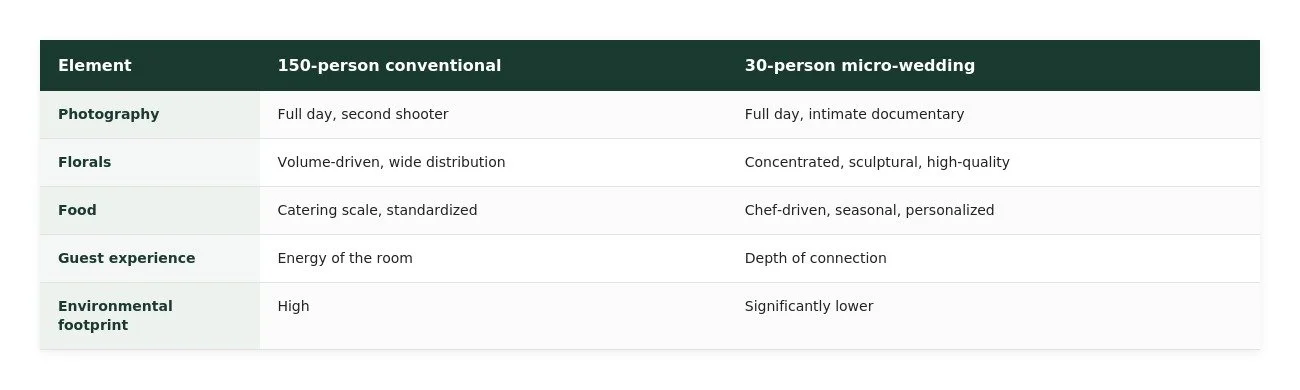
Micro-weddings, typically defined as events with fewer than 30 guests, though the term is applied loosely to up to 50, have grown from a niche choice to a mainstream option at the luxury end of the market. For Gen Z couples, the appeal is multi-dimensional: smaller guest lists allow for a deeper celebration with the people who actually matter, reduced scale enables higher investment per element, and the environmental footprint of a 25-person dinner is meaningfully smaller than that of a 150-person reception.
What Eco-Conscious Gen Z Weddings Look Like in Practice
These values translate into specific, tangible choices rather than vague intentions. Here is what shows up most consistently.
Local and seasonal sourcing as a real value rather than a marketing position: florals from regional growers, menus built around what is available within a defined radius, wine from the estate where the event takes place
Reduced floral volume replaced by sculptural installations from dried or preserved botanicals, potted plants, guests take home, or foraged materials from the surrounding landscape
Zero single-use elements: reusable or compostable tableware, digital invitations or recycled stationery, favors that are edible, plantable, or otherwise useful
Venue selection informed by sustainability credentials, as more luxury venues invest in solar power, water recycling, and waste reduction programs, and couples ask about these as a standard part of evaluation
Conscious vendor selection: photographers who offset travel carbon, caterers with documented waste reduction practices, florists working with ethical supply chains
The Micro-Wedding Economic Logic
A 25-person micro-wedding at a luxury venue with exceptional food, a fine art photographer, and bespoke florals can cost the same as a 100-person conventional reception, but the per-guest and per-element quality is dramatically higher. Gen Z couples who understand this math often choose depth over breadth without feeling it is a compromise.
Section 3: Trend 2 — Digital-First Planning and Editorial Research
Gen Z does not plan weddings the way previous generations did. The planning process is digital-native from the first moment, and increasingly moves beyond social media toward more structured, editorially curated research environments.
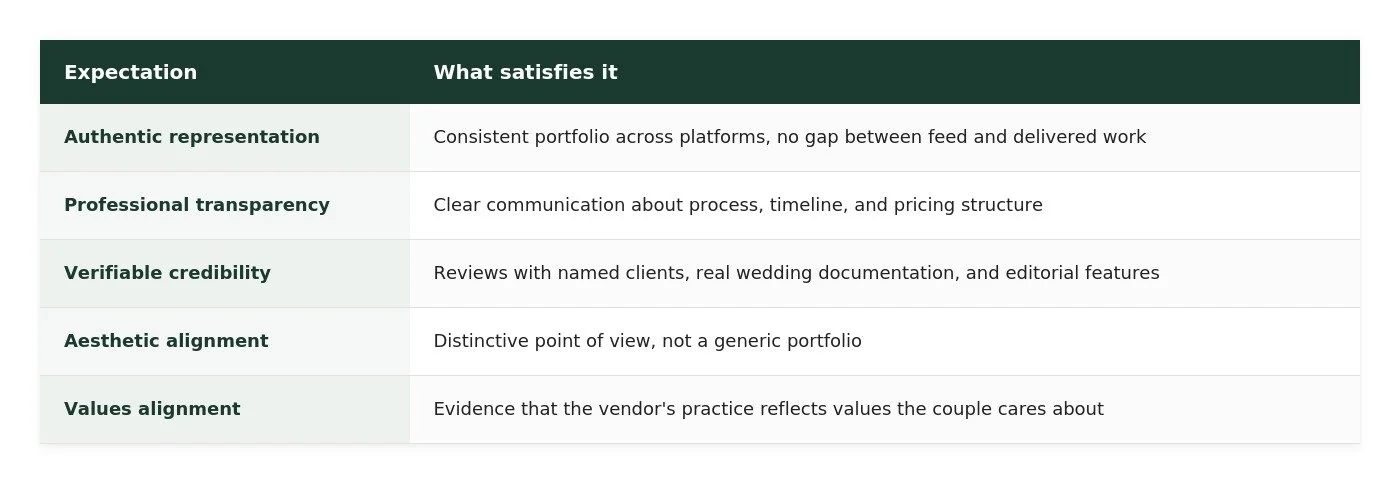
The pattern is consistent: initial inspiration comes from Pinterest and Instagram, but the transition from inspiration to vendor selection requires deeper, more contextual, more verifiable information than social platforms provide. Gen Z couples, precisely because of their visual sophistication, are quick to spot the gap between a well-curated Instagram feed and a professional body of work that is genuinely deep and consistent.
Here is how Gen Z plans differently:
They research vendors extensively before first contact, reading editorial interviews, reviewing full portfolios rather than highlight reels, and cross-referencing reviews across multiple platforms
They are more likely than previous generations to send specific, well-researched inquiries, demonstrating that they have done their homework and expect the vendor to have done theirs
They use real wedding documentation as their primary research tool for vendor discovery, because it shows how professionals perform in actual event conditions rather than staged scenarios
They expect transparency about the process, pricing structure, and what the working relationship will actually look like. A polished sales presentation lands less effectively with this generation than honest, specific professional communication
For vendors building their presence on Wezoree, this shift is directly relevant. Gen Z couples arriving at a vendor's profile are reading the editorial interview, reviewing the full moderated portfolio, and checking real weddings with linked venue and vendor credits, forming a detailed view of the professional before a single message is exchanged. The depth of information available in a structured editorial profile is exactly what this generation's planning behavior demands.
Here is what that translates to in terms of expectations:
Section 4: Trend 3 — Non-Traditional Aesthetics and the Anti-Template Wedding
The most visually distinctive aspect of Gen Z weddings is a deliberate rejection of the templates that defined wedding aesthetics for the previous decade — and a willingness to replace them with choices that are personal, sometimes unexpected, and occasionally polarizing.
This manifests differently across the Gen Z spectrum, but several consistent aesthetic directions have emerged:
Bold Color
The neutral palette that dominated luxury weddings through the early 2020s, blush, ivory, sage, terracotta, is being actively rejected by a significant segment of Gen Z couples in favor of deliberate, committed color. Cobalt ceremony arches, deep burgundy tablescapes, electric blue bridesmaids, and black wedding dresses are not fringe choices in this market. They are increasingly mainstream at the luxury end.
Anti-Bride Bridal Fashion
The traditional white gown remains, but Gen Z has expanded bridal fashion in ways more radical than any generation since the 1960s. Trouser suits, colored dresses, vintage or secondhand pieces, fashion-week silhouettes that bear no resemblance to traditional bridal shapes, and multiple outfit changes that move through entirely different aesthetic registers across the day are all documented in the current luxury wedding market.
Non-Linear Ceremony Structures
Gen Z couples are rewriting ceremony formats with a frequency that reflects their discomfort with inherited scripts. Personalized vow structures, ceremonies that incorporate music performances or humor, and entirely new ritual forms invented by the couple are common. The officiant category has expanded significantly, with professionals increasingly specializing in co-creating ceremony content rather than delivering a standard script.
Aesthetic Range Within a Single Event
Where previous generations tended toward aesthetic consistency across the wedding day, Gen Z couples are more comfortable with tonal shifts between ceremony, cocktail hour, and reception. A ceremony with classical restraint followed by a reception with maximalist energy is not a contradiction for this generation. It is a narrative arc.
Section 5: Trend 4 — Content-Driven Events and the Rise of the Wedding Content Creator
No trend is more distinctively Gen Z than the deliberate integration of content creation into the wedding day as a planned, budgeted element rather than an afterthought.
The wedding content creator, a dedicated professional whose role is to capture behind-the-scenes, informal, and social-media-optimized content alongside the primary photographer and videographer, has emerged as a distinct vendor category. Wezoree's vendor categories include Content Creator specifically because it is now a sufficiently established professional role to warrant its own profile structure and search filters.
What a Wedding Content Creator Does
The wedding content creator's job differs significantly from that of a traditional photographer. Here is what the role actually covers on the day.
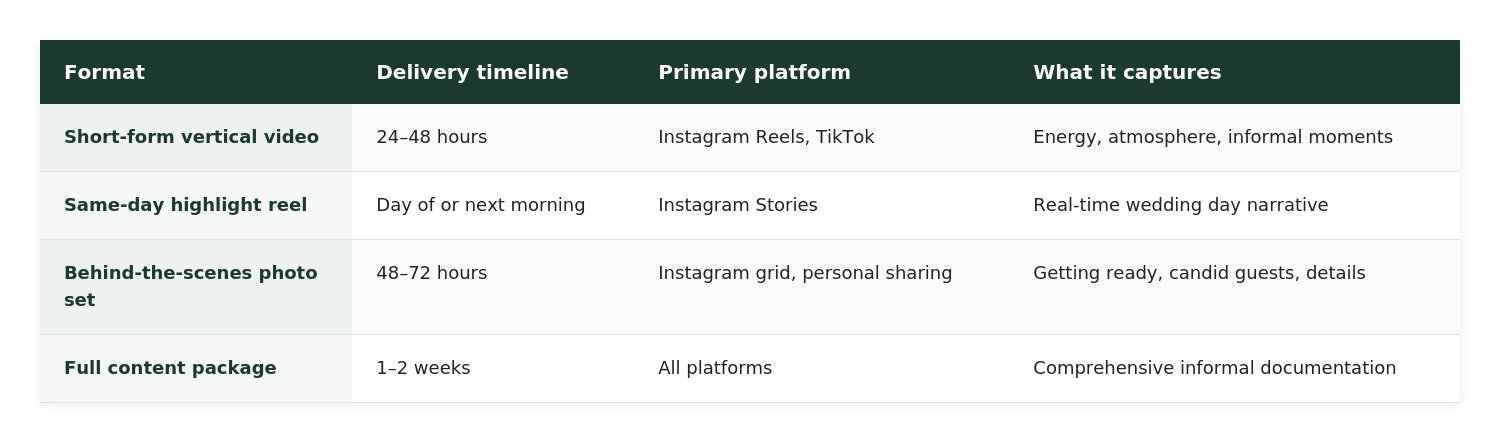
Captures informal, behind-the-scenes content throughout the day: getting ready, candid guest interactions, the unofficial moments that a photographer focused on formal documentation may not prioritize
Produces short-form vertical video optimized for Instagram Reels and TikTok, typically delivered within 24–48 hours of the event
Operates with a smaller footprint than the primary photographer, often using a smartphone or mirrorless camera, focusing on the spontaneous rather than the composed
Works in coordination with the primary photographer and videographer to cover different aspects of the day without duplication
Why Gen Z Couples Prioritize This
The answer is not simply vanity or social media obsession. It reflects a real difference in how this generation relates to documentation. For Gen Z, the informal record of an event is as meaningful as the formal one. The blurry video of the first dance from a friend's phone, the mirror selfie from the getting-ready room, the reaction shot, the official photographer was positioned too far away to capture: these are the documents that circulate within the couple's actual social world, and Gen Z couples want a professional version of them.
Here is what the content creator market actually delivers in 2026:
Section 6: Trend 5 — Experiential Gifting and Shared Honeymoon Crowdfunding
Gen Z couples are redefining the wedding gift in ways that reflect both their housing situation and their values. A generation that is marrying later, often already cohabiting, and frequently renting rather than buying, does not need a new set of dishes or matching towels. What they want from their guests is either an experience or a contribution to one.
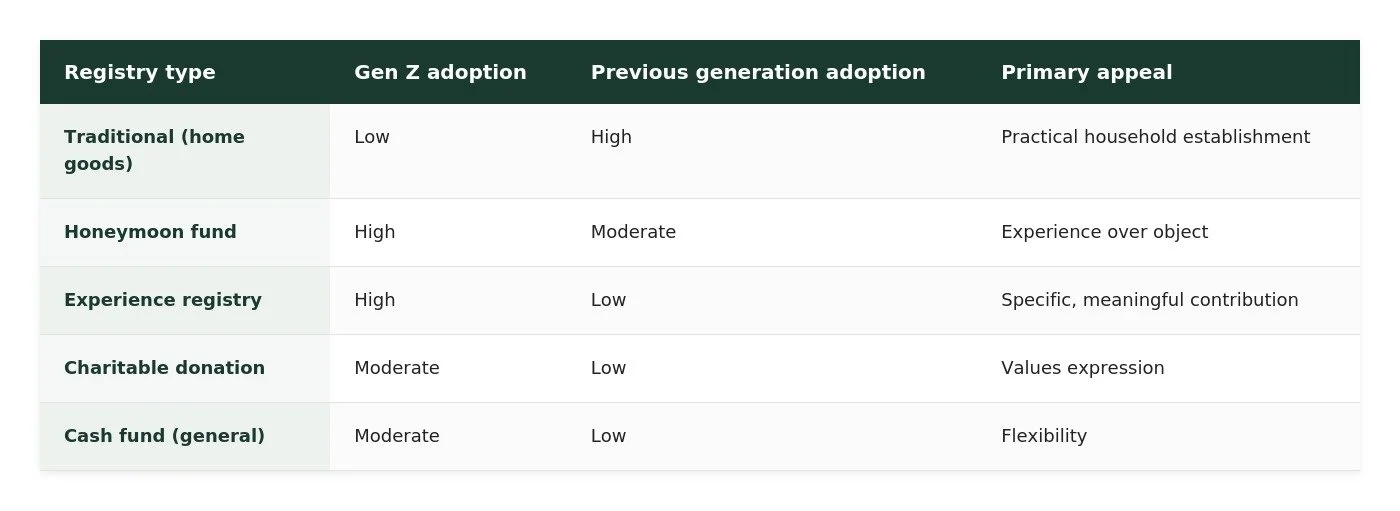
Honeymoon funds and experience registries have moved from a slightly awkward workaround to a standard, fully accepted option for Gen Z couples. The framing has evolved: rather than simply asking for cash, couples are building registries around specific experiences, a cooking class in the country they're honeymooning in, a wine tasting at a specific estate, a helicopter transfer that turns a journey into an event, giving guests the satisfaction of contributing to something specific and meaningful.
Charitable registries, where guests donate to causes the couple supports rather than purchasing gifts, are more common among Gen Z than any previous wedding generation, reflecting the values orientation that characterizes the cohort.
The experience-as-gift model extends beyond the honeymoon. Gen Z couples are increasingly asking guests to contribute to experiences within the wedding itself: a pre-wedding group dinner, a morning-after activity, a group travel element that turns the wedding into a multi-day shared experience rather than a single event. This shifts the gift conversation from objects to memories, which aligns precisely with how Gen Z defines value.
Registry preferences are shifting in a measurable way across generations. Here is how Gen Z compares to those who came before.
Section 7: What These Trends Mean for Vendors — Adapting to the Gen Z Client
Gen Z is not simply a new demographic segment with different aesthetic preferences. They represent a shift in the fundamental expectations a client brings to a vendor relationship, and the vendors who understand this shift are better positioned to serve this market effectively.
Transparency Is Not Optional
Gen Z clients expect to understand how a vendor works, what the process looks like, and what they are paying for before they commit. Vendors who build this transparency into their professional presence, through editorial interviews, detailed About sections, and honest client reviews, align with how this generation makes decisions.
Values Are Part of the Brief
A Gen Z couple who prioritizes sustainability will evaluate their florist's sourcing practices, their photographer's travel carbon approach, and their caterer's waste management as part of the vendor selection process. Vendors with real practices in these areas who communicate clearly have a meaningful advantage in this market.
Documentation Depth Matters
Gen Z's research behavior rewards vendors with deep, verifiable professional documentation, real wedding stories, editorial features, and consistent portfolio records over those with a strong social media presence but a shallow professional infrastructure. Building editorial credibility through platforms like Wezoree is not a vanity investment for vendors serving this market. It is a direct response to how Gen Z researches and decides.
The Content Creator Relationship Requires Coordination
Vendors working with Gen Z couples should expect a content creator in the vendor team and plan accordingly. Photographers and planners who have developed working relationships with content creators and who understand how to coordinate coverage without conflict offer something valuable to this client.
Ceremony Co-Creation Is a Service
Wedding officiants and planners who can support real ceremony personalization, not just space for personal vows within a standard structure, but a fully reimagined ceremony format, are offering something Gen Z couples are actively seeking and willing to invest in.
Conclusion: The Future of Matrimony Is Authentic, Inclusive, and Personal
Gen Z is not destroying the wedding industry. They are redirecting it toward events that are smaller in scale and larger in meaning, more environmentally considered, more aesthetically personal, and more thoroughly documented in both formal and informal registers.
The vendors who thrive in this market are those who have built professional credibility that can withstand the scrutiny of a generation that researches deeply, values authenticity, and responds to evidence over marketing. The couples who feel most satisfied are those who understood what they actually wanted, not what the template suggested they should want, and found professionals whose work and values truly aligned with that vision.
Both outcomes are supported by the same thing: depth of professional presence, transparency of process, and the kind of credibility that builds trust before the first conversation takes place. That is what the best vendors in Wezoree's network have invested in, and it is what the Gen Z wedding market increasingly demands.
HOW DO YOU FEEL ABOUT FASHION?
COMMENT OR TAKE OUR PAGE READER SURVEY
Featured



Finding the right job in human resources or recruitment can take time, especially when you're searching online.