
A Complete Guide to Hiring Professional Moving Companies

PAGE
By PAGE Editor
Moving has a funny way of looking simple until the boxes start multiplying. Suddenly, your hallway is blocked and the couch feels twice as heavy.
Professional moving companies can take much of that pressure off your plate, but hiring the right one takes more than picking the first name in a search result. A reliable mover should fit your move type, explain pricing clearly, provide the right paperwork, and give you confidence about who will handle your belongings.
When Does Hiring Professional Movers Make Sense?
DIY moving can work for a small apartment, a short distance, or a light load. The equation changes when you have several rooms of furniture, difficult stairs, fragile items, limited time, or a long-distance move.
Professional movers bring trained labor, moving equipment, protective materials, and experience with loading and transportation. They reduce the physical work and logistical problems you would otherwise need to solve yourself.
A 2026 evaluation looked at more than 40 moving companies and found that the right choice depends on factors such as move distance, shipment size, specialty items, available time, and the level of service needed.
Before requesting quotes, decide whether you need full-service moving, transportation only, packing help, labor-only assistance, storage, or specialty handling.
How Do You Find Moving Companies That Fit Your Move?
Start by defining the job before comparing company names. Write down your origin and destination, preferred dates, approximate inventory, stairs or elevators, parking restrictions, and any items that need special handling.
If you are searching for the best moving companies near me, compare companies based on whether they serve your route and provide the services your move requires. A local apartment move and an interstate household move can involve very different pricing, equipment, scheduling, and regulatory requirements.
Use the same move details when requesting every quote. If one company receives a complete inventory while another receives only a rough description, the prices will not be directly comparable.
For larger moves, an in-home or video survey can improve the accuracy of the estimate.
Verify the Company Before Comparing Prices
A polished website and a low quote are not enough. Check the business identity, licensing, insurance information, reviews, and written paperwork before paying a deposit.
For interstate moves, FMCSA recommends checking a mover's registration and insurance information and complaint records, confirming that the company is authorized for interstate household-goods moves, and avoiding blank or incomplete documents.
Also find out whether you are dealing with a carrier or a broker. A carrier physically transports household goods. A broker arranges transportation with another company. Knowing which role the business plays helps you understand who will arrive on moving day.
For local moves, licensing requirements vary by state, so check the rules that apply where the move begins.
Compare Written Moving Estimates Line by Line
The lowest estimate is not automatically the best deal. Two quotes can show similar totals while including very different services.
Give each mover the same information and compare:
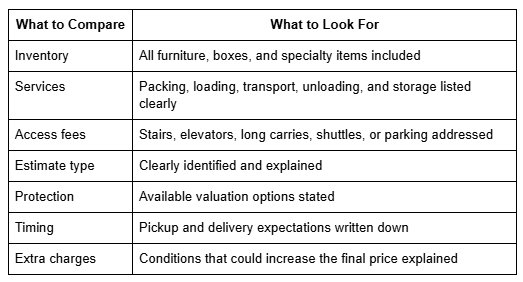
Ask what could change the estimate. Added inventory, difficult access, packing materials, storage, or services requested after the quote can affect the final amount.
Do not rely on promises such as “that should be included.” If a service matters, make sure it appears in writing.
Understand the Contract and Protection Options
Before signing, read the estimate and contract from beginning to end. The company name, pickup details, delivery terms, payment requirements, services, and pricing method should match what you discussed.
For interstate moves, understand the difference between Full Value Protection and Released Value Protection. Released Value Protection provides limited coverage based on an item's weight, while Full Value Protection provides a higher level of responsibility for lost or damaged goods.
If you are moving artwork, electronics, antiques, instruments, or other high-value items, ask how those belongings are handled and whether additional protection is required.
Never sign a blank form or a document with sections that someone promises to complete later.
Ask These Questions Before Hiring Movers
Ask each mover:
Is the company acting as the carrier or as a broker?
What services are included in this estimate?
What could cause the price to increase?
Is the estimate binding or nonbinding?
Who will perform the move?
Are packing materials included?
What happens if pickup or delivery is delayed?
What protection options are available?
How are loss or damage claims handled?
What is the cancellation and refund policy?
What deposit is required?
A professional company should be able to explain these points without rushing you into a booking.
Watch for Moving Company Red Flags
Moving scams often depend on urgency and incomplete information. Be cautious if a company gives a firm price without learning enough about your shipment, refuses to provide a written estimate, uses inconsistent business names, or asks you to sign paperwork with blank spaces.
Other warning signs include unexplained large deposits, vague answers about licensing, missing business information, and pressure to book immediately.
An unusually low estimate deserves extra scrutiny. Compare it with the other quotes and ask exactly what is included. A low number is only useful if it covers the move you actually need.
Prepare for Moving Day Before the Crew Arrives
Finish packing anything you agreed to pack yourself. Label boxes by room, mark fragile items clearly, clear hallways, and reserve elevators or loading areas if required.
Keep medication, identification, keys, chargers, financial documents, jewelry, and other essentials with you rather than placing them on the truck.
When the crew arrives, walk through the home with the team leader. Point out items that need special handling and confirm what is staying behind. At the destination, check belongings against the inventory and document visible damage promptly.
How Can You Keep Moving Costs Under Control?
Start by reducing the amount being moved. Donate, sell, recycle, or discard items you no longer need before finalizing the inventory.
If your schedule is flexible, ask whether changing the date affects availability or pricing. You can also handle straightforward packing yourself while leaving fragile or unusually heavy items to the movers.
Most importantly, compare the total scope of each quote. A lower base rate does not save money if necessary services later appear as additional charges.
Frequently Asked Questions About Hiring Professional Moving Companies
How far in advance should professional movers be booked?
Book once your moving date is reasonably firm. Earlier booking usually gives you more choice, especially for weekends, month-end dates, and busy moving periods. If the move is last minute, compare availability and written terms carefully rather than booking solely because a company can come immediately.
How many moving company quotes should I get?
Three written estimates provide a useful starting point. Give each company the same inventory, addresses, access details, and service requirements. This makes it easier to spot unusually high or low quotes and identify services that one mover includes while another charges for separately.
Should I pay a moving company before the move?
A mover may request a deposit to reserve the date, but the amount and payment terms should be clearly stated in writing. Be cautious about unexplained large upfront payments. Confirm the cancellation and refund policy before paying anything and keep receipts for every transaction.
What should I keep with me instead of putting on the moving truck?
Keep identification, medication, cash, jewelry, important documents, keys, chargers, essential electronics, and irreplaceable personal items with you. Pack enough clothing and basic supplies for the first day as well, particularly if your shipment has a delivery window.
What should I do if something is damaged during the move?
Photograph the damage as soon as you notice it and keep relevant packing materials. Notify the mover promptly and follow the claim instructions in your agreement. Save the inventory, estimate, bill of lading, photographs, receipts, and written communication until the issue is resolved.
Final Thoughts on Hiring the Right Moving Company
Choosing movers should feel careful, not chaotic. Start with the type of move you have, narrow the list to companies that can handle it, verify credentials, and compare written estimates using the same information.
Price matters, but so do clear paperwork, realistic timing, suitable services, and straightforward communication. Ask the awkward questions before signing, understand what could change the final cost, and keep important details in writing.
A little more comparison before booking can make moving day far easier to manage.
HOW DO YOU FEEL ABOUT FASHION?
COMMENT OR TAKE OUR PAGE READER SURVEY
Featured





Moving has a funny way of looking simple until the boxes start multiplying. Suddenly, your hallway is blocked and the couch feels twice as heavy.