
How Pregnancy Changes the Way Massage Therapy Should Be Planned
PAGE
By PAGE Editor
Pregnancy changes posture, load distribution, sleep positions, circulation, energy levels, and the way everyday movements feel. A massage session that was comfortable before pregnancy may need to be modified as the pregnancy progresses. The goal is not to treat pregnancy itself, but to adapt musculoskeletal care to the person's changing body and health context.
That adaptation begins with positioning, pressure, and communication.
Positioning Becomes Part of the Treatment
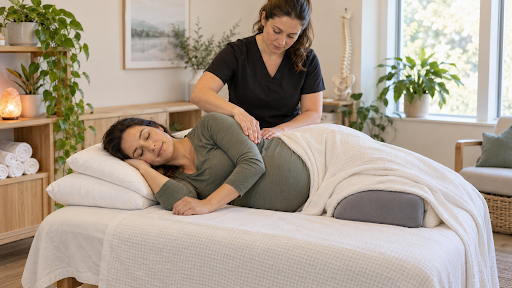
As the abdomen grows, lying face down becomes impractical and prolonged flat-on-the-back positioning may be uncomfortable or inappropriate later in pregnancy. Supported side-lying with pillows or bolsters is commonly used because it gives access to the back, hips, shoulders, and legs while keeping the patient comfortable.
Someone looking for a prenatal massage therapist should ask how pregnancy positioning is handled rather than assuming a standard massage table setup will simply be modified at the last minute.
The Health Check-In Matters More
Pregnancy is not a medical problem, but it is a period when new symptoms deserve context. The therapist should know how far along the patient is, whether the pregnancy has been described as high risk, and whether there are concerns such as bleeding, significant swelling, severe headache, high blood pressure, reduced fetal movement, or activity restrictions.
Those symptoms do not belong in a massage-treatment plan. They need guidance from the patient's maternity care provider.
Comfort Should Guide Pressure
Pregnancy can change tissue sensitivity and how long a person can stay in one position. Pressure that felt comfortable earlier may not feel right later. The therapist should be willing to adjust support, turn the patient, work more gently, or skip an area entirely.
This is one reason regulated care matters. A person seeking a registered massage therapist burnaby bc or an RMT elsewhere should expect health history, consent, appropriate draping, and treatment that stays within professional scope.
Common Goals Are Usually Practical
Pregnant patients often book massage because the low back feels tired after standing, the hips are uncomfortable at night, the shoulders and upper back are working harder, or the legs feel generally heavy. Treatment can focus on these musculoskeletal concerns when appropriate.
Massage should not be presented as a way to prevent pregnancy complications, induce labour, correct fetal position, or replace medical care. Responsible prenatal treatment stays focused on comfort and musculoskeletal support.
The Plan Can Change From Trimester to Trimester
Pregnancy is dynamic. A treatment plan from several weeks ago may need to change as the body changes. Patients should update the therapist about new symptoms, medical advice, and what has become more or less comfortable.
The best prenatal massage is not a special fixed sequence. It is ordinary principles of good clinical care applied thoughtfully to a changing stage of life: appropriate assessment, supported positioning, informed consent, and a willingness to modify the session whenever needed.
Postpartum Needs Can Be Different Again
After delivery, the physical demands change quickly. Feeding positions, carrying, lifting, interrupted sleep, and long periods looking down at a baby can increase load through the neck, shoulders, upper back, wrists, and low back. Postpartum massage may therefore focus on very different areas from prenatal care.
Medical recovery also matters. Caesarean birth, perineal healing, blood-pressure concerns, infection, blood-clot risk, or other complications should be discussed with the appropriate healthcare provider. The transition after pregnancy is another reason massage plans should be responsive rather than based on a fixed maternity routine.
Comfort Includes Temperature and Pace
Pregnancy can change temperature tolerance, breathing comfort, and the need for bathroom breaks. A prenatal session should allow time to reposition, add or remove blankets, sit up slowly, and pause when needed. These details may seem small, but they influence whether the patient can actually relax. A treatment that technically uses the right techniques can still be poorly planned if the person spends the session uncomfortable in the position or environment.
Pregnancy Massage Should Still Feel Ordinary and Respectful
Special modifications do not mean a pregnant patient should feel fragile or overmanaged. The therapist can adapt the session without turning every movement into a source of alarm. Clear explanations, comfortable support, and routine consent allow the treatment to remain calm while still respecting pregnancy-specific considerations. The patient should leave feeling that the care was personalized, not that pregnancy made normal musculoskeletal concerns mysterious.
The Patient Sets the Boundaries
Pregnancy does not reduce a patient's right to choose what is treated. The person can decline abdominal work, leg work, or any other area, ask to remain more fully clothed, or end the session. Clear boundaries are compatible with therapeutic care and can make the appointment feel safer and more comfortable.
HOW DO YOU FEEL ABOUT FASHION?
COMMENT OR TAKE OUR PAGE READER SURVEY
Featured





Yes. A yellow light dispute can affect your car accident claim because it helps determine who was responsible for the collision.