
Pakistan's Export Processing Zone Proposal Could Disrupt A Critical Link In The Global Textile Recycling Economy
PAGE
By PAGE Editor
As governments and brands accelerate commitments to circular fashion, one of the world's most important textile recycling hubs is facing regulatory uncertainty that industry leaders say could reverberate well beyond its borders.
Pakistan has quietly become an essential node in the global secondary materials economy. Every year, hundreds of thousands of metric tons of used clothing arrive from North America and Europe, where charities, collectors, and recycling organizations depend on downstream markets to keep textiles in circulation rather than in landfills. Inside Karachi's Export Processing Zones (EPZs), these garments are sorted, graded, repaired, recycled, and redistributed to markets throughout Africa, Asia, and other developing economies.
The Secondary Materials and Recycled Textiles Association (SMART) is urging Pakistan's Export Processing Zones Authority (EPZA) and government officials to reconsider proposed regulatory changes that would eliminate a decades-old operating mechanism widely viewed as fundamental to the industry's commercial viability.
The debate extends far beyond Pakistan's borders. It reflects the increasingly delicate balance between industrial policy, international trade, and the infrastructure required to build a truly circular fashion economy.
Why Pakistan Matters To Global Circular Fashion
While resale platforms and luxury recommerce often dominate conversations around circularity, much of the industry's environmental impact depends on less visible supply chains.
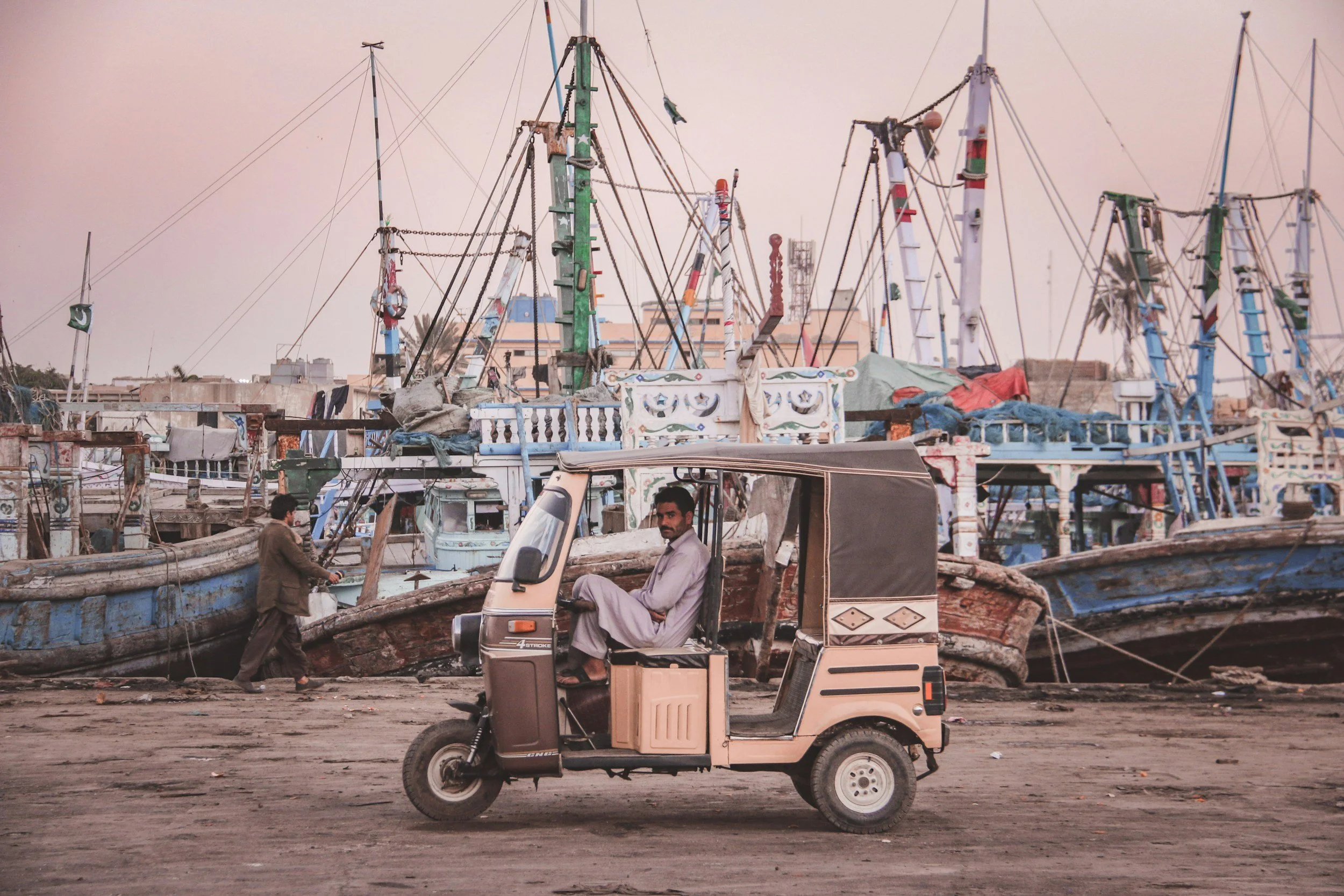
Pakistan has established itself as one of the world's leading destinations for used textile processing. Materials imported into Karachi's EPZ are carefully sorted according to quality, fiber composition, and resale potential before being re-exported across international markets. Items unsuitable for direct resale frequently enter recycling or recovery streams, allowing valuable materials to remain in circulation.
The model delivers economic and environmental value simultaneously.
Companies operating within Pakistan's EPZ collectively export approximately $1 billion annually while financing their own imports without drawing on Pakistan's foreign currency reserves. According to industry figures, these businesses also contribute roughly PKR 5.6 billion in corporate taxes each year, alongside an additional PKR 1.4 billion in EPZ service fees.
Employment is equally significant. More than 50,000 people work within the sector, supporting an estimated quarter-million livelihoods. Notably, women account for more than half of the workforce, making the industry an important source of employment in export manufacturing.
The 80/20 Framework At The Center Of The Debate
The industry's concerns focus on Pakistan's longstanding "80/20" Export Processing Zone framework.
Under the existing model, companies must export at least 80% of production while allowing up to 20% of goods, by value, to enter Pakistan's domestic market after paying all applicable customs duties, taxes, and regulatory fees.
Industry representatives emphasize that this provision is not a subsidy or tax incentive.
Instead, they argue it provides an essential commercial outlet for recovered materials that cannot be efficiently exported because of quality, grade, or market demand. In textile recycling, every garment follows a different pathway. Some pieces command resale value internationally, while others require local recycling, fiber recovery, or alternative processing.
A communication from Pakistan's Ministry of Industries and Production dated June 17, 2026, indicates amendments have been drafted that would prohibit EPZ sales into Pakistan's domestic market following Cabinet approval, potentially by September 2026, as part of commitments associated with the country's IMF-supported economic program.
Industry stakeholders argue that removing this flexibility could fundamentally alter the economics of textile recovery operations that have operated successfully for years.
The Ripple Effect Across Global Supply Chains
The implications extend well beyond Karachi.
Industry estimates suggest that approximately 500,000 metric tons—or roughly 1.1 billion pounds—of used clothing from the United States and Canada are exported to Pakistan each year.
Much of this material originates through charitable collection systems operated by organizations such as Goodwill and The Salvation Army, where the resale of donated clothing generates funding for workforce development, rehabilitation programs, community services, and other social initiatives.
If downstream recycling capacity contracts, charities may face higher costs associated with sorting, warehousing, transportation, recycling, or disposal of garments that cannot be resold domestically.
The environmental implications are equally significant.
Without sufficient global reuse and recycling infrastructure, textiles that currently remain in circulation could instead be stockpiled, incinerated, or sent to landfill—transferring costs from privately financed circular systems to municipalities while increasing emissions associated with textile waste management.
A Call For Predictable Policy
"The global textile recycling industry depends on transparent, predictable and evidence-based policy," said Steven Bethell, Board Member at SMART. "Pakistan's proposed changes risk removing a long-established, duty-paying operating mechanism on which legitimate recycling businesses have invested and built their operations. Any reform process should provide meaningful protection and a workable transition for existing investors."
Bethell also emphasized the broader sustainability implications.
"Used textiles are valuable secondary raw materials that create employment, extend product lifecycles and keep clothing out of landfill. For reuse and recycling to work at scale, there must be viable outlets for every grade of recovered material. Removing this limited domestic channel risks shutting down recycling capacity and shifting substantial volumes of textiles into lower-value or disposal channels."
Circularity Requires More Than Collection
As fashion companies continue investing in resale, fiber innovation, and circular business models, Pakistan's situation illustrates a frequently overlooked reality.
Circularity does not end with collection bins or consumer participation. It depends on an interconnected global network of processors, sorters, recyclers, exporters, logistics providers, and secondary markets capable of handling every grade of recovered textile.
According to industry projections, the global secondary materials market could reach $367 billion by 2029. Online resale alone is expected to approach $40 billion during the same period, while textile rework—a higher-value segment focused on transforming existing garments into new products—already represents an estimated $20 billion annual opportunity.
Those projections assume the infrastructure supporting textile recovery continues to expand rather than contract. For policymakers, the challenge is increasingly clear: strengthening regulatory oversight while preserving the operational flexibility that allows circular systems to function efficiently.
For the textile recycling industry, Pakistan has become a test case demonstrating that achieving global sustainability goals requires not only ambitious environmental targets, but also stable policies that enable reuse, recycling, and value recovery to operate at scale.
HOW DO YOU FEEL ABOUT FASHION?
COMMENT OR TAKE OUR PAGE READER SURVEY
Featured




New Balance introduces the Made in USA 990v7, updating its iconic running silhouette with refined materials, enhanced cushioning, and contemporary design while preserving the craftsmanship and cross-generational appeal that have defined the franchise since 1982.