
Simple Maintenance Tips Between Professional Rug Cleanings
PAGE
By Finixio Digital
A quality area rug defines a room, adds warmth, and often represents a meaningful investment. Whether you own a hand-knotted wool piece, a modern synthetic design, or a family heirloom, the way you care for it between professional services determines how long it remains beautiful and functional.
Many homeowners assume that occasional vacuuming is sufficient. The first and most important step in the carpet and rug maintenance is removing soil when it is on the surface, before it gets tramped down. The Institute recommends vacuuming high-traffic or pet areas daily, medium-traffic areas twice a week, and light-traffic areas weekly to prevent particle accumulation that professional cleaning alone cannot address.
For residents seeking Rug Cleaning San Antonio services, understanding these maintenance fundamentals helps protect your investment between professional visits. The Environmental Protection Agency notes that carpets and rugs act as reservoirs for dust, dirt, pollen, mold spores, and other materials which originate indoors or be brought in from outside. If kept very clean from the time they are installed, rugs can trap significant particles, which can then be removed through regular and effective vacuuming. However, inadequate maintenance allows large quantities of dust to build up, potentially releasing particles into the air during daily activity.
Why Regular Maintenance Matters
Rug fibers function as filters. They trap airborne particles that would otherwise circulate through your home. This is beneficial for air quality in the short term, but it creates a reservoir of contamination that requires periodic removal. Without regular maintenance, particles accumulate at the base of the pile where vacuum suction cannot reach. Foot traffic then grinds these particles against the fibers, causing abrasion that manifests as matting, dullness, and premature wear.
The American Lung Association explains that dust is made up of dead skin cells, dust mite droppings, and dust mite body fragments. An average person sheds 1.5 grams of skin flakes every day, which is enough to feed a million dust mites. Hundreds of thousands of dust mites can live in carpets and rugs, and their body parts and droppings are considered major indoor triggers for people with allergies and asthma.
Proper Vacuuming Techniques
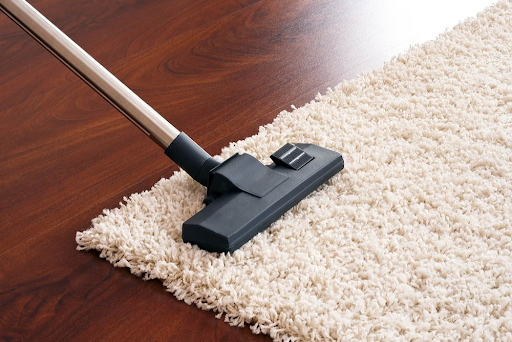
Vacuuming is the most important maintenance activity, but technique matters significantly. Many homeowners damage their rugs unintentionally by using incorrect settings or attachments.
The Carpet and Rug Institute recommends using slow, repetitive motions that overlap about four swipes, ensuring you get right up to the edges where dust, pollen, and pet dander accumulate. Always use a vacuum without a beater bar or rotating brush when cleaning area rugs. The aggressive mechanical action of beater bars pulls at fibers, frays delicate strands, and can distort the pile direction permanently. Instead, use the upholstery attachment or a suction-only setting. This removes surface debris without subjecting the fibers to unnecessary stress.
The Environmental Protection Agency specifically recommends vacuuming all carpets and rugs using a vacuum with a HEPA filter bag. HEPA filtration captures fine particles that standard filters allow to pass through and re-enter room air. The American Lung Association further recommends ventilating by opening windows or using exhaust fans during and after vacuuming to ensure proper air circulation.
Rotate Your Rugs to Prevent Uneven Wear
Foot traffic follows predictable patterns. People tend to walk the same paths, stand in the same spots, and place furniture in consistent positions. Over time, this creates visible wear patterns where certain areas of the rug flatten, fade, or discolor while others remain pristine.
Rotating your rug every three to six months distributes this wear evenly across the entire surface. The process is simple: turn the rug 180 degrees so that the end that was nearest the sofa is now farthest from it. For larger rugs, a 90-degree rotation may be more practical. This ensures that high-traffic zones shift periodically, preventing the permanent pathways that make rugs look aged before their time.
Rotation also helps manage sun exposure. San Antonio's strong sunlight can fade dyes over time, particularly in rooms with large windows. By rotating the rug, you ensure that any fading occurs uniformly rather than creating obvious light and dark zones that detract from the design.
The Value of a Quality Rug Pad
A rug pad is essential protection that serves multiple functions. First, it prevents slipping, which is a significant safety concern on hard surfaces like tile and hardwood. The Occupational Safety and Health Administration identifies loose rugs and mats as common causes of slips in both residential and workplace environments. Proper padding eliminates this hazard.
Second, a rug pad cushions the fibers, absorbing impact from foot traffic and reducing compression that leads to premature flattening. Third, and most importantly, a rug pad creates airflow between the rug and the floor. This ventilation prevents moisture buildup that can lead to mold growth and backing deterioration. In San Antonio's humid climate, this airflow is particularly valuable for maintaining rug integrity.
Choose a pad appropriate for your rug type and floor surface. Felt pads work well for thin rugs on hard floors, while rubberized non-slip pads are better for high-traffic areas. Avoid cheap plastic pads that can stick to floors or degrade into a sticky residue that damages both the rug and the flooring beneath it.
Spot Cleaning Spills and Stains
Accidents happen usually. Coffee tips, wine spills, and pet incidents are part of life with rugs. The key to preventing permanent damage is speed and technique.
The Carpet and Rug Institute recommends scooping up solids and blotting liquids with a dry, white cloth or paper towel, starting at the edge of the spot and moving toward the center. Do not scrub, as this can damage fibers and spread the mess. When a spill occurs, blot immediately with a clean white cloth. Work from the outside of the spill toward the center to prevent spreading.
For water-based spills, it is suggested that mixing one-quarter teaspoon of clear dishwashing liquid with one cup of warm water. Avoid laundry detergent, which can cause permanent damage such as color change. For coffee or tea stains, try mixing one cup white vinegar with one cup water. For ink stains, apply rubbing alcohol to a cloth and blot. Always test any cleaning solution on an inconspicuous corner of the rug first to verify colorfastness.
If the stain persists after gentle treatment, stop and contact a professional. Aggressive DIY efforts often set stains permanently or damage fibers in ways that complicate later restoration. This is particularly true for silk rugs, antique pieces, and rugs with intricate dye work.
Deodorizing Without Chemicals
Rugs can develop odors from pet accidents, cooking fumes, or general household activity. Rather than masking these smells with commercial deodorizers that leave chemical residues, use baking soda for natural odor absorption.
Sprinkle a thin layer of baking soda across the rug surface and let it sit for several hours or overnight. The baking soda absorbs odor molecules rather than covering them. Vacuum thoroughly afterward to remove all residue. For pet-related odors, allow extra dwell time before vacuuming.
This method is safe for all rug types, including wool and synthetic fibers. It leaves no harmful residues that could affect children, pets, or individuals with chemical sensitivities. The American Lung Association recommends avoiding chemicals such as air fresheners, sprays, and cleaning products where possible, or using healthier options that do not introduce additional pollutants into the indoor environment.
Protecting Rugs from Sun and Moisture
San Antonio's climate presents two primary environmental threats to rugs: intense sunlight and humidity. Direct sun exposure fades dyes and weakens fibers over time. If your rug sits in a sunny room, close blinds or curtains during peak daylight hours. Consider UV-filtering window film for rooms where rugs receive consistent direct light.
Humidity encourages mold growth and dust mite proliferation. The American Lung Association recommends keeping humidity levels around 50 percent to control dust mites in carpets and rugs. Maintain indoor humidity between 30 and 50 percent using air conditioning or dehumidifiers. If a rug becomes wet from a spill or cleaning, dry it thoroughly and quickly. Lay the rug flat in a well-ventilated area, elevated slightly to allow air circulation underneath. Never hang a wet rug, as the weight of the water can distort the shape and cause stretching.
For rugs in entryways, use a high-quality doormat outside and a runner inside to capture moisture and debris before they reach your primary rug. This simple barrier system significantly reduces soiling rates and extends cleaning intervals.
When Maintenance Reaches Its Limits
Home maintenance is essential, but it has boundaries. Vacuuming removes surface debris but cannot extract deeply embedded soil. Spot treatment addresses fresh spills but cannot remove set-in stains or odors that have penetrated the backing. Baking soda deodorizes but does not sanitize.
Professional cleaning reaches what home methods cannot. It is recommended that professionally deep cleaning carpets and rugs every 12 to 18 months to keep them looking great and lasting for years to come. Commercial-grade equipment generates the water pressure, temperature, and extraction power necessary to suspend and remove deep contamination. Trained technicians identify fiber types, dye compositions, and construction methods to select appropriate cleaning protocols. Controlled drying environments prevent mold growth and fiber distortion.
For San Antonio homeowners, professional service also addresses the specific challenges of the local climate. Hill Country dust, pollen, and humidity create contamination profiles that require specialized treatment. A Rug Cleaning San Antonio provider with local experience understands these factors and tailors service accordingly.
San Antonio Carpet Cleaning provides area rug cleaning services throughout San Antonio and surrounding communities. Their technicians handle wool, oriental, synthetic, and specialty rugs using methods that align with industry best practices.
HOW DO YOU FEEL ABOUT FASHION?
COMMENT OR TAKE OUR PAGE READER SURVEY
Featured




As European organisations continue to modernise their digital environments, the demand for practical technology services is increasingly being shaped by operational complexity rather than by simple software adoption.