
Victory Travels in Louis Vuitton: Craft, Culture, and the Spectacle of Speed Converge At Miami F1

PAGE
By PAGE Editor
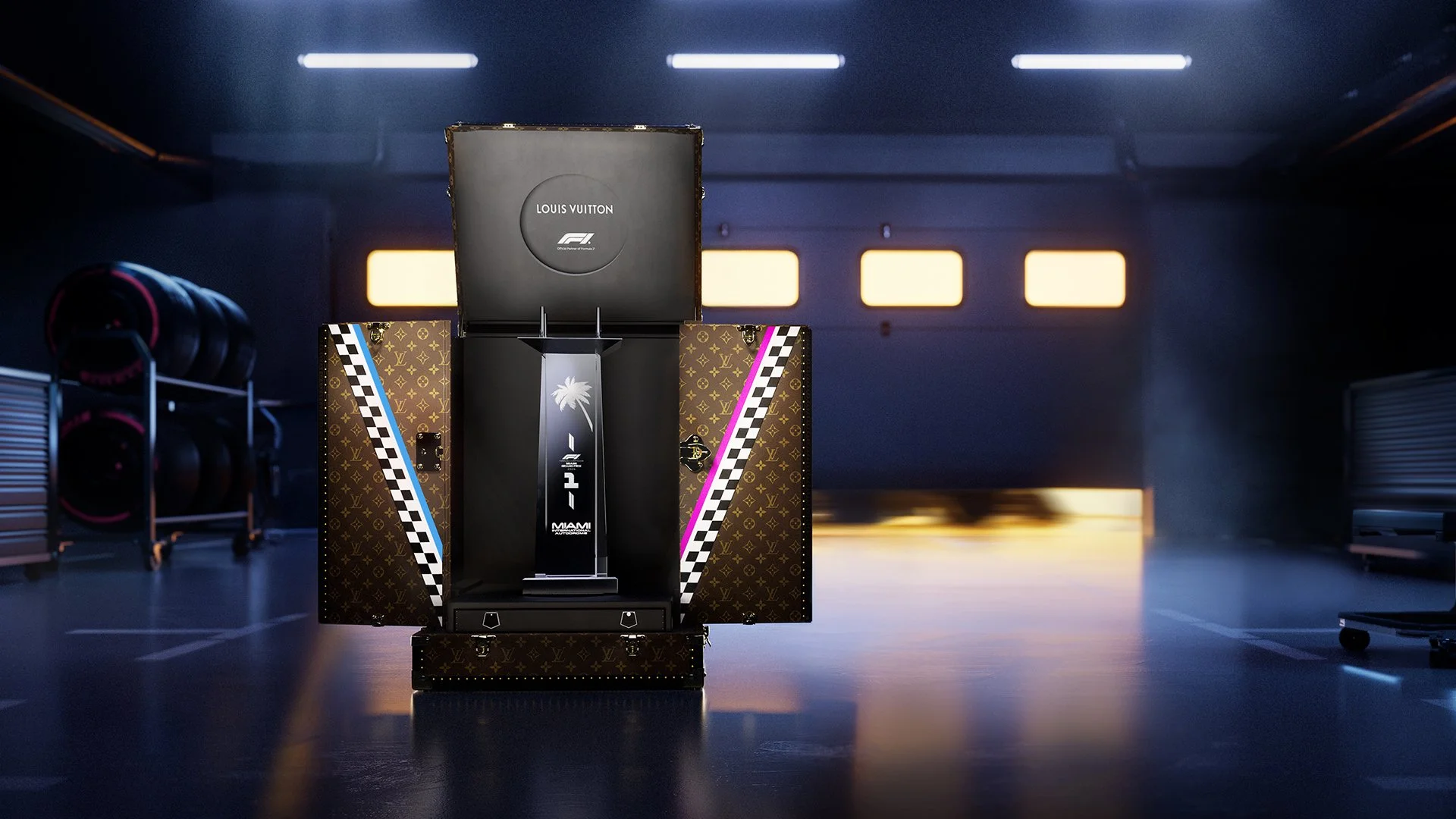
In a city defined by movement—of culture, capital, and creativity—Louis Vuitton arrives in Miami not simply as a partner, but as a curator of victory itself. For the Formula 1 Crypto.com Miami Grand Prix 2026, the Maison unveils a bespoke Trophy Trunk that reframes the language of competition through the lens of heritage, design, and precision.
From May 1st through May 3rd, the Formula 1 circuit transforms the Miami International Autodrome into a stage where engineering meets emotion. It is here—amid the calibrated chaos of speed—that Louis Vuitton positions its latest creation, an object that exists at the intersection of legacy and spectacle.

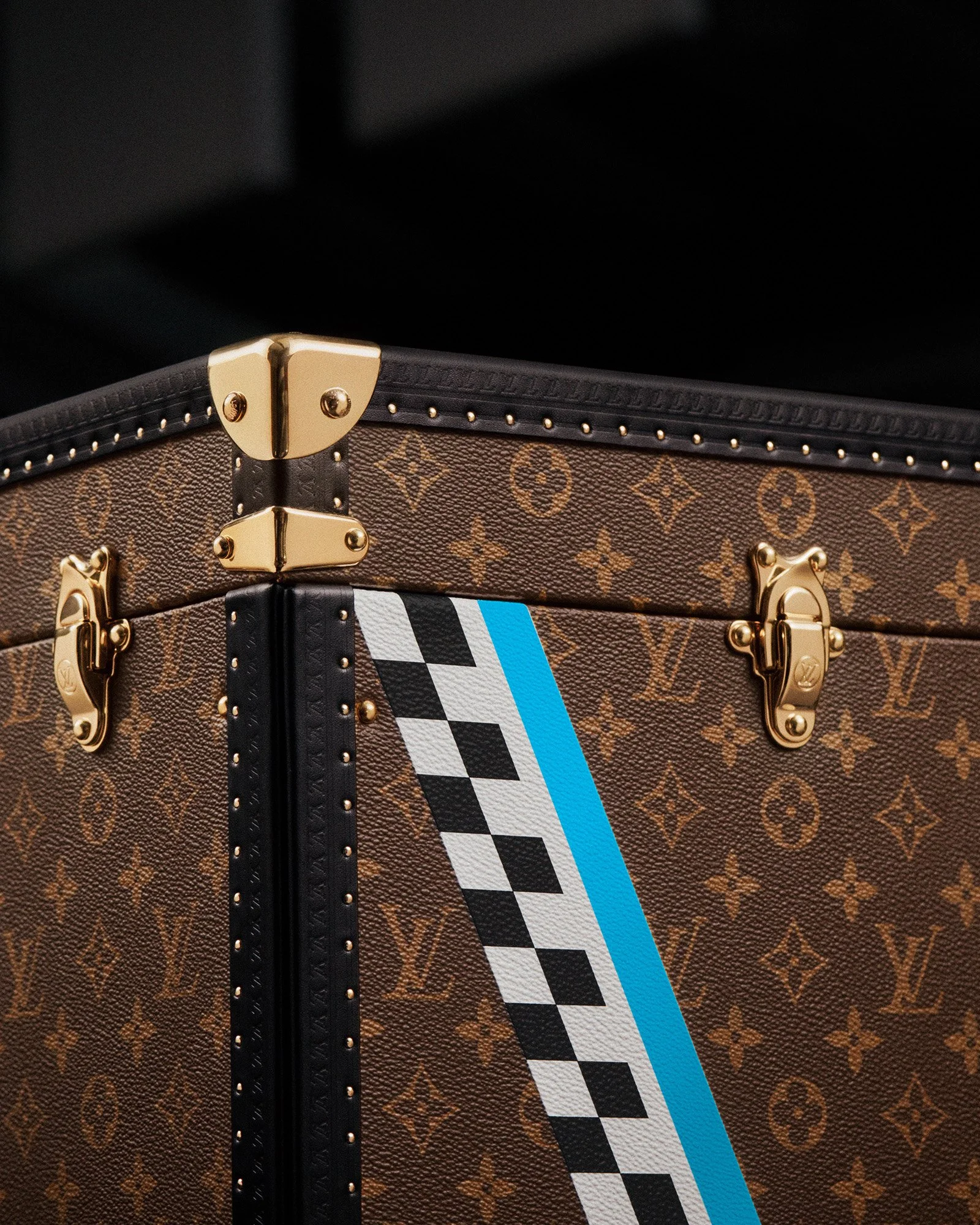
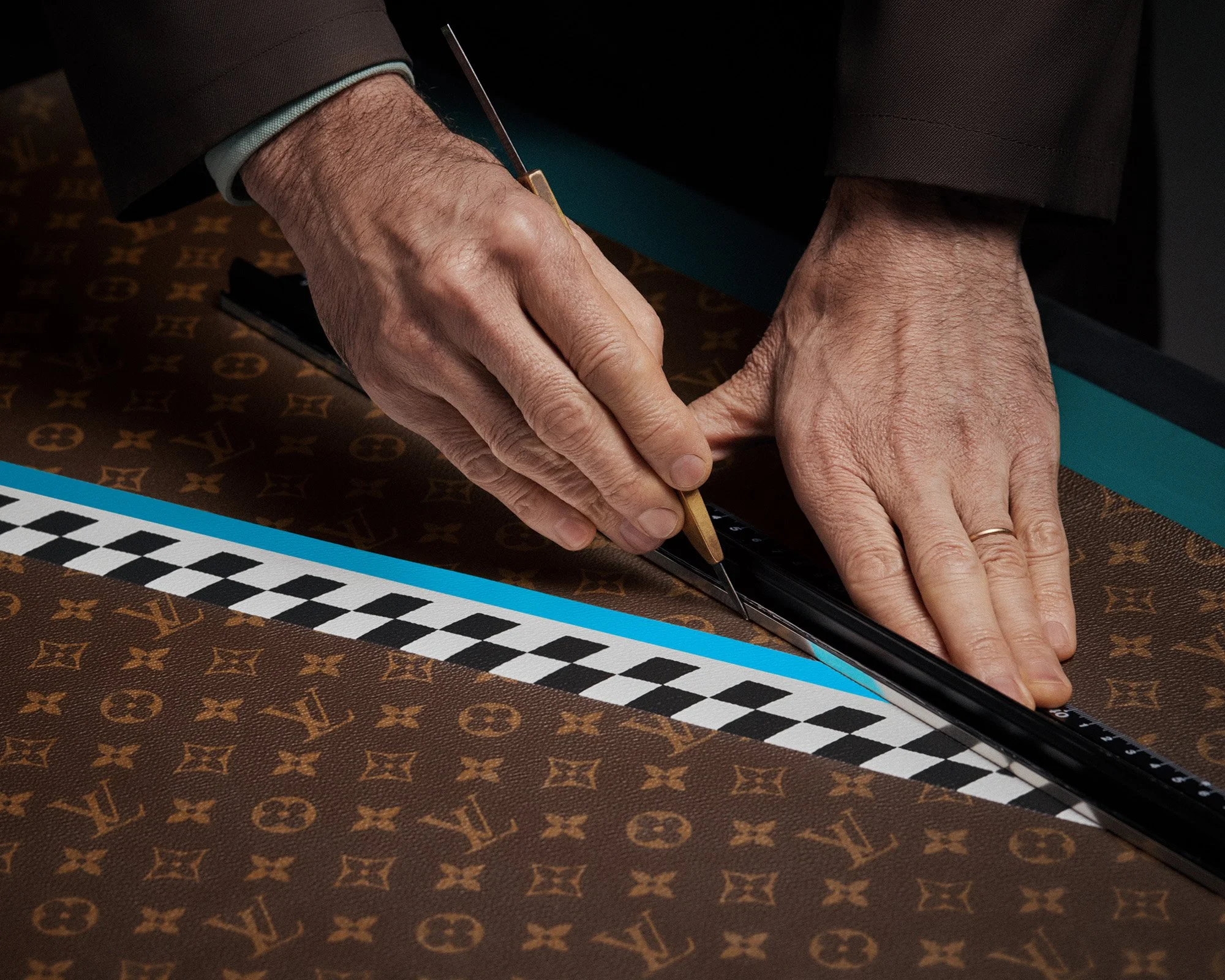
The trunk itself is not merely a vessel. It is a narrative object. Handcrafted in the historic ateliers of Asnières, France, it draws a direct line back to Georges Vuitton, whose early anticipation of automotive culture led to innovations that would define modern travel. His development of “Vuittonite,” a durable canvas engineered to withstand the elements, quietly underpins the Maison’s contemporary codes. In Miami, that lineage is reimagined through a palette of tropical pinks and blues—an homage to the city’s Art Deco vernacular—juxtaposed with the graphic finality of Formula 1’s black-and-white checkered flag.
This is Louis Vuitton’s second year as an official partner of Formula 1, but the relationship feels less like a sponsorship and more like a convergence of ideologies. Both institutions are built on an obsession with performance—whether measured in lap times or in craftsmanship. The phrase “Victory Travels in Louis Vuitton” is less slogan than thesis, reinforced through decades of association with global sporting milestones.
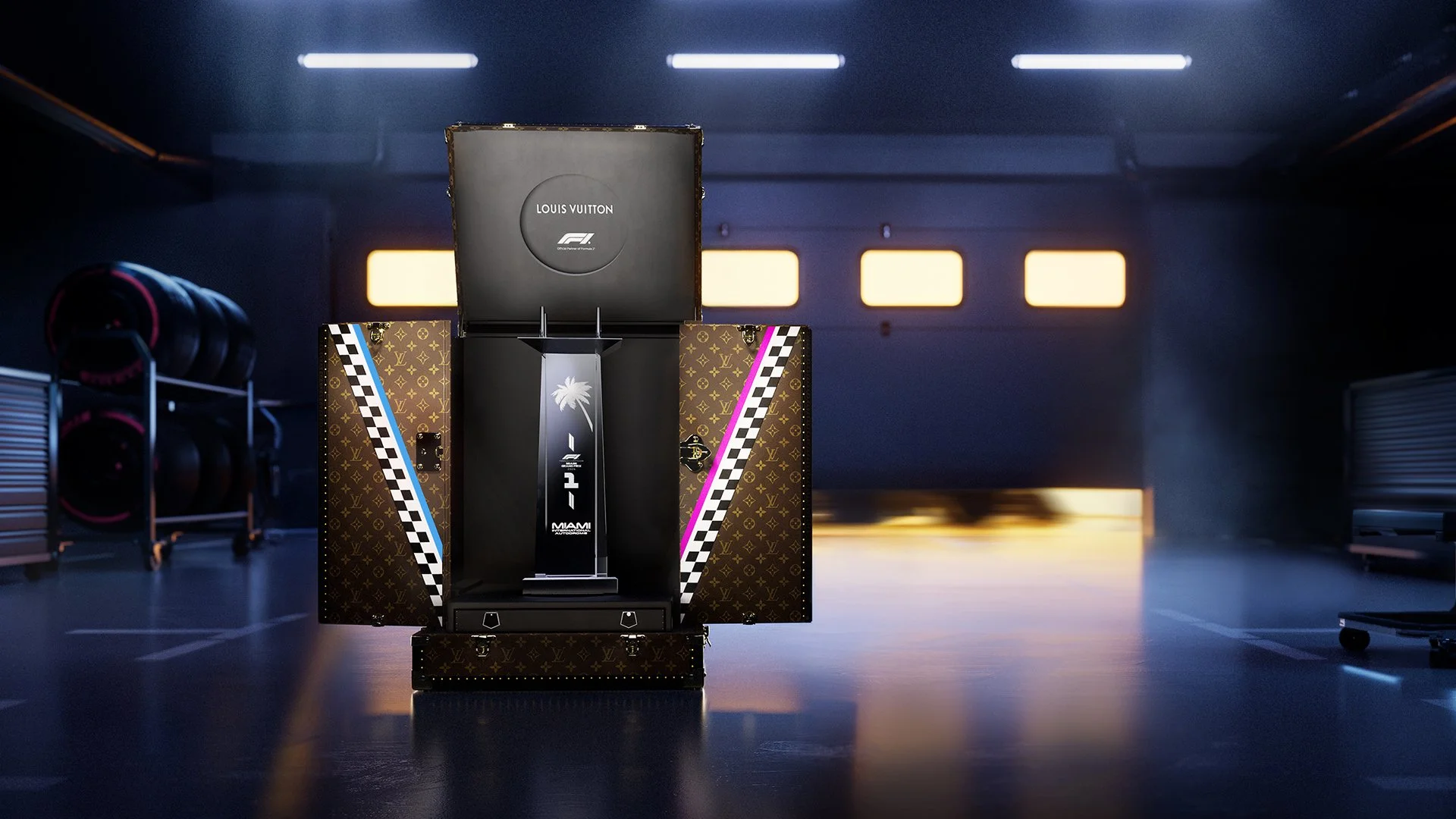
From the FIFA World Cup to the America’s Cup, from the NBA Finals to the Ballon d’Or, the Maison has consistently framed the moment after triumph—the pause where legacy is formalized and memory becomes artifact. In doing so, Louis Vuitton has embedded itself not in the act of competition, but in its enduring symbolism.
Miami, in this context, becomes more than a host city. It is a collaborator. Its cultural elasticity—where Latin American influence meets global luxury—mirrors the duality of Formula 1 itself: hyper-local in atmosphere, yet globally consumed. The trackside branding, infused with motion and heat, echoes the city’s own rhythm, blurring the lines between sport, fashion, and entertainment.
What emerges is a recalibration of what luxury represents in the modern era. It is no longer static. It moves—across circuits, across continents, across cultural touchpoints. And in that movement, Louis Vuitton asserts its relevance not just as a heritage brand, but as an active participant in contemporary spectacle.
In Miami, victory is not only won. It is designed, protected, and ultimately, transported.


HOW DO YOU FEEL ABOUT FASHION?
COMMENT OR TAKE OUR PAGE READER SURVEY
Featured


Wale joins CapSole as Chief Creative Officer and equity partner, bringing his influence in sneaker culture to a business focused on preservation, sustainability, and extending the life of collectible footwear.