
Pratt Institute’s 125th Fashion Showcase Framed Sustainability And Identity As The Next Luxury
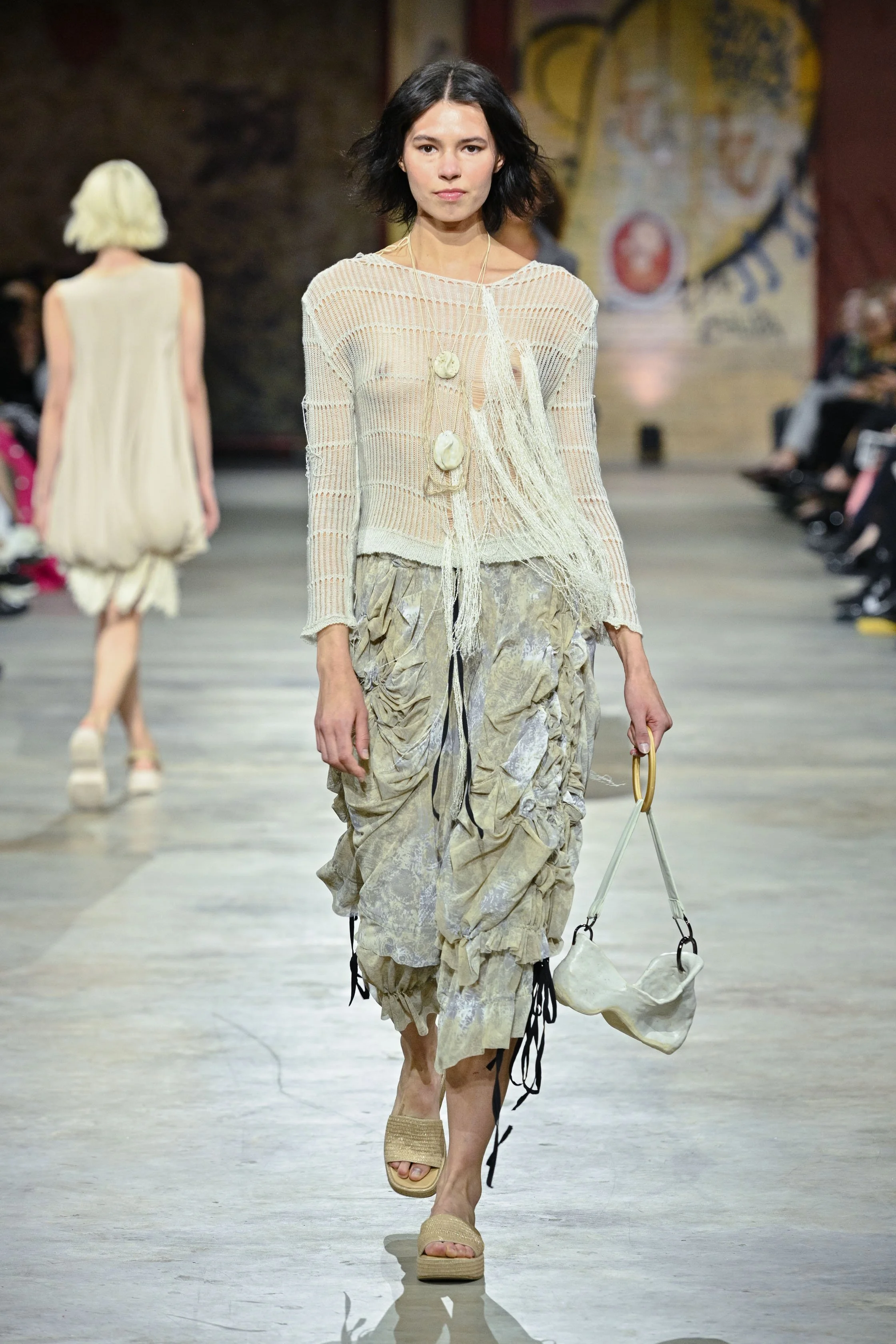
Bea Kohner [Images courtesy of Fernando Colon]
By PAGE Editor
At a moment when fashion education is increasingly tasked with preparing students for both creative relevance and cultural accountability, Pratt Institute used its 2026 Fashion Show to spotlight a graduating class deeply attuned to the emotional and social realities shaping contemporary design. Held at Powerhouse Arts, the school’s 125th annual showcase presented collections that moved beyond trend forecasting, instead examining memory, resistance, sustainability, and the growing tension between humanity and digital acceleration.
The evening presentation opened with remarks from Pratt Institute President Frances Bronet before Céline Semaan presented the 2026 Fashion Visionary Award to Korina Emmerich. Emmerich, whose work through EMME Studio has consistently centered Indigenous futurism and community-driven narratives, reflected on the emotional sincerity embedded throughout the collections shown that evening.
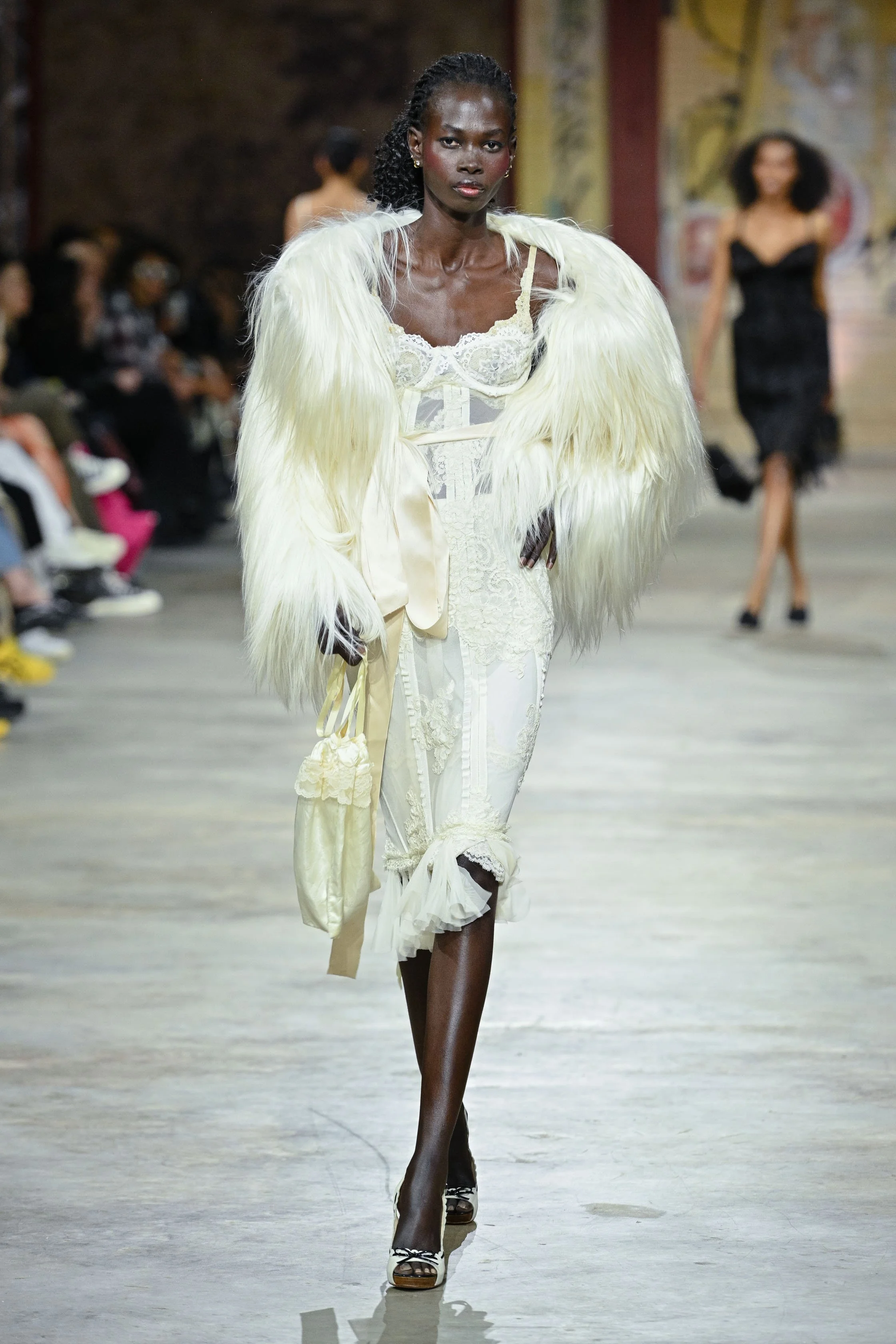
Ava Wilson
“I was so impressed by how much every student at Pratt held their collection so close to their heart,” Emmerich said. “It wasn't about something that was easy to reproduce. It was about making something that meant something.”
That sentiment ultimately became the defining undercurrent of the showcase. Across 155 looks created by 28 graduating designers, the collections resisted spectacle for spectacle’s sake, favoring craftsmanship, storytelling, and intentionality. Students explored themes of family lineage, survival, migration, anti-colonial histories, and ecological consciousness through textile-driven approaches that emphasized weaving, embroidery, hand-dyeing, and artisanal construction techniques.
What emerged was less a conventional student runway and more a reflection of fashion’s evolving role as cultural documentation.
Under the leadership of Fashion Department Chairperson Lisa Z. Morgan, sustainability remained central to the program’s framework. Each senior committed to incorporating responsibly or sustainably sourced materials into their final collections, with many significantly exceeding the department’s minimum requirement.
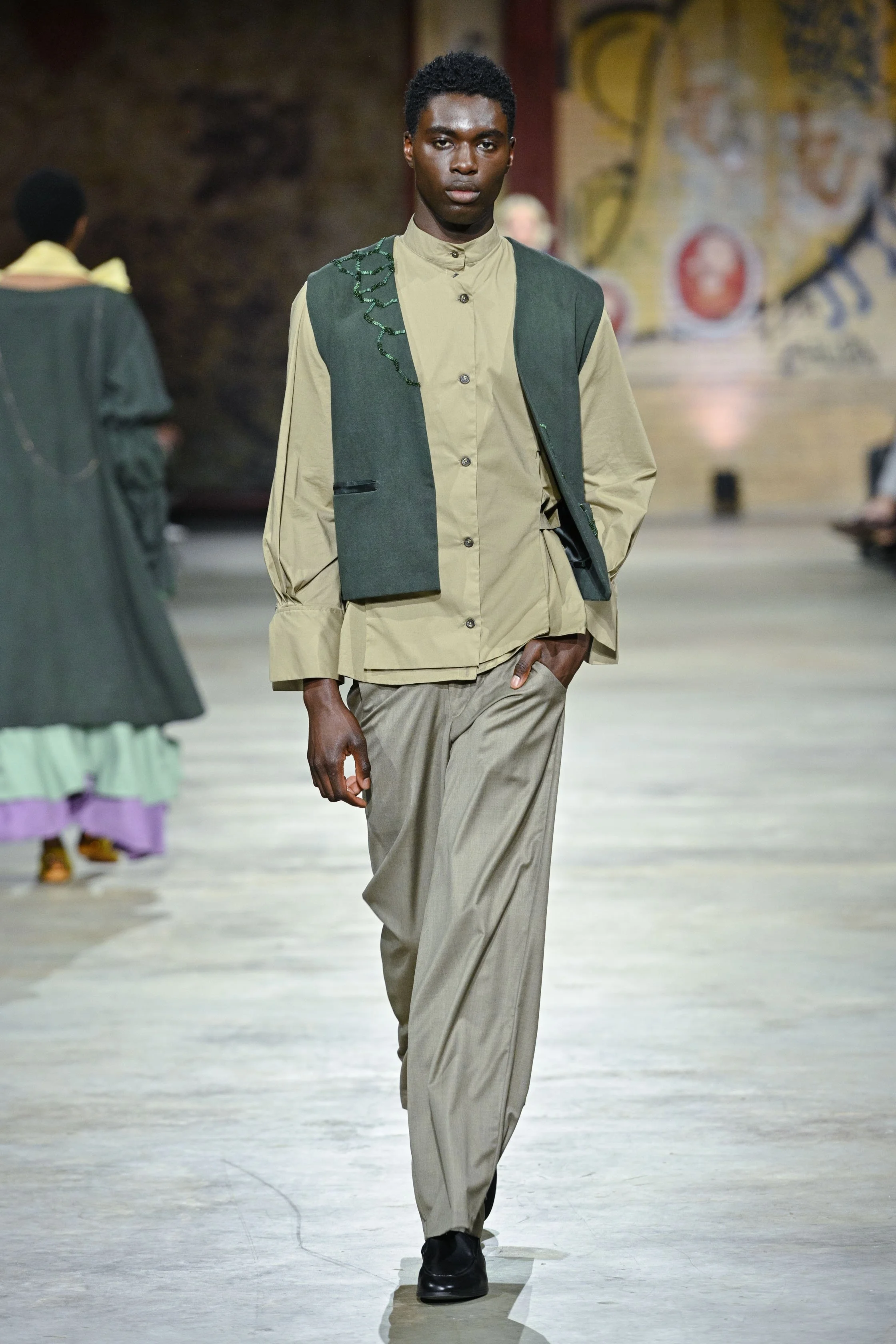
Naisa Agrawal
“Each one of our seniors had to commit to a minimum of 20% responsibly or sustainably sourced resources,” Morgan noted. “In true Pratt fashion, many committed to so much more.”
That philosophy was particularly evident in collections examining craft traditions as forms of preservation and resistance. One standout explored women’s resistance movements in India through textile manipulation and hand-finished detailing, while another merged Norwegian folkdress references with family aviation history to create a nuanced meditation on heritage and identity. Rather than approaching sustainability as a marketing device, many of the collections treated material sourcing and slower production methods as integral extensions of their narratives.
The Fashion Department also recognized graduating student Caleb Callahan with the 2026 Christopher Hunte “On Point” Award for Cork, Kerala, a collection exploring Irish and Indian anti-colonial histories through fashion and textile craft traditions. The recognition underscored the broader thematic direction of the showcase: fashion as a vehicle for historical reflection and cultural continuity.
The graduating designers represented a distinctly international and multidisciplinary cohort, with collections spanning menswear, womenswear, and unisex design while also exploring inclusive sizing and adaptive approaches to fit and wearability. Designers including Naisa Agrawal, Sophia Albaisa, Caleb Callahan, Devon Carlson, Cyril Cao, Vivi Xinran Fan, Stella Minkyung Kim, Lia Skøien, Bea Kohner, Jiaying Tang, and Ava Wilson each approached fashion through deeply personal frameworks, reinforcing how emerging designers are increasingly prioritizing emotional resonance over mass replication.
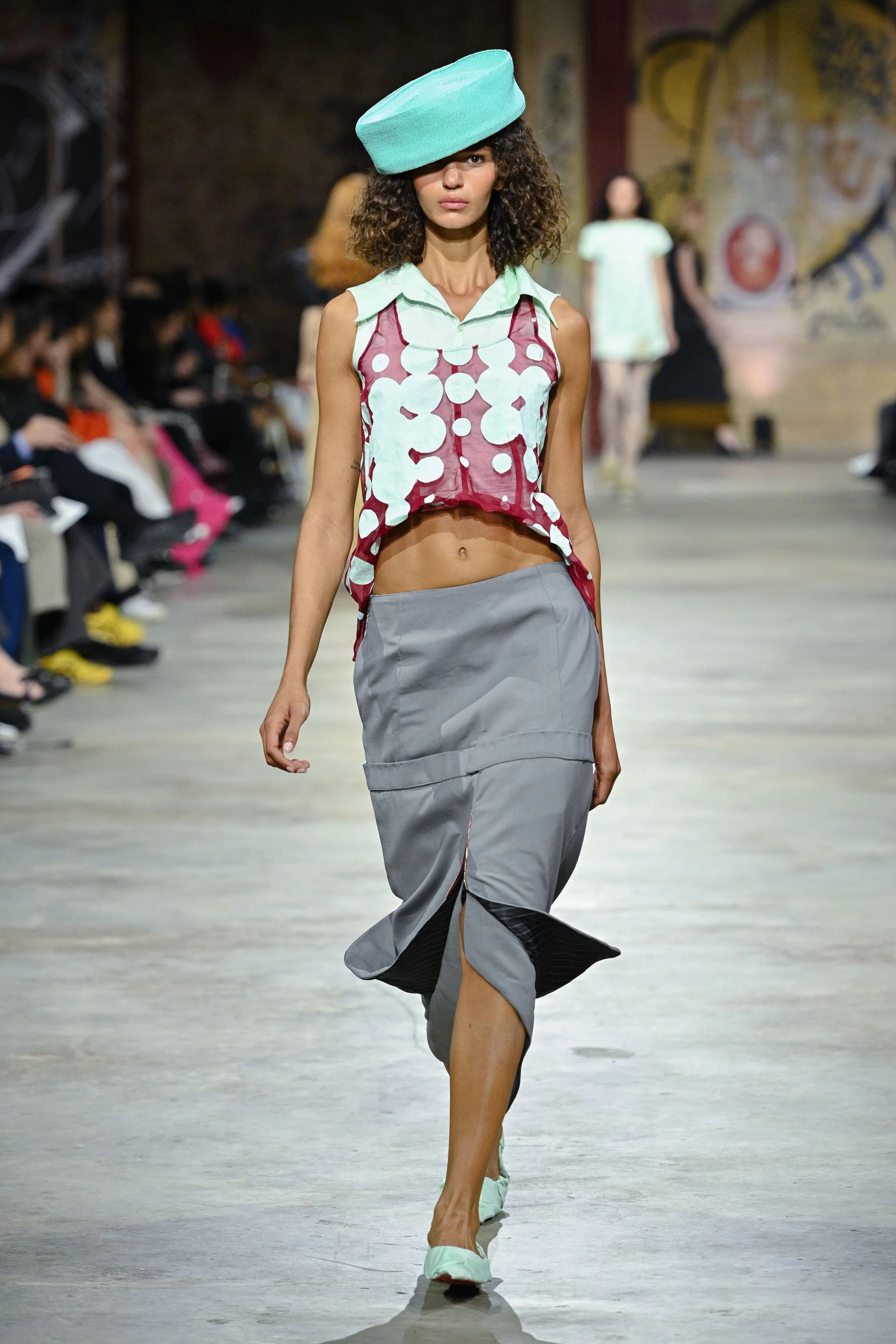
Stella Minkyung Kim
Production elements throughout the showcase reflected the same collaborative rigor. Music direction from The Other Side of the Brain, Henri Scars Struck, and Grace Palmer complemented the collections’ emotional cadence, while beauty direction by the Bryan Bantry Agency team, including Vicky Steckel and William Schaedler, maintained a polished but restrained aesthetic that allowed the garments themselves to remain central.
As fashion continues navigating conversations around sustainability, technological disruption, and cultural authorship, Pratt’s 2026 graduating class offered a compelling reminder that the future of design may not be defined by speed or scale, but by intimacy, craftsmanship, and perspective. In an increasingly digitized creative economy, the collections shown at Pratt argued for something distinctly human: fashion that carries memory, intention, and meaning forward.
See all looks and designers:
HOW DO YOU FEEL ABOUT FASHION?
COMMENT OR TAKE OUR PAGE READER SURVEY
Featured

Better With Age’s FW26 “STOLEN ART” collection expands its circular design philosophy into refined tailoring and limited-edition eyewear, transforming vintage textiles and antique silver flatware into contemporary pieces with a distinct sense of history.