
The Subversive Shift: How Sustainability Is Quietly Rewiring Fashion’s Future
Images courtesy Fashion Institute of Technology:
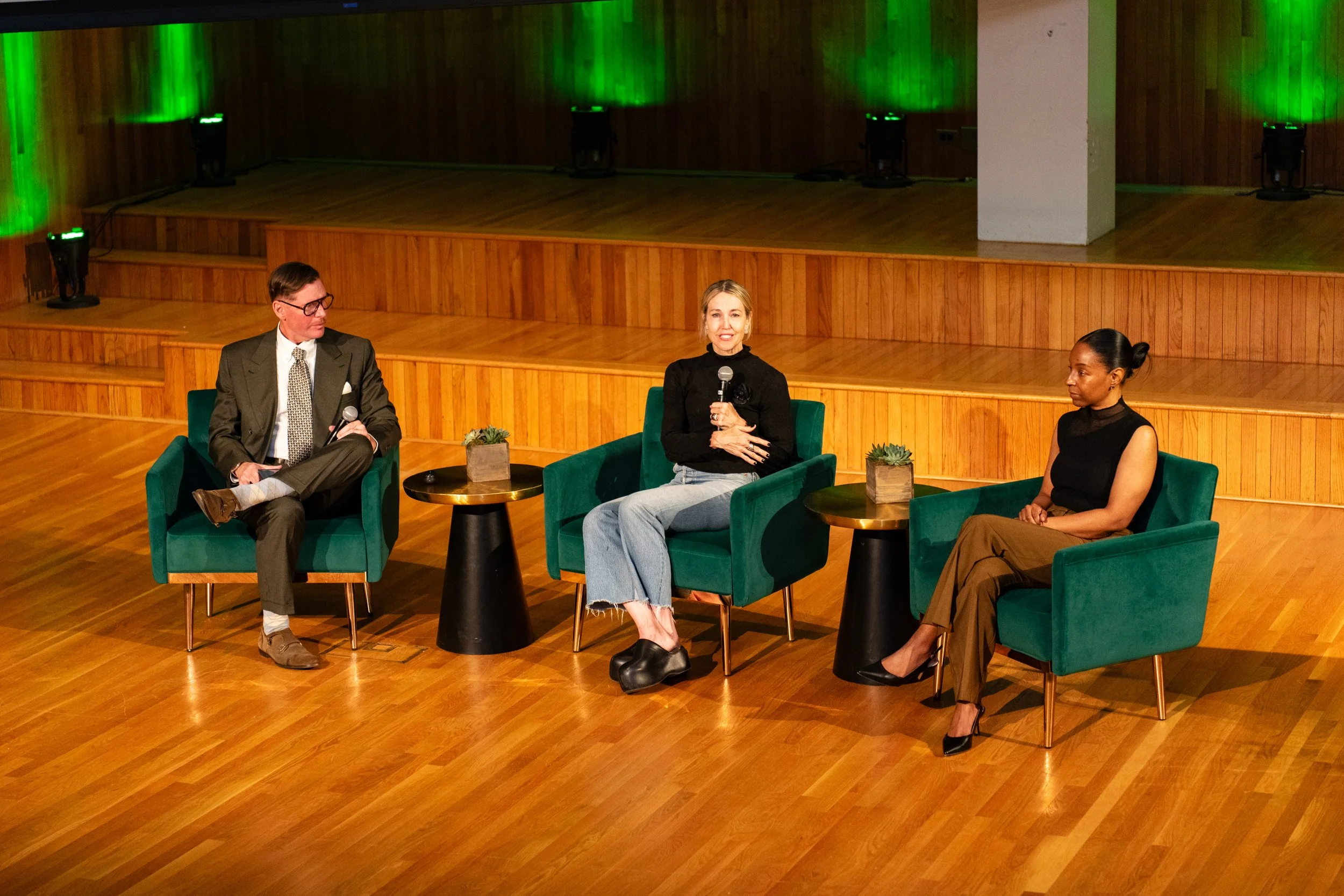
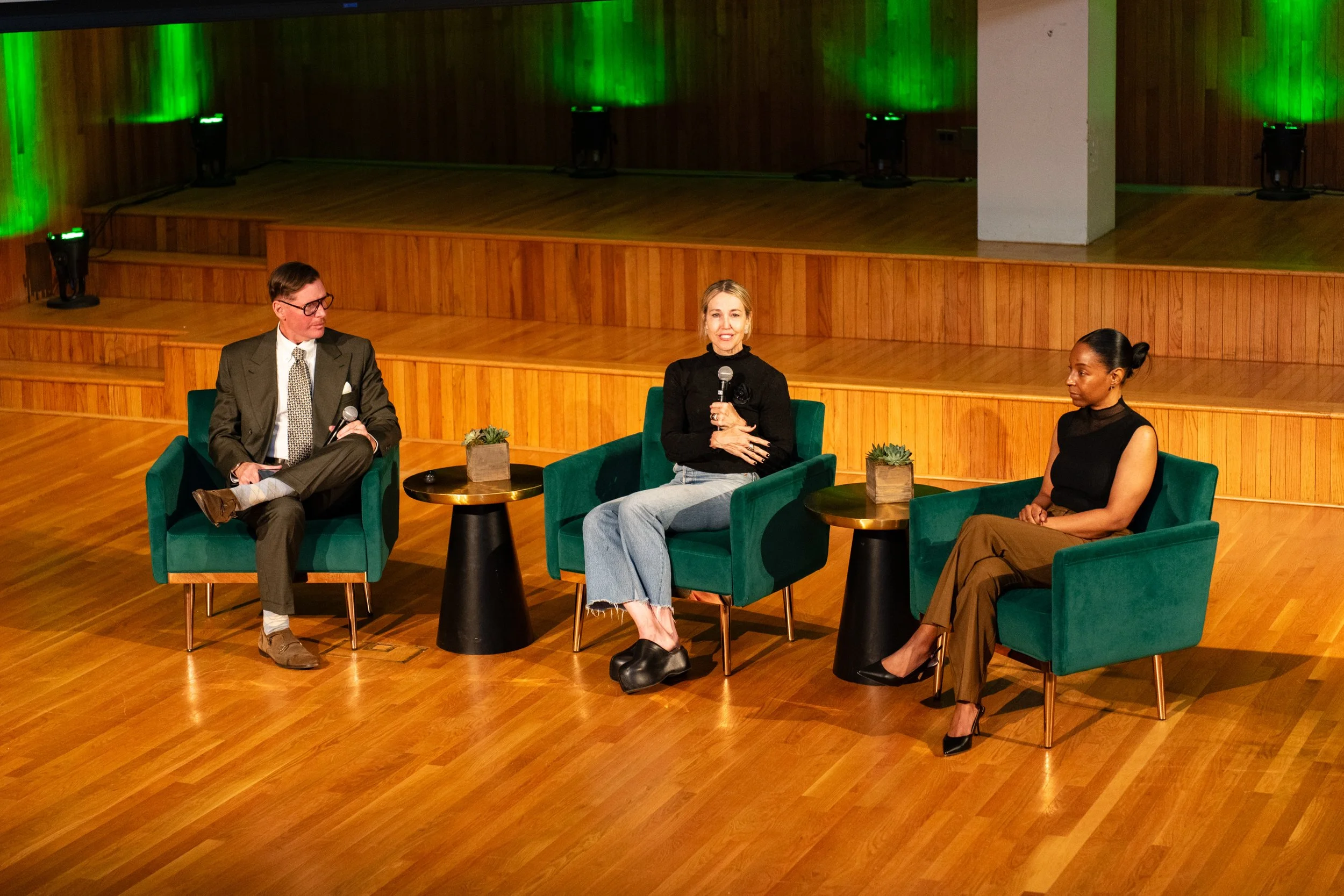
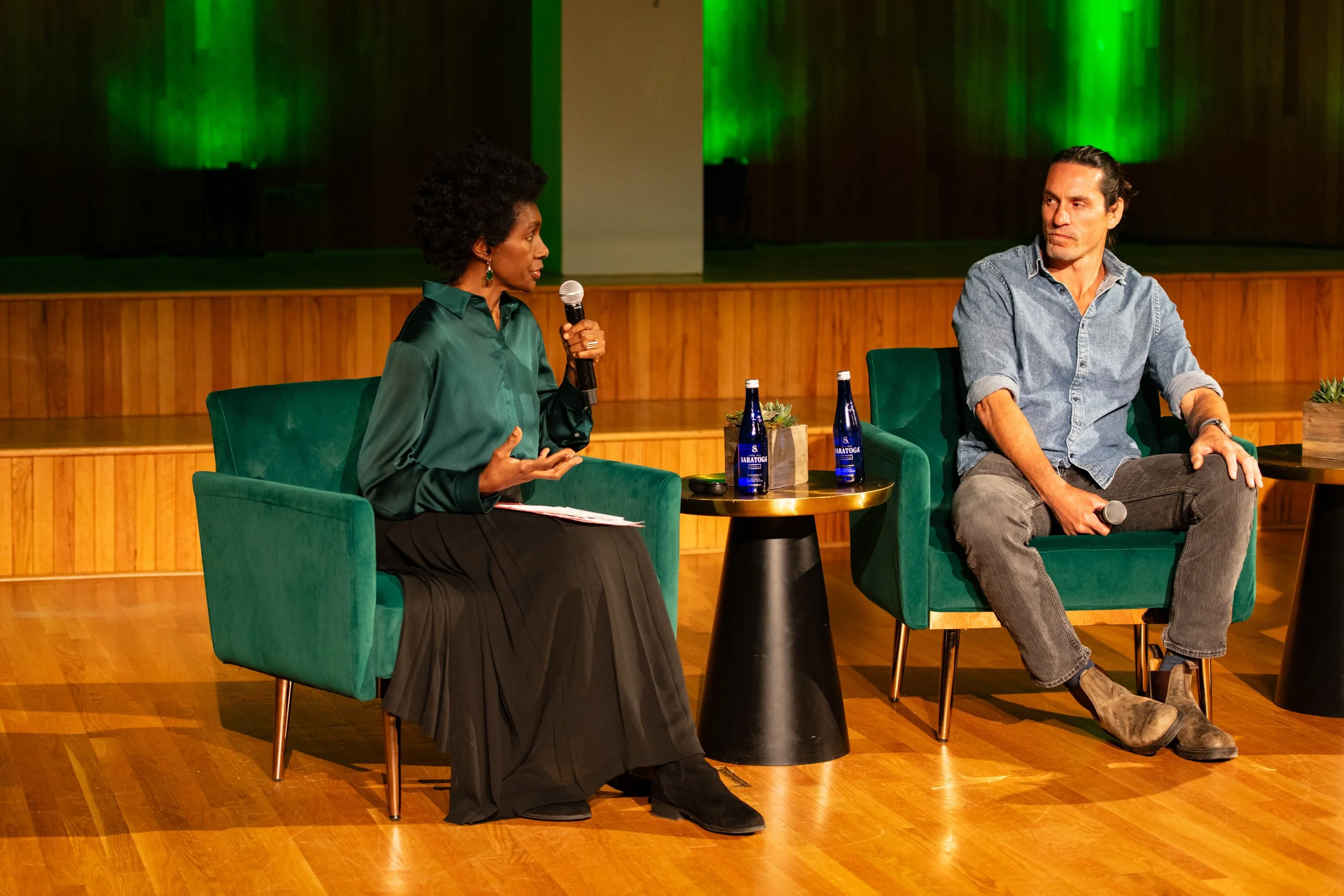
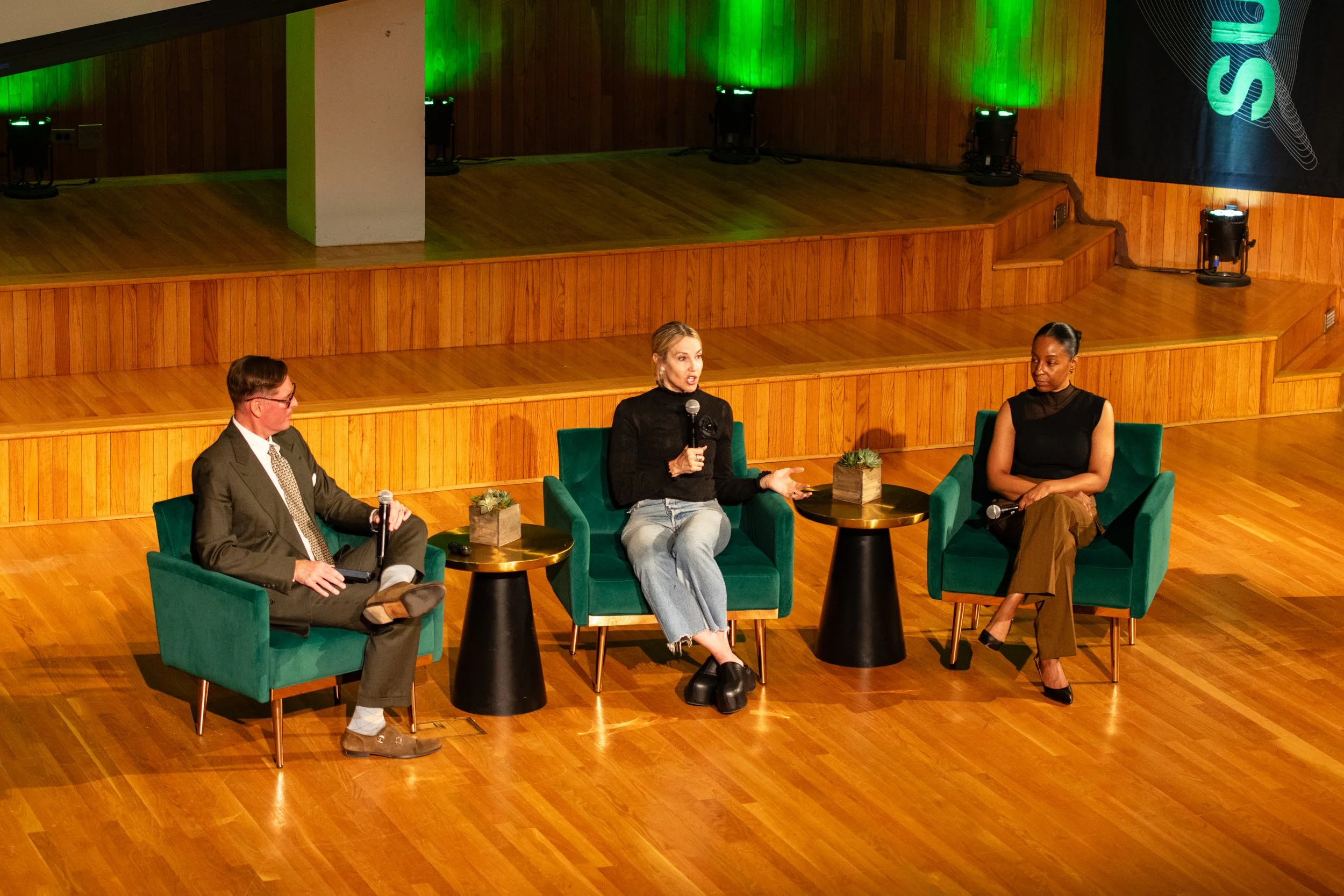
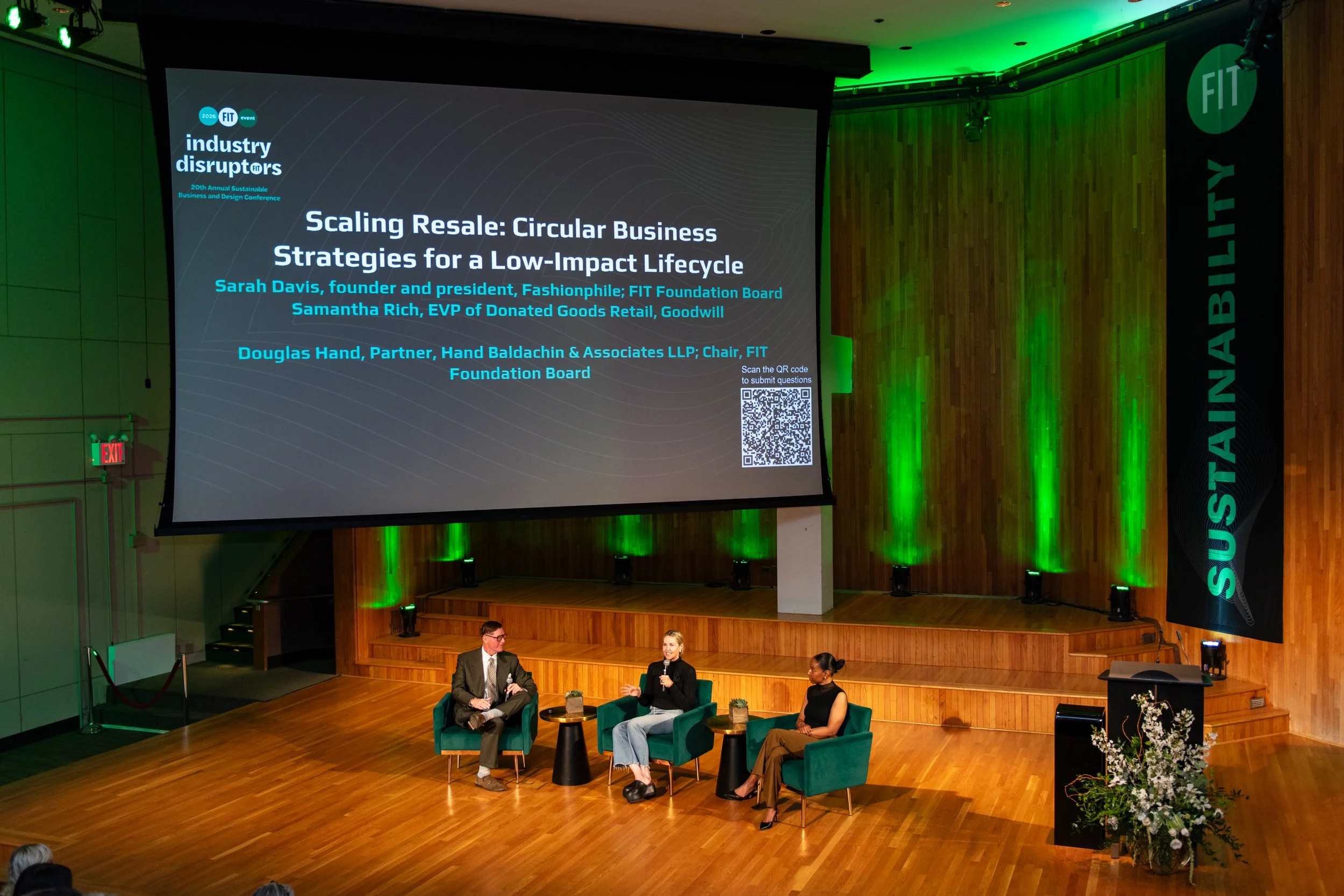
Scaling Resale: Circular Business Strategies for a Low-Impact Lifecycle
The resale market has emerged as a significant driver of circular fashion. By extending garment lifecycles through innovation and strategic partnerships, leaders in the preloved space are responding to shifts in consumer values while working to tangibly reduce fashion’s environmental footprint.
The conversation will be moderated by Douglas Hand—partner, Hand Baldachin & Associates LLP; chair, FIT Foundation Board.
Sarah Davis, founder and president, Fashionphile, member, FIT Foundation Board
Samantha Rich, EVP of Donated Goods Retail, Goodwill
By PAGE Editor
At the Fashion Institute of Technology’s Sustainable Business and Design Conference—held inside the Katie Murphy Amphitheatre—sustainability in fashion no longer reads as a future tense ambition. It registers as an active recalibration, one unfolding in real time, often quietly, and increasingly, subversively.
The 20th anniversary theme, “Industry Disruptors,” is less about spectacle than it is about continuity—about how once-radical ideas have settled into operational reality. What emerged over two days of programming is a portrait of an industry no longer asking if it should change, but rather how deeply it is willing to restructure itself to do so.
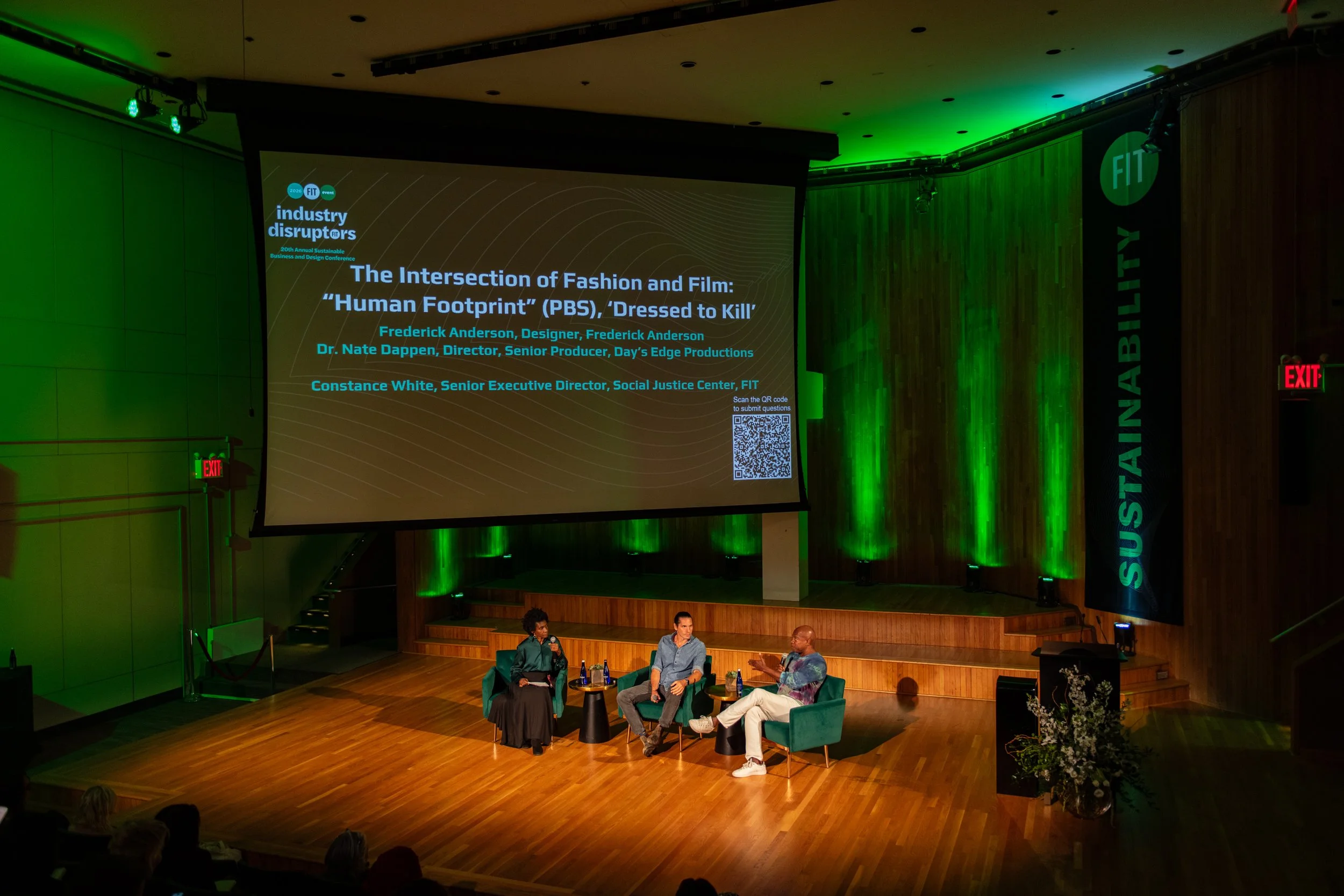
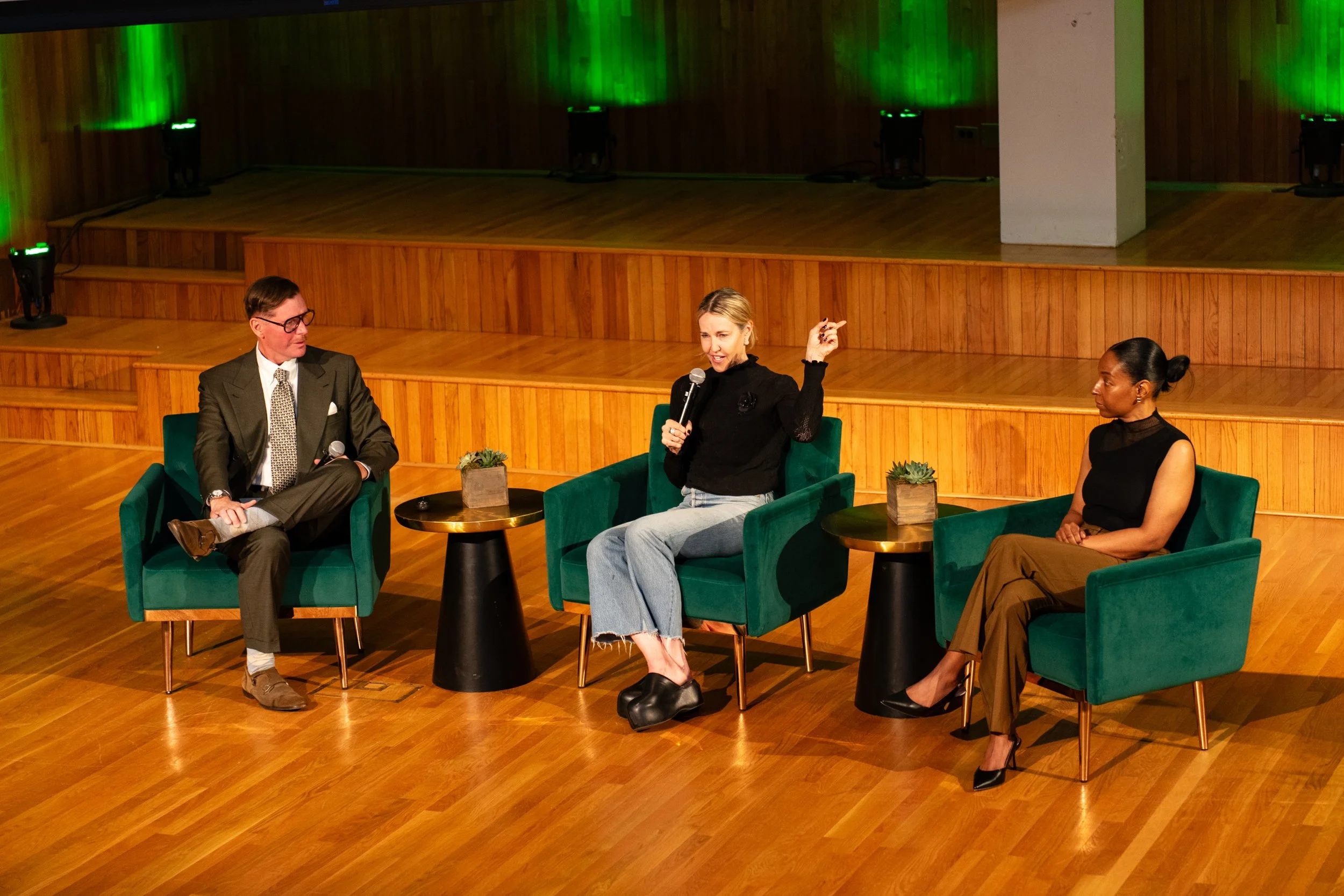
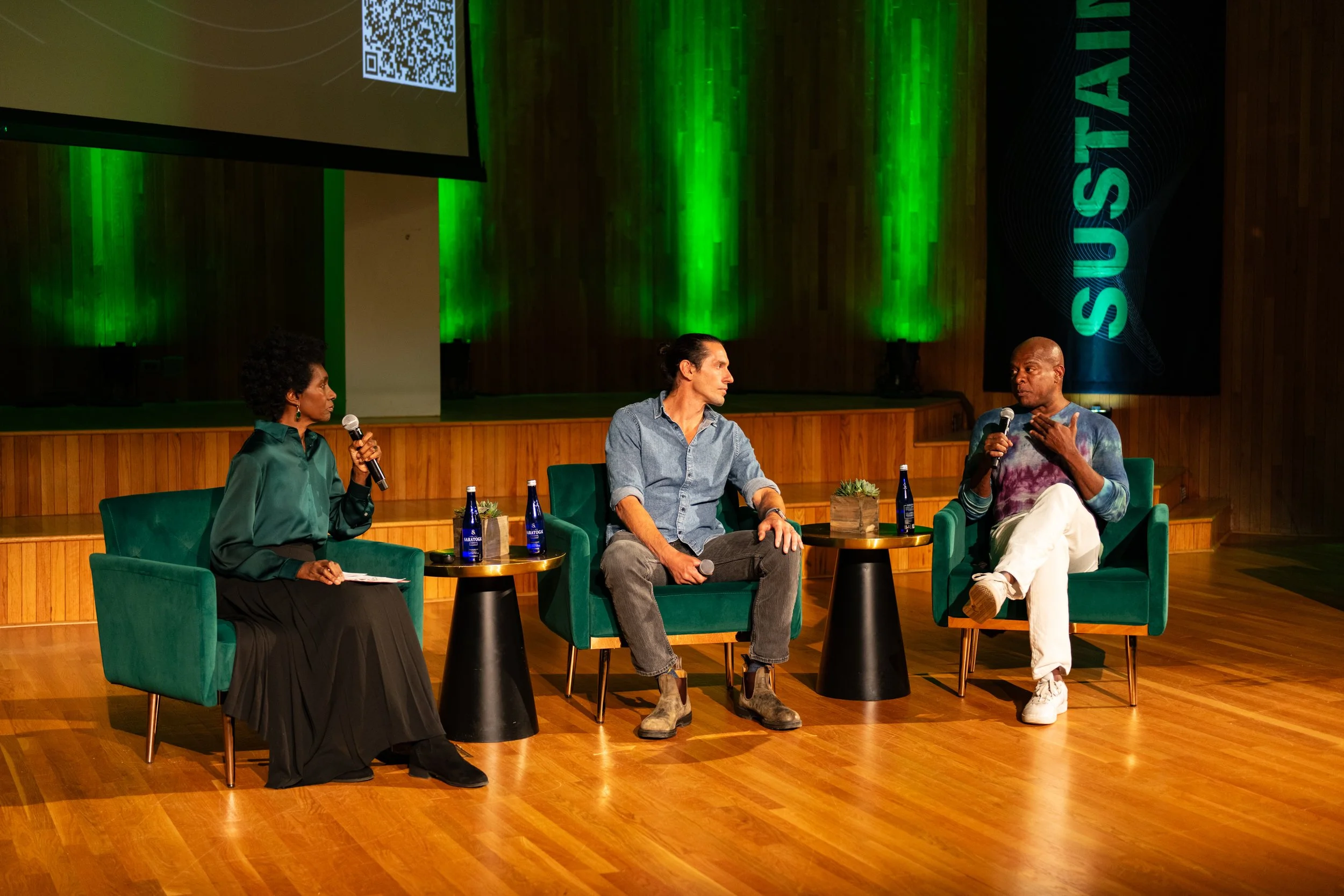
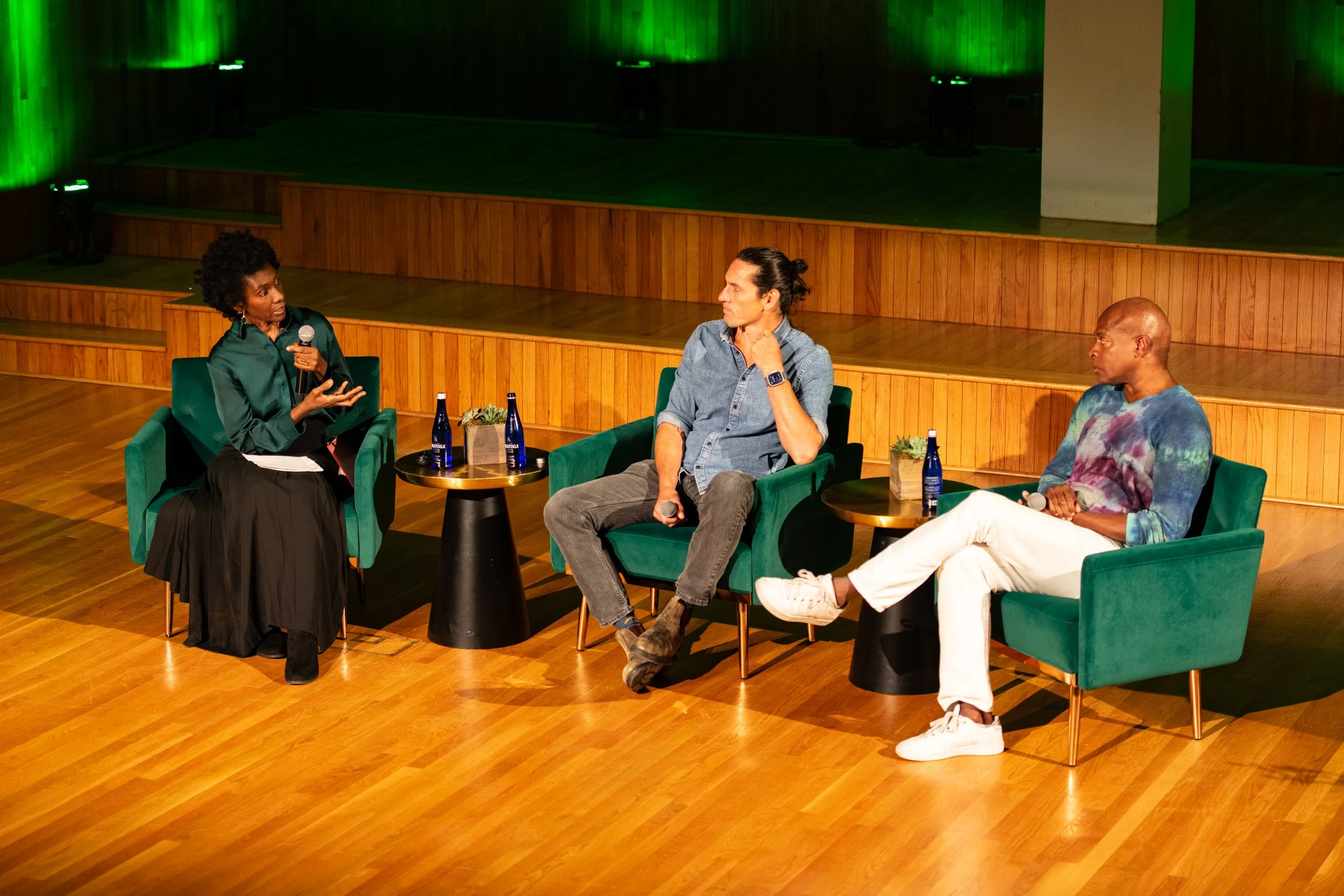
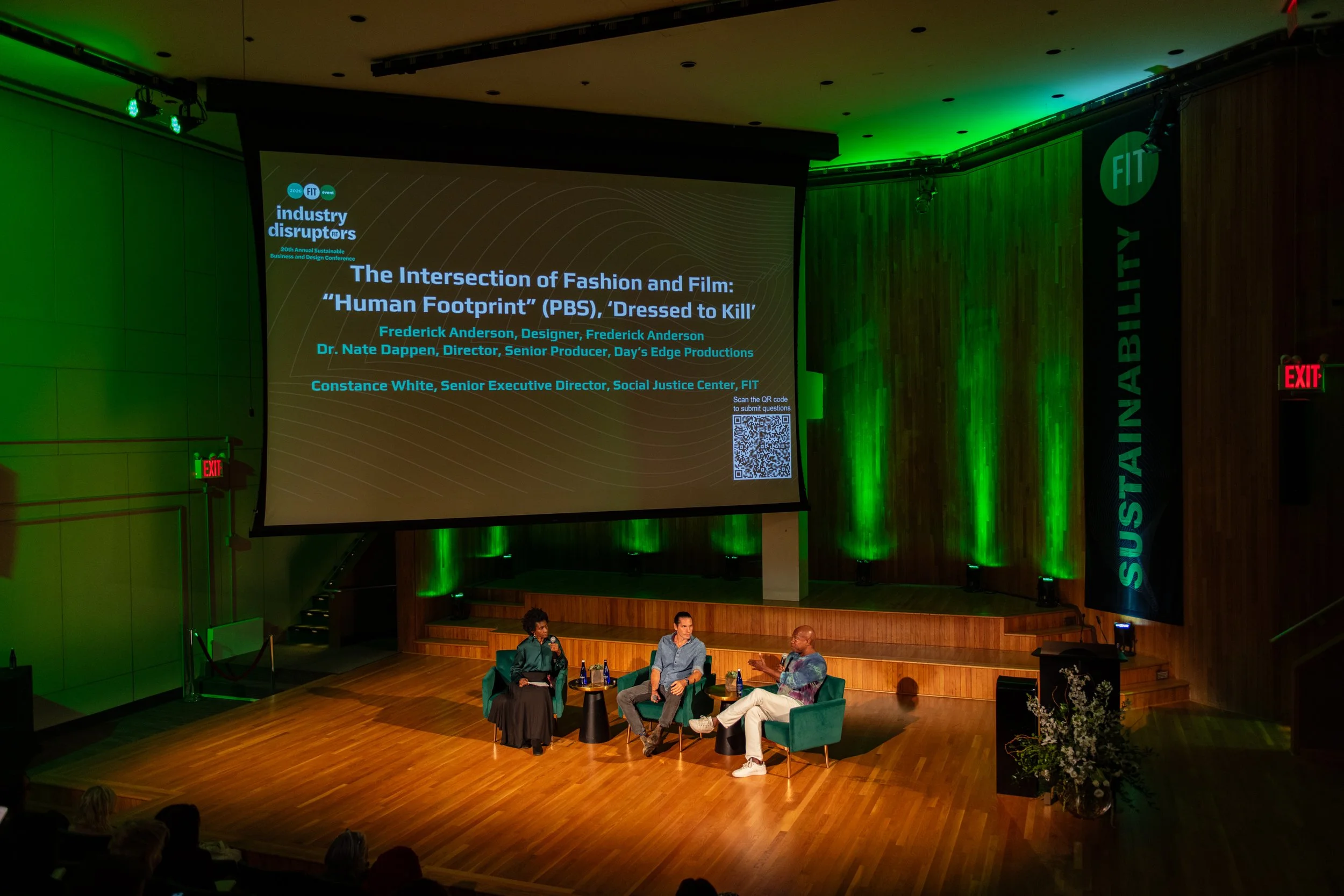
The Intersection of Fashion and Film: “Human Footprint” (PBS), ‘Dressed to Kill’
This session brings together designers, scientists, and filmmakers to explore the environmental reality of what we wear through the lens of film, as seen in the Human Footprint episode “Dressed to Kill.” The panel examines how storytelling can expose the industry’s ecological toll and move audiences beyond awareness toward actual change.
The conversation will be moderated by Constance White—senior executive director of FIT’s Social Justice Center.
Frederick Anderson, designer, Frederick Anderson
Dr. Nate Dappen, director, senior producer at Day’s Edge Productions
From Concept to System
For Dr. Karen R. Pearson, the evolution is both measurable and philosophical. Sustainability, she suggests, has matured beyond isolated innovation into embedded practice:
“I think early in the conversation it was about showcasing an example of innovation… It was like we have this one example of this kind of cool conceptual item… But now today… these ideas have been put into practice. It’s no longer just a conceptual conversation.”
That shift—from prototype to production—is where the real tension lies. Because once sustainability becomes scalable, it begins to challenge the very infrastructure that fashion has relied on for decades: speed, volume, and control.
Pearson frames this transformation not as a clean break, but as an ongoing negotiation between creativity and consequence:

Dr. Karen R. Pearson
“The conversation will continue to evolve… but I think legitimately the thing that has never changed… it has always been a continued call to action.”
This “call to action” is no longer rhetorical. It is curricular, operational, and increasingly, economic.
The Resale Economy’s Quiet Disruption
Nowhere is that economic shift more visible than in the resale market—a space that has grown from secondary afterthought to primary business strategy.
During the “Scaling Resale” panel, Sarah Davis, founder of Fashionphile, offered a candid look at luxury’s hesitation to fully embrace a model that, paradoxically, already benefits it:
“There’s no car company out there that doesn’t participate in resale. Mercedes isn’t like, ‘I’m not doing that.’ It’s like they have their own certified pre-owned Mercedes… and ‘cause they’re making money off of this. And it’s literally tens of billions of dollars…”
The analogy is direct, but the implication is sharper: fashion’s resistance to authenticated resale is not about feasibility—it’s about control.
Luxury’s value system has long been built on scarcity and authorship. To formally enter resale would mean acknowledging a product lifecycle that extends beyond the point of sale—something that destabilizes traditional notions of exclusivity while simultaneously unlocking new revenue streams.
This is the subversion at play. Not loud, not branded—but structural.
Storytelling as Exposure
If resale challenges the business model, storytelling challenges perception. The conference’s exploration of Human Footprint—particularly the “Dressed to Kill” episode by Dr. Nate Dappen—positions film as a critical tool in translating data into emotional clarity.
Where science quantifies impact, film visualizes it.
The episode reframes garments not as static objects, but as carriers of environmental consequence—tracing their journey across geographies, labor systems, and ecosystems. It’s a reminder that fashion’s footprint is not abstract; it is lived, often disproportionately, by communities far removed from the point of consumption.
Pearson underscores this imbalance with striking simplicity:
“The reality is the chances that we chose 100% of our items… produced within a hundred-mile radius… is actually likely zero… some portion of the manufacturing process happened overseas… in many cases… by somebody who will experience the greatest impact.”
The power of Human Footprint lies in its ability to make that distance visible—and, more importantly, uncomfortable.
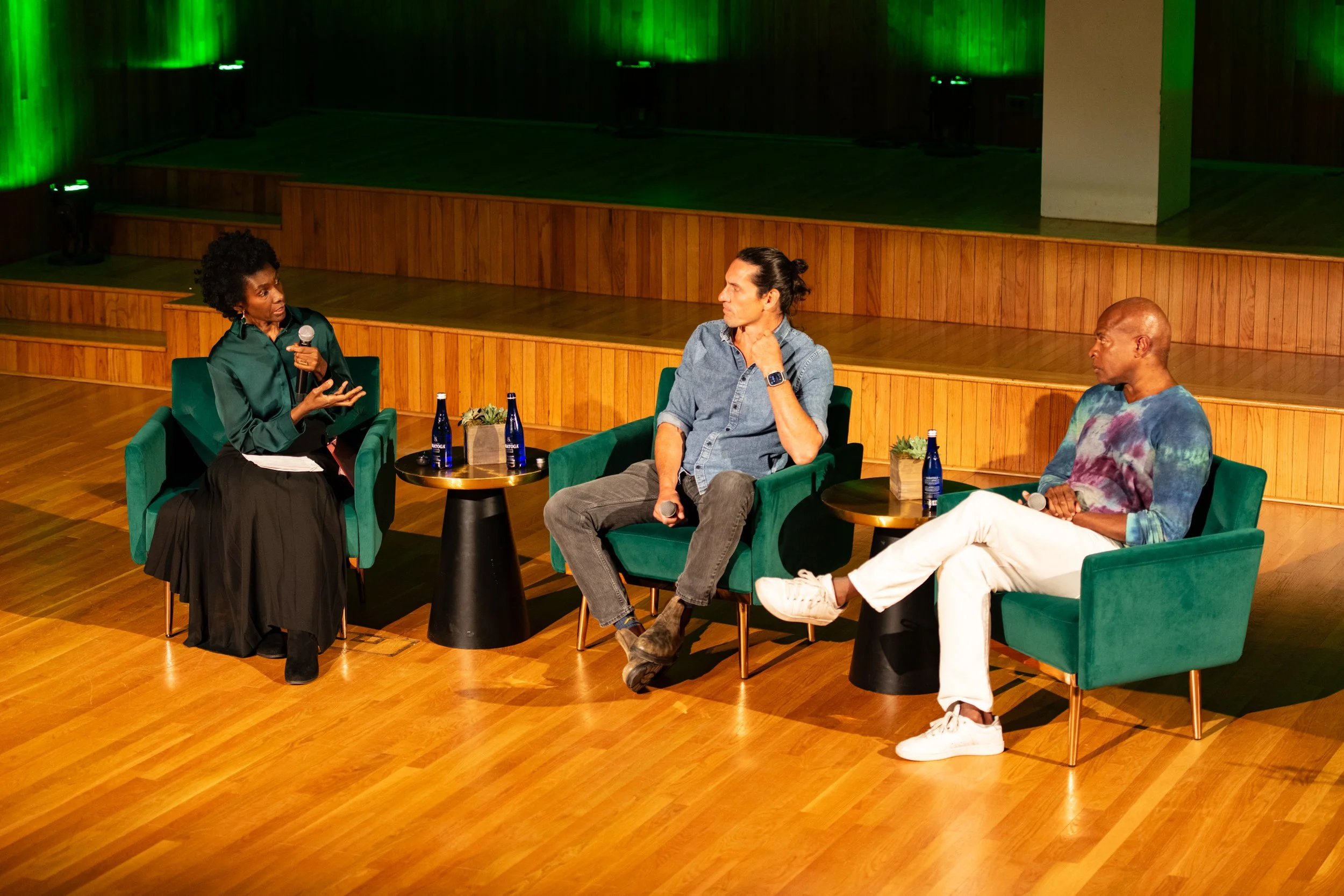
The Intersection of Fashion and Film: “Human Footprint” (PBS), ‘Dressed to Kill’
This session brings together designers, scientists, and filmmakers to explore the environmental reality of what we wear through the lens of film, as seen in the Human Footprint episode “Dressed to Kill.” The panel examines how storytelling can expose the industry’s ecological toll and move audiences beyond awareness toward actual change.
The conversation will be moderated by Constance White—senior executive director of FIT’s Social Justice Center.
Frederick Anderson, designer, Frederick Anderson
Dr. Nate Dappen, director, senior producer at Day’s Edge Productions
Education as Infrastructure
What ties these threads together—resale, storytelling, material innovation—is education. Not as a passive transfer of knowledge, but as an active restructuring of how the industry prepares its future participants.
At FIT, sustainability is no longer siloed. It is integrated across disciplines, from design to business to science, creating what Pearson describes as an “intersectional” framework:
“It’s really about providing voice and opportunity for how we intersect different conversations… and therefore… offer the real opportunity for progress and change… at a broad scale.”
This approach mirrors the industry’s own evolution. Sustainability cannot exist as a department—it must function as a system.
And perhaps more critically, students are arriving with that expectation already in place:
“They come… and they want to also be a different player in that space… They don’t wanna do business as usual… they wanna disrupt them themselves.”

Closing keynote: How Fashion Wins the War on Waste
Inspired by her TEDx talk, Stacy Flynn’s closing keynote explores how innovation and creativity can transform waste into opportunity in the fashion industry. Flynn, CEO and co-founder of Evrnu and FIT alumna, shares insights on sustainable solutions, circular design, and strategies for repairing fashion’s environmental harms while fighting for industry change.
Stacy Flynn, Textile Development and Marketing BS ’99; CEO and co-founder, Evrnu
The Subversive Future
What the conference ultimately reveals is that the future of sustainable fashion will not be defined by a single breakthrough, but by a series of quiet integrations.
Resale becoming standard practice.
Scientific literacy becoming creative currency.
Storytelling becoming accountability.
None of these shifts are inherently disruptive on their own. But together, they begin to erode the legacy structures that have long insulated the industry from its externalities.
This is the subtext of sustainability today: not a rebrand, but a redistribution of power—across supply chains, across ownership, across narrative.
And if there is a throughline connecting Pearson’s systems thinking, Davis’s economic pragmatism, and Human Footprint’s visual urgency, it is this:
Fashion is no longer being asked to imagine a better future.
It is being forced to reconcile with the one it has already created.


HOW DO YOU FEEL ABOUT FASHION?
COMMENT OR TAKE OUR PAGE READER SURVEY
Featured





Telfar's SS2027 collection transforms the sample sale into a runway, using inside-out tailoring, manipulated materials, New York street references and a Brooklyn-to-Paris spectacle to question who gets to define fashion—and where it actually happens.