
7 Wood Fence Styles That Complement Pacific Northwest Home Architecture
PAGE
By PAGE Editor
If you’re choosing wood fence styles Pacific Northwest homes need, the right option balances moisture resistance, durability, and architectural fit. In Washington State—where rainfall, humidity, and moss growth are constant factors—fence design isn’t just about looks. It must handle wet conditions while enhancing curb appeal.
The best wood fence styles for the Pacific Northwest include cedar privacy fences, horizontal slat designs, board-on-board fencing, and modern mixed-material styles. Each offers different levels of airflow, longevity, and maintenance requirements.
This guide breaks down 7 proven fence styles that perform well in Seattle, Tacoma, and surrounding areas—along with when to use each and how to avoid common mistakes homeowners make in wet climates.
Why Fence Style Matters in the Pacific Northwest
Before choosing a design, it’s important to understand how the local environment affects fencing.
Washington’s climate presents three major challenges:
High rainfall (Seattle averages 35–40 inches annually)
Moisture retention leading to rot and mildew
Limited sunlight slowing drying time
Because of this, not all wood fence styles perform equally.
Cedar remains the most popular material in the region because it:
Naturally resists rot and insects
Handles moisture better than pressure-treated pine
Ages into a gray patina that suits Northwest aesthetics
Local building considerations also matter:
Many cities cap fence height at 6–8 feet
Front yard fences often have stricter design rules
HOA guidelines may dictate style and materials
1. Cedar Privacy Fence (Solid Panel Design)
Best for: Maximum privacy and noise reduction
This is the most common option among wood fence styles Pacific Northwest homes use, especially in suburban neighborhoods.
Key Features:
Full vertical boards with no gaps
Strong wind and noise barrier
Classic appearance that fits most home styles
Pros:
Excellent privacy
Works well for small lot homes
Straightforward installation
Cons:
Limited airflow (can trap moisture)
Requires sealing or staining every 2–3 years
Local Insight:
In areas like Seattle and Bellevue, solid cedar fences are often paired with pressure-treated posts set in concrete to prevent ground-level rot.
2. Board-on-Board Fence (Shadowbox Style)
Best for: Privacy + airflow balance
This design alternates boards on either side of the rail, creating slight gaps while maintaining coverage.
Why it works in Washington:
Improves airflow, reducing moisture buildup
Maintains privacy from most viewing angles
More stable during seasonal expansion
Pros:
Longer lifespan than solid panel fences
Visually appealing from both sides
Ideal for shared property lines
Cons:
Higher material cost
Slightly less privacy than full panel
For homeowners considering custom wood fence installation in Washington State, board-on-board fencing is often recommended as a long-term solution for wet climates.
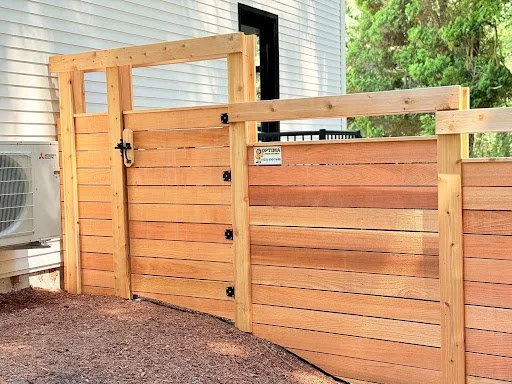
3. Horizontal Slat Fence (Modern Style)
Best for: Contemporary homes and clean lines
Horizontal fencing has gained popularity across the Pacific Northwest due to modern architectural trends.
Design Characteristics:
Long horizontal boards
Even spacing between slats
Often paired with metal or steel posts
Pros:
Modern, high-end appearance
Allows airflow (reduces moisture retention)
Can be customized for privacy level
Cons:
Requires precise installation
Higher upfront cost
Needs consistent maintenance to prevent warping
Local Tip:
Use kiln-dried cedar or thermally modified wood to prevent warping caused by Washington’s fluctuating moisture levels.
4. Lattice-Top Fence
Best for: Decorative privacy with light penetration
This style combines a solid lower section with a lattice pattern at the top.
Benefits in rainy climates:
Allows sunlight to pass through
Reduces visual heaviness in small yards
Improves airflow compared to solid panels
Pros:
Attractive, traditional design
Good balance of privacy and openness
Works well with garden landscapes
Cons:
Lattice requires more maintenance
Can weaken over time if not sealed properly
5. Split Rail Fence with Wire Backing
Best for: Large properties and rural settings
Common in areas outside dense urban zones, this style is more functional than decorative.
Features:
Horizontal rails with open gaps
Often paired with wire mesh for containment
Pros:
Low cost
Minimal maintenance
Natural, rustic appearance
Cons:
Limited privacy
Not ideal for urban homes
This style works particularly well in parts of Snohomish County and eastern Washington where larger lot sizes are common.
6. Picket Fence (Traditional Style)
Best for: Front yards and classic homes
Picket fences are iconic and still widely used in older neighborhoods.
Design Elements:
Evenly spaced vertical boards
Decorative tops (rounded, pointed, or flat)
Pros:
Enhances curb appeal
Complies with most front-yard regulations
Lower material cost
Cons:
Minimal privacy
Requires regular maintenance
Local Application:
In historic Seattle neighborhoods, picket fences often align with architectural preservation guidelines.
7. Mixed Material Fence (Wood + Metal)
Best for: High-end, low-maintenance designs
This modern option combines wood panels with metal frames or posts.
Why it’s ideal for the Pacific Northwest:
Metal resists moisture damage
Wood adds warmth and natural appeal
Increased structural durability
Pros:
Long lifespan
Contemporary aesthetic
Reduced maintenance compared to full wood
Cons:
Higher upfront cost
Requires skilled installation
Homeowners exploring premium designs often start with a fence design consultation Seattle to determine the best combination of materials for their property and climate conditions.
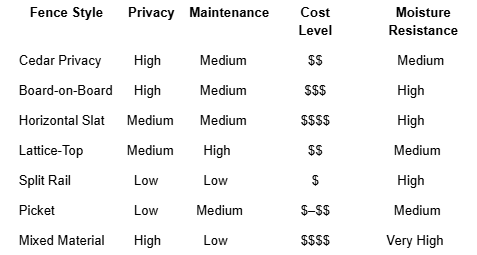
Comparison Table: Best Wood Fence Styles for Washington Homes
How to Choose the Right Fence Style for Your Home
Selecting the right option depends on your priorities:
Choose based on your goals:
Privacy: Cedar privacy or board-on-board
Modern design: Horizontal or mixed material
Low maintenance: Mixed material or split rail
Curb appeal: Picket or lattice-top
Consider site conditions:
Drainage and soil moisture
Sun exposure
Wind direction
Property slope
Think long-term:
Maintenance schedule
Staining or sealing costs
Expected lifespan (typically 10–25 years for cedar)
Common Mistakes to Avoid in the Pacific Northwest
Many fence failures happen due to poor planning rather than bad materials.
Avoid these issues:
Installing untreated posts directly in soil
Skipping sealant in the first year
Choosing dense designs with no airflow
Ignoring drainage around fence lines
Proper installation and material selection can extend fence life by 30–50%.
Conclusion: Choosing the Best Wood Fence Styles Pacific Northwest Homes Need
The right wood fence styles Pacific Northwest homes require must balance design with durability. In Washington’s wet climate, airflow, material quality, and installation methods matter just as much as aesthetics.
Whether you prefer a modern horizontal fence or a classic cedar privacy design, choosing the right style ensures your fence lasts longer, looks better, and adds real value to your property.
FAQ Section
1. What is the best wood for fences in the Pacific Northwest?
Cedar is the top choice because it naturally resists rot, insects, and moisture. It performs better than pressure-treated pine in Washington’s wet climate and requires less chemical treatment.
2. How long does a wood fence last in Washington State?
A well-maintained cedar fence typically lasts 15–25 years. Proper sealing, drainage, and installation techniques can significantly extend its lifespan despite constant exposure to rain and humidity.
3. Do I need a permit to build a fence in Seattle?
Most fences under 6 feet don’t require a permit, but rules vary by location. Height limits, setbacks, and HOA guidelines may apply, so always verify with your local municipality.
4. How much does a wood fence cost in Washington?
Costs usually range from $25 to $60 per linear foot depending on style, material quality, and labor. Premium designs like horizontal or mixed-material fences can cost significantly more.
5. How do I prevent my fence from rotting?
Use cedar or treated wood, install posts with proper drainage, and apply sealant every 2–3 years. Ensuring airflow around the fence also helps reduce moisture buildup and prolong lifespan.
HOW DO YOU FEEL ABOUT FASHION?
COMMENT OR TAKE OUR PAGE READER SURVEY
Featured





Wale joins CapSole as Chief Creative Officer and equity partner, bringing his influence in sneaker culture to a business focused on preservation, sustainability, and extending the life of collectible footwear.