
How to Spot a Quality Thobe Before You Buy One Online
PAGE
By PAGE Editor
Quick answer: A quality thobe shows in four places: fabric matched to the style, clean reinforced stitching at the collar and cuffs, a cut that falls straight to the ankle without pulling at the shoulders, and a seller who owns and inspects their stock instead of drop-shipping it from overseas. Photos hide all four. This guide shows you how to check anyway.
In a product photo, every thobe looks the same. White, straight, clean. The cheap one drop-shipped from a warehouse you will never see and the one cut from real Italian linen photograph almost identically. You cannot feel the fabric through a screen. You cannot check the stitching. You find out what you actually bought three weeks later, when a package arrives from somewhere you did not expect and the thing inside is thinner, shorter, or more crooked than the picture promised.
Brother, most men learn this the hard way — once. Then they learn what to look for.
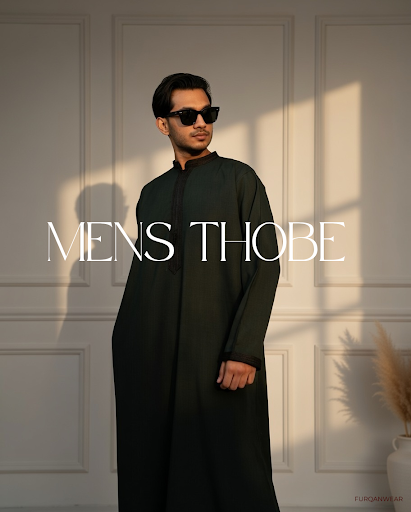
That is what this guide is. Four checks you can run from the product page, before your money leaves your hand. If you want a reference point for what each one looks like done right, Furqanwear's men's thobes — a Canadian brand that owns and inspects its stock across the Saudi, Emirati, Omani, and Moroccan cuts rather than drop-shipping — are built to the standard this guide describes. Whether or not you buy there, the four checks are the same everywhere.
Know what kind of thobe you are buying first
"Thobe" is not one garment. It is a category, and the regional cuts are built differently — so quality looks different depending on which one you are buying. Judge a Moroccan thobe by Saudi standards and you will misread it completely.
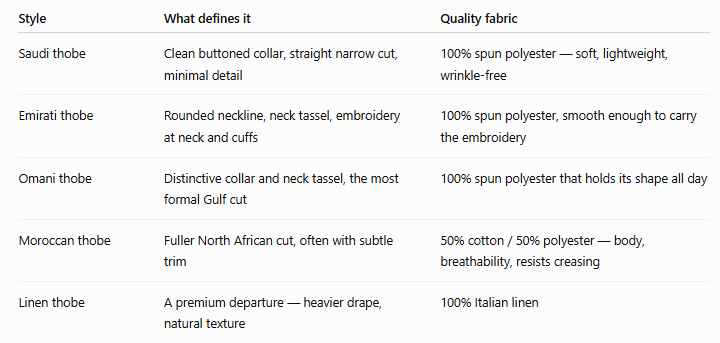
The pattern most sellers hide: the fabric should match the cut. Gulf thobes are spun polyester because it stays crisp on the masjid floor and does not wrinkle when you stand for prayer. A cotton blend suits the fuller Moroccan cut. Linen is its own tier. A seller who runs one cheap fabric across every "style" and just swaps the collar is selling a costume, not a thobe.
What is a quality thobe, really?
Quality comes down to four things: fabric weight, stitch integrity, cut, and the seller's sourcing. Color, embroidery, and brand name are secondary. Here is how to read each from a product page.
1. Fabric — weight and honesty
The most common downgrade in a cheap thobe is thin fabric that photographs fine and falls apart in the wash. Look for the composition stated plainly: "100% spun polyester," "50% cotton / 50% polyester," "100% Italian linen." Vague language — "premium fabric," "luxury blend" — with no actual composition is the red flag. If they will not name the fabric, they are hiding it.
2. Stitching — the tell photos catch
Zoom in on the collar, cuffs, and side seams in the product images. Quality stitching is even, tight, and reinforced at stress points. Loose threads or puckered seams in the photo look worse in person. The collar is the hardest part of a thobe to build well — if it photographs clean and sits flat, the maker knew what they were doing.
3. Cut and fit — it should fall, not hang
A thobe should fall straight to the ankle. Check the size chart for real measurements — chest, shoulder, length — not just S/M/L. The shoulders are the critical point: loose everywhere else is fine, but the shoulder seam should sit where your shoulder ends. And confirm the range fits you — many sellers stop at XL and leave larger brothers with nothing.
4. The seller — owned stock vs drop-shipped
This is the one nobody tells you about, and it matters more than the rest combined.
Many online Islamic clothing stores look local but are drop-shippers — they never touch the thobe. You order, they forward it to a warehouse overseas, and the garment ships straight to you from China or the Gulf. Nobody inspected it. That is why it takes three to four weeks, and why the quality is a gamble. A seller who owns their inventory and inspects it before it ships is the opposite bet: someone actually looked at this garment before it went in the box. That single fact is most of what "quality control" means in practice.
How Furqanwear inspects a thobe before it ships
Here is what that inspection standard actually looks like, using one brand as the worked example.
Furqanwear is a Canadian brand that holds its own stock rather than drop-shipping — which means every thobe is physically on hand to be checked before it goes out. In practice, that means confirming the fabric is the right weight for the cut (spun polyester on the Gulf styles, the cotton blend on the Moroccan, real linen on the linen thobe), that the collar and cuff stitching is clean, and that the garment matches the size it is labelled — across a range that runs XS up to 4XL depending on the style.
You do not need to buy from any one brand to use this. The point is the standard: a thobe someone inspected beats a thobe nobody did. Ask any seller whether they hold and check their stock, or forward your order overseas. The answer tells you most of what you need to know.
How to tell where a thobe actually ships from
Sourcing is the hardest thing to verify, so here are the practical tells:
Read the delivery estimate. Fifteen to thirty days almost always means overseas, one garment at a time.
Check the returns policy. If returning means shipping to another country at your own cost, the "local" storefront is a front.
Search the brand name plus "reviews." Drop-ship complaints — wrong sizes, month-long waits, no reply — surface fast.
Are thobes sunnah, or cultural?
The thobe is broadly cultural rather than strictly religious, though a modest, loose, ankle-length dress aligns with Islamic guidance for men. The long, loose garment traces to the Arabian Peninsula and embodies the deen's principles of modesty well. White carries particular weight for Jummah and Eid, drawn from the Prophet ﷺ encouraging white garments.
Why it matters for buying: you are not bound to one style, which frees you to choose the cut and fabric that suit your life. A brother in a cold climate is not less correct for choosing a heavier thobe. Buy the one you will wear.
What do you wear under a thobe?
Under a thobe, most men wear a plain undershirt and loose trousers or a sarong-style wrap, in a light color that will not show through — especially under white. Cotton against the skin keeps a polyester thobe comfortable through a long day. Nothing that shows through, nothing that bunches, nothing that fights the clean line.
Under a white thobe, this matters more than men expect: a dark undershirt reads straight through thin white fabric in daylight — another reason to check fabric weight before you buy.
The short version
Before you check out:
Know the cut — Saudi, Emirati, Omani, Moroccan, or linen — because quality looks different for each.
Read the fabric composition. If it is not stated plainly, be suspicious.
Zoom in on the collar and cuff stitching. It should look clean and even.
Check the size chart for real measurements and confirm the range fits.
Find out if the seller owns their stock or dropship it. This is the difference between a thobe someone inspected and one nobody did.
The men who get burned buying thobes online are judged by the photo and the price. The men who wear the same thobe for years checked those five things first.
A good thobe is not complicated: honest fabric, clean construction, a cut that falls right, and a seller who stands behind it. Learn to see those four, and you stop gambling. You start choosing.
HOW DO YOU FEEL ABOUT FASHION?
COMMENT OR TAKE OUR PAGE READER SURVEY
Featured





Video is no longer optional for marketing teams, e-commerce brands, and solo creators.