
Mix and Match Bridesmaids Dresses in 2026: Complete Guide
PAGE
By PAGE Editor
Mix-and-match bridesmaids dresses have moved far beyond a passing trend and into the mainstream of modern wedding design. Rather than asking every member of the bridal party to wear an identical gown, today’s brides curate a coordinated collection of styles that celebrates individuality and flatters all body types. This complete guide walks through inclusive sizing, silhouette coordination, the appeal of an ocean-inspired palette, fabric mixing strategies, and practical tips for pulling every element together into a cohesive and stunning bridal party look.
Embracing Inclusive Sizing
Inclusive sizing sits at the heart of the mix-and-match philosophy, ensuring no bridesmaid feels like an afterthought. The bridal industry has made significant strides in recent years, with leading designers now offering gowns that range from petite to 6XL without sacrificing style or construction quality. Well-crafted plus size bridesmaid dresses feature thoughtful engineering—princess seaming that contours the waist, internal boning that provides structure without rigidity, and stretch-lined bodices that move with the body rather than against it. These design choices matter because they allow every bridesmaid to stand, sit, dance, and celebrate in genuine comfort.
True inclusive sizing also means rethinking how dresses are proportioned across the full range. A size 18 gown requires different strap widths, armhole depths, and torso lengths than a size 4, and quality brands account for these differences at the pattern-drafting stage rather than simply grading up a single template. Adjustable features like corset-laced backs, convertible straps, and removable belt sashes give bridesmaids agency to fine-tune the fit on the day itself. When a bridal party embraces inclusive sizing, the result is visible—every woman carries herself with poise because her dress was designed for her body, not adapted as a compromise.
Flattering Styles for All Body Types
The mix-and-match approach solves a problem that has frustrated bridal parties for decades: the reality that no single dress design flatters every figure equally. A bridesmaid with an hourglass shape gravitates toward a fitted wrap bodice that accentuates her natural waist, while a pear-shaped bridesmaid finds confidence in an A-line skirt that flows gracefully over the hips. Those with athletic builds often prefer structured necklines—square cuts or boat necks—that add dimension across the shoulders, and petite bridesmaids benefit from high-waisted empire cuts paired with vertical seaming that elongates the frame.
What makes this system work is its inherent respect for individuality. Instead of forcing everyone into a strapless sweetheart gown that suits perhaps two out of six figures, the bride selects a curated palette and lets each bridesmaid choose the silhouette that makes her feel most confident. Halter necklines balance wide hips, V-necks elongate shorter torsos, and cap sleeves offer coverage without bulk. The bridal party photographs beautifully not because every dress matches, but because every woman genuinely looks and feels her best. Flattering dresses for all body types become the unifying thread rather than an identical hemline.
The Ocean-Inspired Color Palette
Few color families carry as much natural romance as the ocean-inspired palette. Drawing from the shifting tones of coastal water—from pale seafoam and soft aqua through cerulean and deep teal—this spectrum creates a sense of movement and depth that a single solid color cannot replicate. The palette thrives in outdoor settings where natural light plays across the different shades, producing a watercolor effect that feels effortless and organic. Beach and destination weddings benefit most obviously, but garden receptions, vineyard celebrations, and even modern loft venues come alive when bridesmaids wear graduated tones of blue-green.
Brides building an ocean-inspired palette often anchor the look with aqua blue bridesmaid dresses as the central tone, then layer in complementary shades above and below on the spectrum. A maid of honor in deeper teal stands beside bridesmaids in soft aqua and powder blue, creating a gradient that reads as intentionally curated. This palette flatters a remarkable range of skin tones—cool aqua tones brighten fair complexions, while richer teal shades warm deeper skin beautifully. Gold and rose gold accessories serve as the finishing touch, adding metallic warmth that prevents the cooler blues from feeling stark.
Coordinating Different Silhouettes
Coordinating multiple silhouettes without creating visual chaos requires one firm anchor: a single unifying element that holds everything together. For most bridal parties, that anchor is color—when every dress shares the same shade or tonal family, even dramatically different cuts look cohesive. A one-shoulder column gown, a strapless fit-and-flare, and a V-neck A-line in matching dusty blue read as a deliberate collection rather than a random assortment. Alternatively, brides who want color variation can anchor through fabric, choosing the same chiffon or crepe across all styles to create textural unity.
A practical strategy involves the bride selecting four to six pre-approved styles from a single collection, then allowing each bridesmaid to choose her favorite. This approach keeps decision-making manageable while preserving individual agency. Hemline consistency also helps: an all-floor-length or all-midi lineup maintains visual balance even when necklines and bodice shapes vary widely. The most polished results come from bridesmaids who try their selected styles together at least once before the wedding day, allowing time to adjust proportions, swap sizes, or reconsider a cut that looked different on screen than on the body.
Mixing Fabrics and Textures
Texture is the subtle detail that separates a good mix-and-match bridal party from a great one. Combining matte and luminous surfaces—a crepe column beside a satin wrap dress, or a chiffon flutter sleeve next to a structured mikado bodice—introduces visual richness that a single fabric cannot achieve alone. Each texture catches and reflects light differently, so the bridal party gains dimension in photographs without anyone wearing a distinctly different color. The effect is similar to a painter mixing brushstrokes on a canvas: the variations are small individually, but collectively they create a composition with genuine depth.
The critical rule when mixing fabrics is to keep color temperature consistent. A warm champagne satin and a warm champagne chiffon sit comfortably together, but pairing a warm satin with a cool-toned chiffon in the same hue introduces subtle discord that the camera picks up even when the naked eye does not. Lace overlays, delicate beading, and tulle accents work best when concentrated on one or two dresses rather than distributed across the entire group, creating deliberate focal points—often the maid of honor—rather than competing textures. Brides who approach fabric mixing with restraint and intention achieve results that look editorial rather than accidental.
Creating a Cohesive Color Story
Every successful mix-and-match bridal party tells a color story—a deliberate narrative expressed through shade, saturation, and tone. Monochromatic stories draw from a single color family, moving through light, medium, and deep variations of the same hue. Dusty rose, mauve, and burgundy create a rich, romantic progression; ice blue through cobalt builds drama and sophistication. Analogous stories pull from neighboring sections of the color wheel, combining lavender with periwinkle and soft blue for a palette that feels harmonious and slightly unexpected.
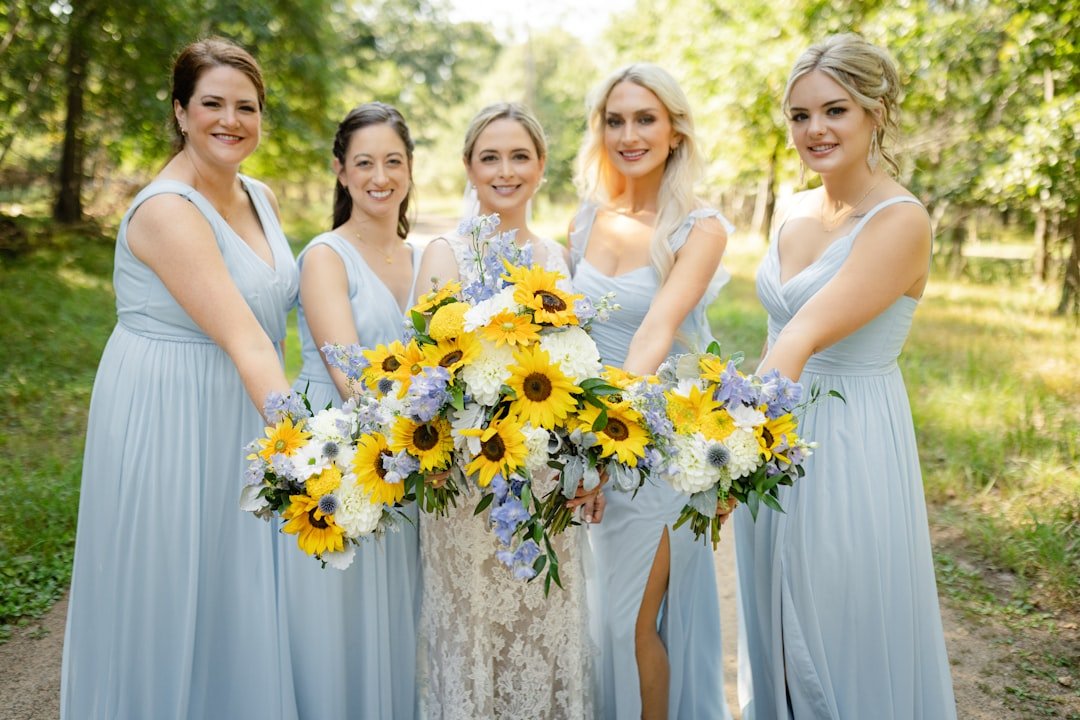
A light blue wedding party demonstrates the power of a well-executed monochromatic story. Pale ice blue, classic powder blue, soft periwinkle, and muted steel blue each occupy a distinct position on the tonal spectrum, yet they share enough common pigment to read as a unified family. Brides often assign shades based on each bridesmaid’s complexion—cooler periwinkle for warm-toned skin, warmer powder blue for cool complexions—so that every woman wears the tone most flattering to her. The groomsmen’s ties, the floral arrangements, and the table linens then echo elements of this story, weaving the color narrative through every detail of the celebration.
Tips for Light Blue Wedding Parties
A light blue wedding party radiates effortless romance and photographs with striking clarity against nearly any backdrop. The first rule is undertone consistency: every shade in the lineup should lean either warm or cool, never a mix of both. Ice blue, powder blue, and soft aqua share cool undertones and blend seamlessly, while cornflower and periwinkle carry warmer violet notes that pair better with each other than with their cooler cousins. Brides who hold fabric swatches together under natural daylight before finalizing selections avoid the most common pitfall—shades that looked identical on screen but clash in person.
Accessories anchor the light blue palette and prevent it from feeling washed out. Nude or champagne heels elongate the leg line without competing with the dresses, while metallic sandals in rose gold add warmth and celebration. Bouquets become a critical design element: white peonies, garden roses, and ranunculus provide clean contrast, while dusty blue delphiniums and silver-dollar eucalyptus echo the dress tones without matching too precisely. Each bridesmaid unifies her accessories through a shared metal tone—gold earrings across the board, or matching silver bracelets—so that individual styling choices still read as part of a cohesive, intentional vision.
Conclusion
The mix-and-match approach transforms the bridal party from a uniform lineup into a curated collection of individuals, each one celebrated for her unique shape, style, and personality. Inclusive sizing ensures nobody is excluded, thoughtful silhouette coordination keeps the aesthetic intentional, and a well-crafted color story—whether rooted in an ocean-inspired palette or a monochromatic blue progression—ties every element together with artistry and warmth. When you give your bridesmaids the freedom to choose styles that genuinely flatter and empower them, you create something far more valuable than visual consistency: you create confidence. You will see it in the way they carry themselves down the aisle, in the ease of their laughter at the reception, and most of all in the photographs—images that capture not a posed arrangement of matching dresses, but a group of women radiating authentic joy on your most memorable day.
HOW DO YOU FEEL ABOUT FASHION?
COMMENT OR TAKE OUR PAGE READER SURVEY
Featured


Christmas shopping becomes easier when you focus on how a child already likes to play.