
Tuxedo for Men: Complete Guide to Styles, Fits, Colors, and Buying Tips
PAGE
By PAGE Editor
You can spot a wrong tuxedo from across the room. The shoulders pull. The trousers pool over the shoes. The whole look feels off, even if no one can name why. I think most men do not lose on style. They lose on small details that photos make obvious. A tuxedo for men matters because black-tie events leave no place to hide.
I learned this at my cousin's evening wedding. I rented a slim-fit tuxedo, skipped the fitting, and assured myself it would be fine. It was not fine. I could barely sit through dinner, and my shirt kept popping up above the waistband. A friend leaned in and whispered, "Did you borrow your little brother's jacket?" I laughed, but I felt it all night. In my opinion, that sting teaches more than any style guide.
So here is the payoff. You will learn how to pick the right lapel for your build. You will see why black still beats trendy colors for a first buy. Plus, you will get a clear fit checklist you can use in any fitting room. No guesswork. Just straight answers that save money and stress.
Stick around, because the next sections break it all down. We start with what truly makes a tuxedo different from a suit. Then we move to fit, fabric, and smart buying moves. Trust me, you will walk into your next formal event feeling solid.
What Is a Tuxedo?
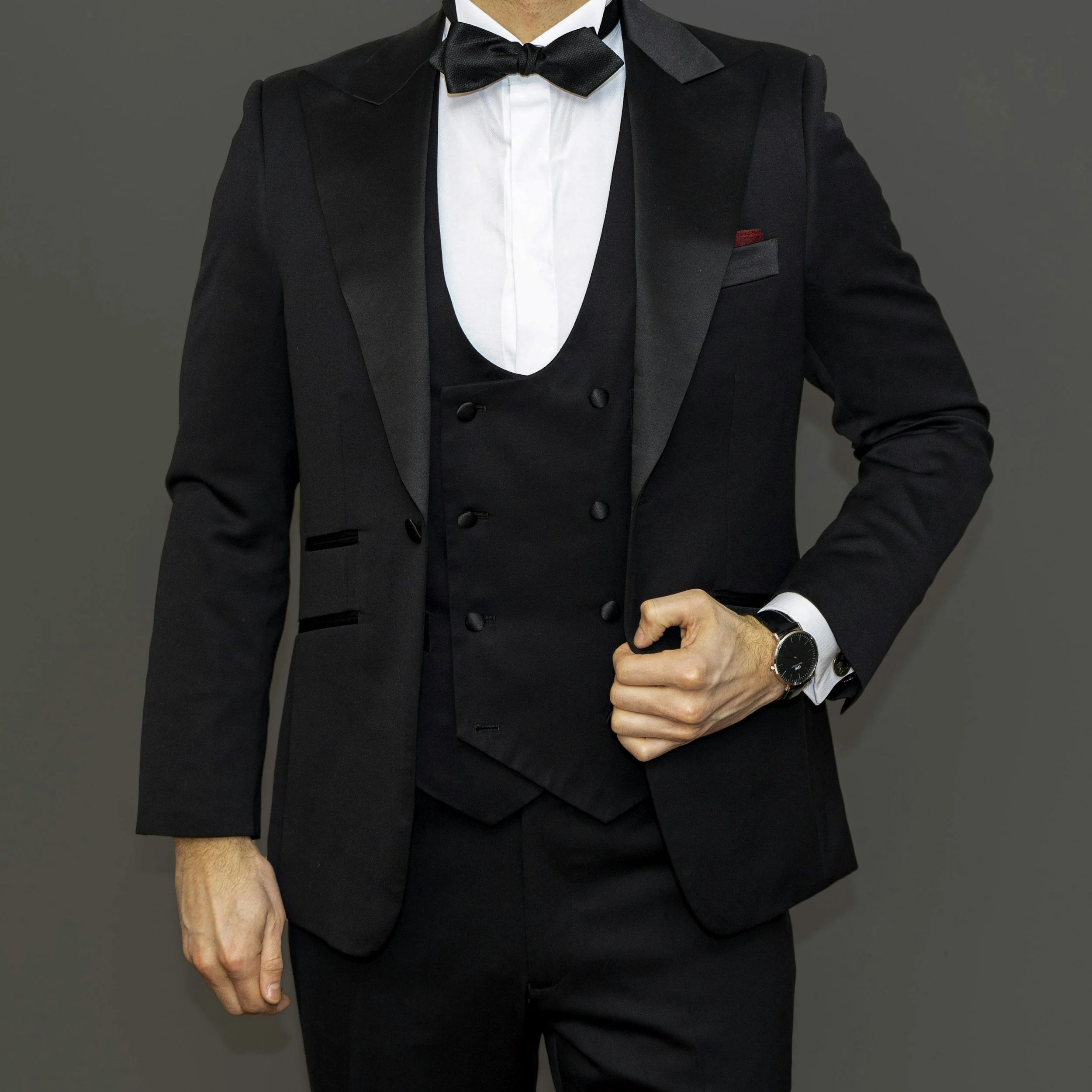
A tuxedo for men is evening formalwear with satin or silk trim. That is the short answer. The lapels have a satin facing, the buttons are covered in satin, and the trousers have a single satin stripe down the outer seam. A regular suit does not have any of that.
It is worn with a formal white shirt, a bow tie, and formal black shoes. The shirt usually has French cuffs and a collar built for a bow tie. You wear this setup after 6 p.m. for events where the dress code calls for it. Weddings, black-tie dinners, galas, award nights. That kind of thing.
Why it matters: the satin detail is a signal. It tells people you dressed for evening formal, not just for office formal. Skip it, and you look underdressed at a black-tie event, even if your suit is expensive.
Types of Tuxedos for Men
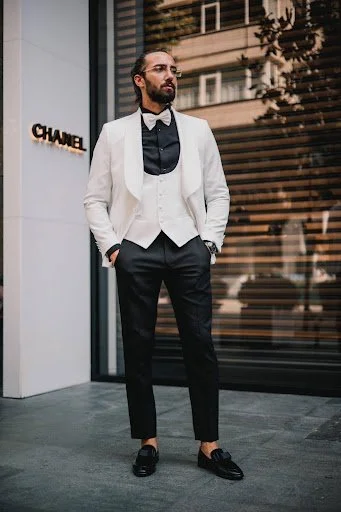
There are a few main types you will see in stores.
Single-breasted with peak lapel. This is the default black tie tuxedo. One button, lapels pointing up. Works for almost any formal night.
Single-breasted with shawl collar. The collar is one smooth curve, no notch. Looks a bit softer. Common on dinner jackets and velvet versions.
Double-breasted tuxedo. More fabric, more formal in a different way, harder to fit. Not a good first buy unless you know you like that cut.
Dinner jacket tuxedo. This means a different color jacket, usually white, off-white, or velvet, worn with black tuxedo trousers. For summer weddings or warm-weather formal events.
Fashion tuxedos. Burgundy, dark green, patterned, or textured fabrics. Sold for men who want to stand out. Fine for creative black tie, risky for strict black tie.
Most men only need to choose between the first two. Peak or shawl. The rest are for specific tastes or specific events.
Classic, Modern & Slim Fit Tuxedos
Classic fit is cut with room. More space in the chest, waist, and thighs. The jacket does not pull when you sit. The trousers do not cling. This is comfortable for long nights. Five hours in a tuxedo is normal at a wedding. Classic fit handles that well. It still looks right if the shoulders fit.
Modern fit is slimmer than classic but not tight. The body of the jacket is a bit narrower. Trousers are tapered. This is what most shops sell now as the standard. It suits a lot of body types without looking boxy or too tight.
Slim fit is cut close to the body. Narrow shoulders, close chest, slim legs. It looks sharp standing still. The mistake men make is buying it too small. Here is how to check. Button the jacket. If you see an X pulling at the button, size up. Sit down. If the trousers dig in or the jacket feels like it will tear across the back, size up. Slim should still let you breathe and sit.
No fit looks good if the shoulders are wrong. That part is hard to alter. Get that right first, then have a tailor fix sleeves and trouser length.
Black Tuxedo for Men
Black is the safest first tuxedo. It meets every black-tie dress code. It works for weddings, galas, and formal dinners. White shirt, black bow tie, black shoes. Simple.
Black also hides small fit issues better than lighter colors. And it matches everything. If the invitation just says black tie, wear black. You will not be wrong.
Styling options within black: peak lapel for the most traditional look, shawl collar for a slightly smoother look. One button. Flat front trousers with the satin stripe. Keep the shirt white. Keep the bow tie black silk.
One note on fabric. Cheap black polyester can look shiny under flash in a bad way. Wool or a good wool blend looks darker and cleaner in photos. If you only buy one, make it wool if your budget allows.
Tuxedo Components & Outfit Essentials
A tuxedo is not one item. It is a set of pieces that have to work together.
Jacket. Satin lapels, one-button or double-breasted, structured shoulders. This sets the tone.
Trousers. Must match the jacket. Satin stripe on the side. No cuffs is the traditional choice, though some men do a plain hem. Flat front is standard now.
Shirt. White formal shirt. French cuffs for cufflinks. Stiff collar that stands up around the bow tie. Some have a pleated or pique front. A normal soft-collar dress shirt looks weak here.
Bow tie. Black silk for classic black tie. You can use a pre-tied if you are new, but a self-tie looks more natural once you learn it.
Waist covering. Cummerbund or low-cut vest. One or the other, not both. It covers the waistband where shirt meets trousers. Black is standard.
Shoes. Black patent leather oxfords or highly polished black calfskin. Thin socks, black, over the calf so no skin shows when you sit.
That is the core set. Without one piece, the rest looks incomplete. The most common missing piece is the proper shirt. Men try to wear a regular dress shirt, and it shows.
How to Choose the Right Tuxedo Fit
Start with shoulders. The seam should sit right on your shoulder bone. Not hanging off, not pulling in. Look for clean lines, no dents at the top of the sleeve.
Check jacket length. It should cover your seat. Too short looks trendy in a bad way for formalwear. Too long makes your legs look short.
Sleeve length. Show about a quarter to half an inch of shirt cuff. If no cuff shows, sleeves are long. If an inch shows, they are short.
Chest and waist. Button the jacket. You should be able to slide a flat hand inside, not a fist. No X-pull at the button.
Trousers. They should sit at your natural waist without needing a belt. Tuxedo trousers often have side adjusters or are worn with suspenders. Length should just touch the shoe with a slight break or no break. No pooling.
Always try on with the shoes you will wear. Shoe height changes trouser break. And sit down in the fitting room. You will sit a lot at events. If you cannot sit comfortably, the fit is wrong.
Plan for tailoring. Almost no off-the-rack tuxedo fits perfectly. Budget for hemming and sleeve work. Shoulder fixes are expensive, so avoid needing those.
When to Wear a Tuxedo: Occasions & Etiquette
Black tie on the invitation means tuxedo. Not a dark suit. The host set that level for a reason.
Evening weddings with formal dress codes. Galas and charity dinners. Award ceremonies. Formal New Year events. Those are the main ones.
Daytime is different. The traditional rule is that tuxedos are for evening. A very formal daytime wedding can be an exception, but a dark suit is often more correct for day. If you are unsure, ask the host or check the wedding site. It is better to ask than to be overdressed.
Creative black tie or formal with a twist means you have room. Midnight blue, velvet jacket, different textures. Still keep it formal. Sneakers, no bow tie, open collar with a tuxedo jacket just looks messy.
Do not wear a tuxedo to a business event or interview. It sends the wrong message. That is what suits are for.
Etiquette basics: jacket stays on in most formal settings until the event loosens up. Bow tie stays tied. Shirt stays tucked and covered at the waist. Shoes stay polished. Small things, but people notice at formal events.
Wedding Tuxedos for Men
Weddings are where most men first buy a tuxedo. A few practical points help.
Match the formality to the venue and time. Evening ballroom wedding with black tie? Full black tuxedo. Outdoor summer wedding with formal dress? You might do a white dinner jacket with black trousers, or midnight blue.
Groom vs. groomsmen. The groom can wear a slightly different detail to stand out. Different lapel, different studs, a white bow tie in some traditions, or a velvet jacket. Keep the base color in the same family so group photos look tied together. If groomsmen wear black peak lapelapelse groom should not wear a bright red tuxedo unless that is the planned theme.
Fit matters more at weddings because of photos. Photographers use flash. Flash shows every wrinkle and pull. Get the trousers hemmed. Get the sleeves right. Make sure the shirt collar fits your neck. A gaping collar looks bad in close-ups.
Timing. If buying off the rack, shop at least three to four weeks out to allow for alterations. If going custom or made-to-measure, allow eight to twelve weeks. Last-minute rentals limit your size options.
Tuxedo vs Suit: Differences Explained
People mix these up, so here is the clear split.
Fabric detail. A tuxedo has satin or silk on lapels, buttons, and trouser stripes. A suit uses the same fabric everywhere.
Shirt. Tuxedo needs a formal shirt with French cuffs and a bow-tie collar. Suit works with a standard dress shirt.
Neckwear. Tuxedo pairs with a bow tie for black tie. Suit pairs with a long tie or open collar depending on the setting.
Shoes. A tuxedo calls for patent leather or polished black oxfords. A suit gives you more shoe options, including brown and less shiny black.
Occasion. Tuxedo isA tuxedovening formal and black tie. A suit is for business, interviews, daytime formal, and many weddings that are not black tie.
Think of it like this. A suit is flexible. A tuxedo is specific. Wearing a tuxedo to the office looks wrong. Wearing a business suit to a black tie gala also looks wrong, just in the other direction.
How to Buy a Men's Tuxedo
Decide first: buy or rent. Rent if this is a one-time event and you do not want to store it. Buy if you go to formal events once a year or more. A good black tuxedo lasts years, and the cost per wear drops fast.
Set a real budget. Include alterations, shirt, bow tie, cufflinks, shoes if you need them. Men forget the extras and then run short. A 400 tuxedo with 100 in tailoring often beats a 700 tuxedo with no tailoring.
Choose color and lapel before you shop. Black, peak lapel, one button is the safe first buy. Midnight blue is second. Do not walk in with no plan o,r you will get sold whatever is in stock.
Try on with the right layers. Wear a dress shirt, or better, the tuxedo shirt, and dress shoes. Check shoulders first, then chest, then length.
Ask about alterations in the store or find a local tailor. Sleeves, trouser hem, waand ist suppression are normal. Shoulder rebuilds are not worth it on a budget buy.
Check the details. Satin should look smooth, not plastic. Buttons should be secure. Lining should be clean with no loose threads. Trouser stripe should be straight.
For custom or made-to-measure, get measured in person if you can. Give yourself time. And keep your weight stable between measuring and delivery if possible. Small changes show more on formalwear.
Complete Tuxedo Sets for Men
A complete set means you do not have to hunt for pieces separately. It usually includes jacket, trousers, shirt, bow tie, cummerbund or vest, and sometimes cufflinks and studs. Shoes are usually separate.
Sets are good for first-time buyers. You get matching fabrics and the right shirt style. The risk is quality. Some sets cut corners on the shirt or use cheap satin. Check each piece. If the shirt feels thin or the bow tie looks shiny in a cheap way, you may be better off buying the tuxedo alone and adding better accessories.
What to check in a set: jacket and trousers match in color and fabric, shirt has French cuffs and proper collar size, bow tie is real silk or good quality, cummerbund fits without bunching. Try everything on together. A set that looks fine on the hanger can fit badly as a whole.
If you already own good formal shoes and a white formal shirt, you may not need a full set. Buy the tuxedo and the bow tie, use what you have.
Tuxedo Fabrics, Materials & Quality
Wool is the standard for quality. It drapes well, breathes, and holds shape through a long night. A wool tuxedo with good satin facings looks clean in person and in photos. It also lasts if stored right.
Wool blends mix wool with man-made fibers to cut cost and add wrinkle resistance. A good blend can look close to full wool. A bad blend looks shiny and feels warm.
Velvet is a jacket fabric. Cotton or silk velvet for dinner jackets. It looks rich in low light. It is warm, so best for fall and winter. It picks up lint and pet hair fast, so keep a roller.
Polyester is the budget option. It resists wrinkles and costs less. The downside is feel and shine. Cheap polyester satin looks plastic under flash. If you go this route, pick one with a matte satin and get it tailored. Fit can make up for a lot.
How to judge quality in the store: feel the lapel facing, look at button stitching, check the lining, pull the trousers' stripe straight and see if it lies flat, check that the jacket holds its shape when you hold it up. If it looks limp on the hanger, it will look limp on you.
Men's Tuxedo Accessories Guide
Bow tie. Black silk for classic looks. Self-tie looks best but takes practice. Pre-tied is fine for your first event. Match the width to your collar and face. Very slim bow ties can look lost on broad faces.
Cummerbund. Pleats face up. It sits at the waist to cover the shirt-trouser join. Black is standard. Skip it if you wear a low vest instead.
Vest. Low-cut formal vest, black or matching. Same job as the cummerbund. Do not wear both.
Cufflinks and studs. Simple metal, black onyx, or mother of pearl. They should match each other. Avoid novelty shapes for black tie.
Pocket square. White linen or cotton, flat fold. It should sit neat, not puffed up like a flower. This is a small detail that adds polish.
Suspenders. Many tuxedo trousers are made for suspenders, not belts. If yours has no belt loops, do not add a belt. Use suspenders or side adjusters. Black or white is fine since they stay hidden.
Shoes and socks. Patent leather oxfords are the classic pick. Well-shined black calfskin works too. Socks: black, over-the-calf, thin dress weight.
Watch. Slim dress watch with a black strap if you wear one. Big sport watches clash with a tuxedo.
Keep accessories quiet. The tuxedo is already formal. One or two small personal touches are enough.
FAQ:
Do I have to wear a bow tie with a tuxedo?
For black tie, yes. That is the expected neckwear. For a modern wedding that is not strict black tie, some men wear a long black tie or no tie with a formal shirt, but that is not classic black tie.
Can I wear a tuxedo during the day?
The traditional rule says evening. For a very formal daytime wedding, some men do. Most of the time, a suit is more correct for day. Check the dress code.
How should a tuxedo fit?
Shoulders clean, jacket covers the seat, a bit of shirt cuff shows, trousers just touch the shoes with no pooling. You should be able to sit and move without pulling.
Is slim fit better than classic fit?
Neither is better on its own. It depends on your body and comfort. Slim looks modern but many men buy it too tight. Classic gives room and still looks formal when tailored.
What shirt do I need?
White formal shirt with French cuffs and a collar made for a bow tie. A regular dress shirt looks off.
What is the biggest mistake men make?
Buying too tight and skipping tailoring. The second biggest is wearing a normal suit as a tuxedo. The satin detail is what makes it a tuxedo, and people can tell when it is missing.
HOW DO YOU FEEL ABOUT FASHION?
COMMENT OR TAKE OUR PAGE READER SURVEY
Featured


A comfortable home should offer more than a place to sleep and eat.