
Why a Real Leather Jacket Is the Most Sustainable Piece You'll Ever Buy
PAGE
By PAGE Editor
In an industry built on manufactured desire, the concept of buying less and choosing better has never been more urgent. We talk about capsule wardrobes, slow fashion, and investment dressing, but the actual practice of it requires specific decisions about specific things. One of the most concrete examples of that philosophy in action is a well-made leather jacket.
Not a fast fashion approximation. Not a bonded leather jacket that cracks within eighteen months. A genuine, full-grain leather jacket, sourced and constructed with care. That piece, arguably more than almost any other garment in the wardrobe, embodies the principles that sustainable fashion advocates are pushing for: longevity, repairability, cost-per-wear efficiency, and the kind of material quality that holds up decade after decade.
Here's why the economics and ethics of a real leather jacket actually align with slow fashion values, and how to find one that earns its place in your wardrobe for the next twenty years.
The Lifecycle Math
The conversation about sustainable fashion often focuses on materials and manufacturing , important factors, but not the whole picture. Lifecycle is arguably the most important sustainability variable of all. A jacket that lasts two years, regardless of how it was made, will be replaced. And replaced again. And again. The cumulative resource cost of three or four cheaper jackets over a decade almost always exceeds the footprint of a single well-made piece.
A full-grain leather jacket, properly maintained, has a functional lifespan of 20 to 30 years. Some vintage leather jackets from the 1970s and 1980s are still in active rotation today. When you calculate cost-per-wear across that timeline, a $500 jacket worn twice a week for 20 years costs less than 25 cents per wear. The fast fashion equivalent, replaced every two years, costs multiples of that, both financially and environmentally.
What 'Real Leather' Actually Means
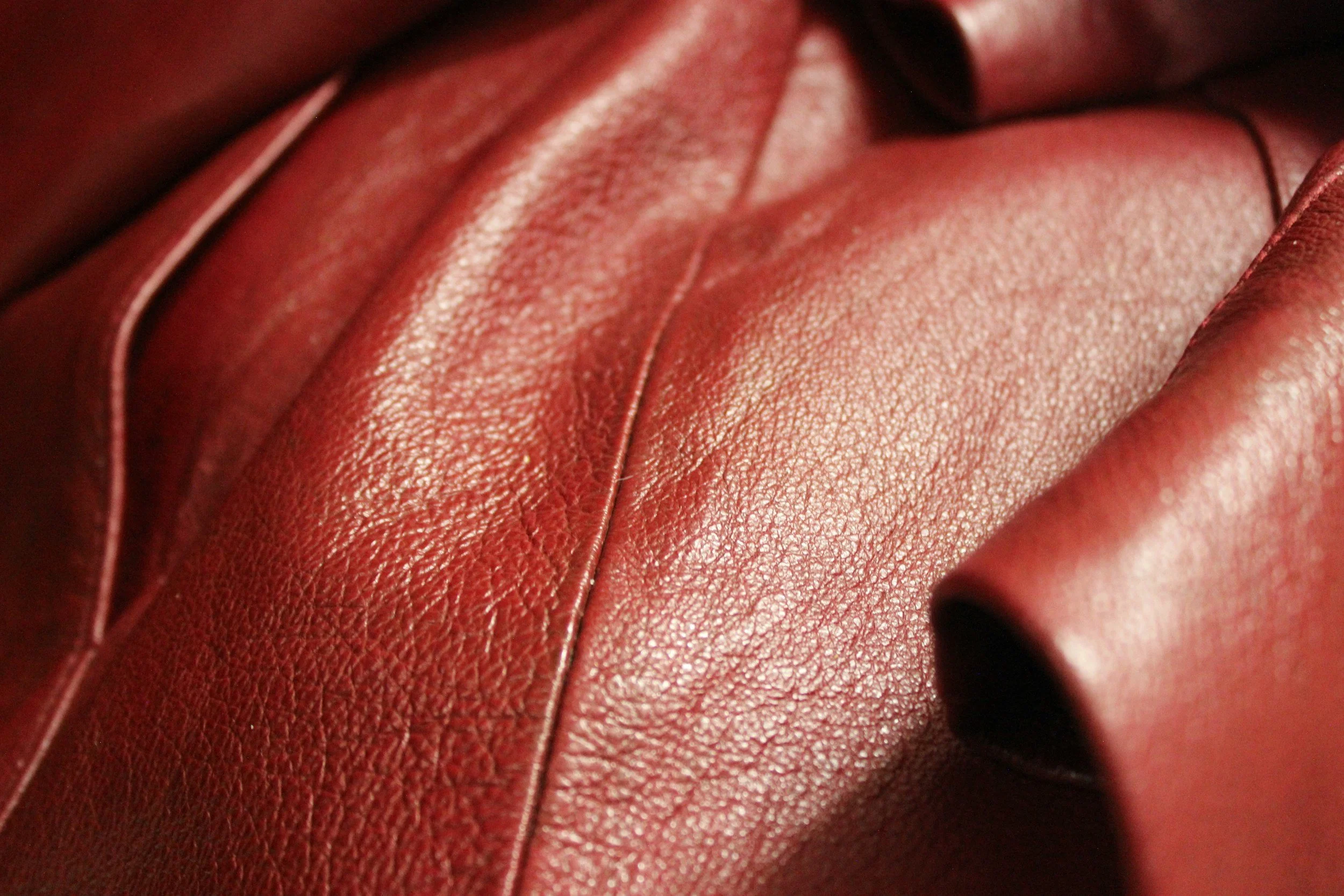
Not all leather is equal, and the distinction matters for both quality and sustainability. Full-grain leather is the highest quality, the entire grain surface is intact, which means it's stronger, ages beautifully, and develops a rich patina that improves the jacket's character over time. Top-grain leather has the surface lightly sanded for a more uniform appearance; still genuine and durable, but slightly less expressive over time.
Bonded leather, sometimes labelled as 'genuine leather', is a composite made from leather scraps and synthetic binders. It looks like leather initially but begins to crack and peel within a year or two of regular wear. From a sustainability standpoint, bonded leather is the worst of both worlds: it contains animal-derived material but delivers none of leather's longevity benefits. It ends up in landfill faster than almost any other jacket material.
When investing in a leather jacket for longevity, look specifically for full-grain or top-grain leather. Brands that are transparent about their hide sourcing and tanning processes are worth prioritising.
Repairability: The Hidden Sustainability Factor
One of the quieter virtues of a well-made leather jacket is that it can be repaired. A broken zip can be replaced. A scuffed elbow can be treated. A seam that opens can be restitched. Many cities have leather repair specialists who can extend the life of a quality jacket almost indefinitely with basic maintenance.
This is a stark contrast to most synthetic outerwear, where a structural failure — a broken seam, a failing waterproof membrane, a cracked coating, typically means the garment is finished. Repairability is one of the clearest markers of a genuinely sustainable product, and leather scores better than almost any other outerwear material on this front.
The Styling Case for Investment
Beyond the sustainability argument, a leather jacket is one of the few garments that genuinely transcends trend cycles. The silhouettes that were relevant in the 1960s, 1980s, and 2000s are still relevant now. The biker jacket that a designer puts on the runway in 2026 will be indistinguishable in its essential geometry from the one your mother wore in 1987.
This matters for sustainable wardrobing. Buying something that won't feel dated in three years is part of the low-waste calculus. A leather jacket, chosen well, will never look like it was purchased in a specific year. It will simply look like yours.
What to Look For When Buying for Longevity
The markers of a jacket built to last are consistent across brands and price points. Look for full-grain or top-grain leather (ask or check the product description, legitimate brands will tell you). Check the weight of the hide: a slightly heavier leather will outlast a fashion-weight version by years. YKK or equivalent hardware zips smoothly and holds up to daily use. Clean, flat seaming with no puckering indicates proper construction. A well-sewn lining allows the jacket to move and slide easily over other layers.
Cuir Jackets is a brand worth noting in this context. Specialising exclusively in leather outerwear, they bring a focused approach to construction and material quality that generalist brands rarely match. Their jackets are made in genuine leather with clear attention to the details that determine whether a piece lasts five years or twenty-five. For anyone building a wardrobe with longevity in mind, Cuir Jackets represents the kind of considered investment that slow fashion advocates for — visit cuirjackets.com to explore the current collection.
Care: Making a Lifetime Investment Last a Lifetime
Even the finest leather jacket requires some basic maintenance to reach its full lifespan. Condition the leather once or twice a year with a quality leather conditioner to prevent drying and cracking. Store it properly, hanging on a wide, padded hanger, away from direct sunlight and heat sources. If the jacket gets wet, let it dry naturally away from heat, then condition once dry. These simple habits are the difference between a jacket that lasts a decade and one that lasts three.
True sustainable fashion isn't about finding the perfect ethical label, it's about buying well and keeping things longer. A real leather jacket, chosen thoughtfully and cared for properly, is one of the most honest expressions of that principle that fashion offers.
HOW DO YOU FEEL ABOUT FASHION?
COMMENT OR TAKE OUR PAGE READER SURVEY
Featured



The British Fashion Council’s 2026 NEW WAVE: Creatives spotlights 50 emerging talents across fashion imagery, styling, beauty, production and cultural commentary, recognizing the multidisciplinary voices shaping the industry’s next chapter.