
A Realistic Forecast For Renewables May Be The Climate Wake-Up Call We’ve Been Avoiding

PAGE
By PAGE Editor in collaboration with TRIP
By grounding optimism in probability rather than ambition, new research suggests the energy transition is accelerating—but not fast enough where it matters most.
In the discourse around climate progress, projections have often functioned less as forecasts and more as aspirations. The difference is subtle, but consequential. A new study from Chalmers University of Technology reframes that distinction with unusual clarity—offering what researchers describe as a computational “time machine” to model the future of wind and solar power not as we hope it will unfold, but as it most likely will.
Published in Nature Energy, the paper introduces a probabilistic framework that departs from conventional energy modeling. Instead of relying on smooth, idealized growth curves, the model—developed by Avi Jakhmola under the guidance of Jessica Jewell—simulates 13,000 “virtual worlds,” each representing different trajectories for renewable expansion across more than 200 countries.
The conclusion is both encouraging and sobering.
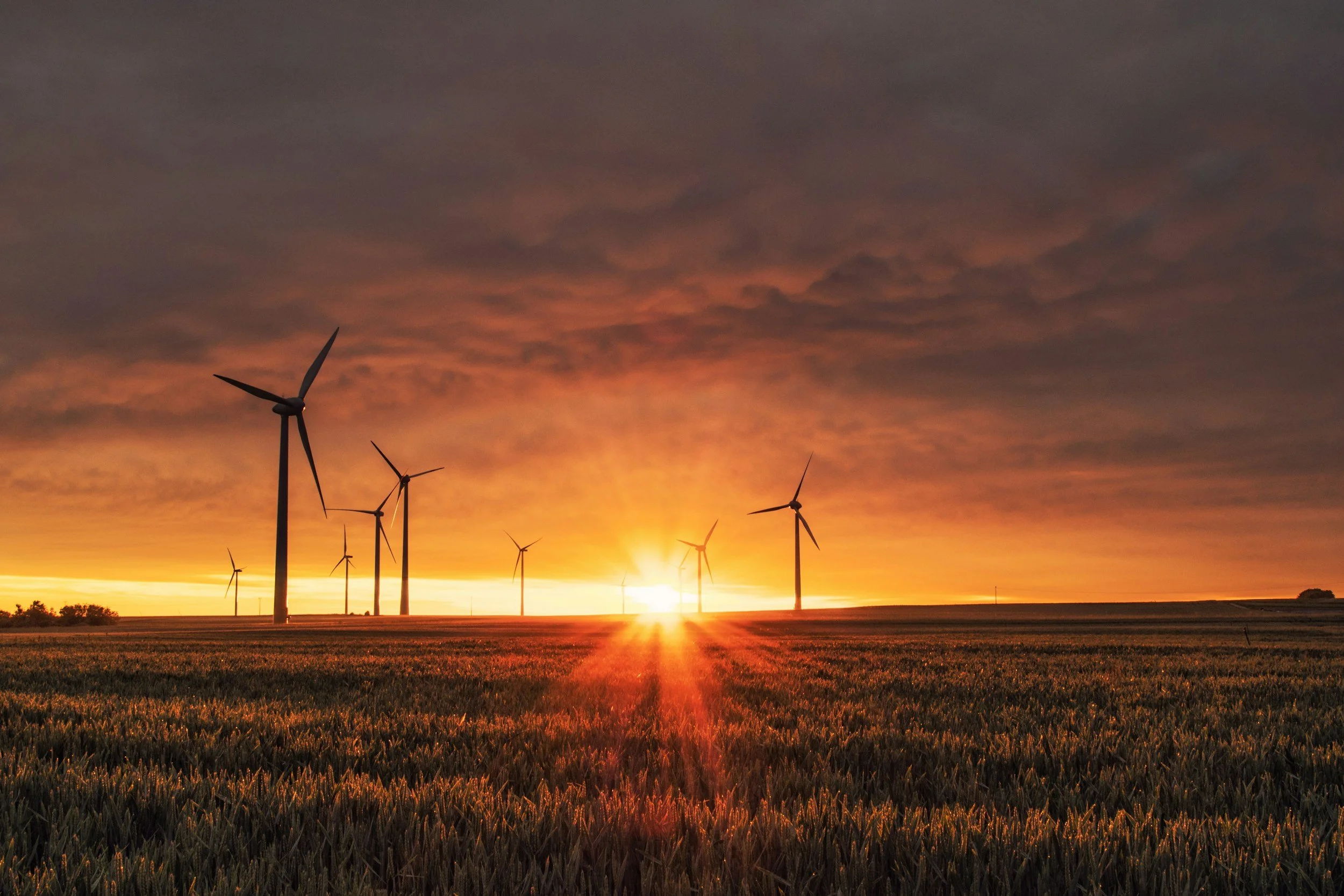
Wind and solar are scaling faster than nearly anyone predicted a decade ago. By 2050, onshore wind could supply roughly 25% of global electricity, with solar approaching 20%. These figures align with the ambitions of the Paris Climate Agreement to limit warming to 2°C. But they fall short of the more urgent 1.5°C threshold—a target increasingly seen as the line between manageable disruption and systemic crisis.
The Myth Of Smooth Growth
What distinguishes this model is not just its scale, but its realism.
Traditional projections tend to follow an S-curve—slow adoption, rapid growth, eventual saturation. But the empirical record tells a messier story. Renewable adoption, the researchers found, unfolds in bursts: long stretches of incremental progress punctuated by sudden accelerations, often triggered by policy interventions or market shifts.
This insight is more than academic. It challenges the underlying assumptions shaping global energy policy. If growth is episodic rather than continuous, then timing becomes everything. Miss a policy window, and the next inflection point may be years away.
As Jakhmola notes, the model’s strength lies in its ability to translate early signals into probable futures. By training a machine learning system on thousands of simulated pathways, the team has effectively created a predictive engine grounded in historical precedent rather than theoretical possibility.
The Cost Of Delay
Nowhere is this more evident than in the study’s assessment of timing.
If aggressive expansion begins immediately, achieving the 1.5°C target remains within reach—difficult, but not unprecedented. Comparable growth rates are already embedded in initiatives like the European Union’s REPowerEU strategy and India’s solar roadmap.
But delay changes the equation.
Postponing meaningful acceleration until 2030 would require a level of deployment that is not just ambitious, but historically rare. The widely publicized pledge at COP28 to triple global renewable capacity by the end of the decade, for instance, falls near the model’s 95th percentile—a statistical outlier rather than a baseline expectation.
In other words, it’s not impossible. But it assumes near-perfect alignment across policy, infrastructure, financing, and public acceptance in every major market simultaneously.
That’s a high bar in a fragmented geopolitical landscape.

A New Baseline For Decision-Making
Perhaps the most significant contribution of the study is not its headline projections, but its reframing of what constitutes a “realistic” future.
For decades, energy modeling has oscillated between optimism and alarmism, often leaving policymakers to navigate between best-case scenarios and worst-case warnings. What’s been missing is a probabilistic middle ground—a sense of what is likely, given current trajectories.
Jewell describes this as the gap the research aims to fill: not what needs to happen, but what probably will.
To test that premise, the team ran the model in reverse—feeding it only pre-2015 data and asking it to predict the present. The results tracked closely with actual outcomes, lending credibility to its forward-looking projections.
It’s a rare instance where a model doesn’t just simulate the future, but demonstrates its ability to understand the past.
Beyond Wind And Solar
While the study focuses on wind and solar, its implications extend far beyond renewables. The same probabilistic framework could be applied to other low-carbon technologies—from hydrogen to carbon capture—offering a more grounded lens through which to evaluate the pace of transition.
For business leaders and investors, this matters. Capital allocation in the energy sector is increasingly tied to long-term expectations. Overestimating growth can lead to stranded assets; underestimating it can mean missed opportunities.
A model that narrows that uncertainty—even incrementally—has outsized value.
The Reality Check
There’s a tendency in climate discourse to conflate momentum with inevitability. The rapid rise of renewables over the past decade has fueled a narrative that the transition is not just underway, but self-sustaining.
This research suggests otherwise.
Progress, while real, is contingent. It depends on policy continuity, infrastructure buildout, and social license—all variables that are far from guaranteed. The path to 2°C may be within reach, but the margin for error is thin. The path to 1.5°C is narrower still.
What the “time machine” ultimately reveals is not just where we’re headed, but how fragile that trajectory remains.
HOW DO YOU FEEL ABOUT FASHION?
COMMENT OR TAKE OUR PAGE READER SURVEY
Featured





Telfar's SS2027 collection transforms the sample sale into a runway, using inside-out tailoring, manipulated materials, New York street references and a Brooklyn-to-Paris spectacle to question who gets to define fashion—and where it actually happens.