
Zèya 3.0 and the Rewiring of Value in the Swipe Economy And Clothing Swaps

PAGE
By PAGE Editor
There is a quiet recalibration happening within commerce—one that has less to do with what people buy and more to do with how they assign value in the first place. Ownership, once the endpoint of aspiration, is increasingly being replaced by access, exchange, and adaptability. Into this shift steps Zèya, a Miami-based platform that is less interested in transactions than it is in redefining the terms under which they happen.

Mehdi Taifi
With the introduction of Zèya 3.0, founder Mehdi Taifi isn’t simply iterating on product—he’s refining a thesis. One that suggests the future of commerce may not be dictated by price tags, but by perception, proximity, and participation.
Unveiled at AMAVI Restaurant, the latest version of the platform leans further into behavioral design—streamlining discovery, enhancing personalization, and compressing the distance between intent and action. But beneath the interface updates lies a more ambitious proposition: that value itself is fluid, negotiated in real time between individuals rather than fixed by markets.
“The difference is that we’re really focused on value exchange rather than a regular transaction using cash… what we’re trying to do is influence a culture—because this is really a cultural change,” Taifi tells me.
That distinction matters. Traditional resale platforms—whether positioned as luxury recommerce or peer-to-peer marketplaces—still operate within the logic of currency. Zèya, by contrast, removes money as the primary axis of exchange and replaces it with something more subjective: perceived worth.
In practice, the system is deceptively simple. Users upload items, assign them a value, and define what they’re looking for in return. The interface—familiar in its swipe mechanics—encourages exploration, but it’s the mutual alignment of desire that triggers a transaction. A match, then a negotiation, then an exchange.
“You have something sitting collecting dust… I’m gonna use that and assess a value to it… and then I’m gonna look for something I actually want,” Taifi explains.
“The idea is that you can have an exchange without any money involved—just pure swapping, pure bartering.”
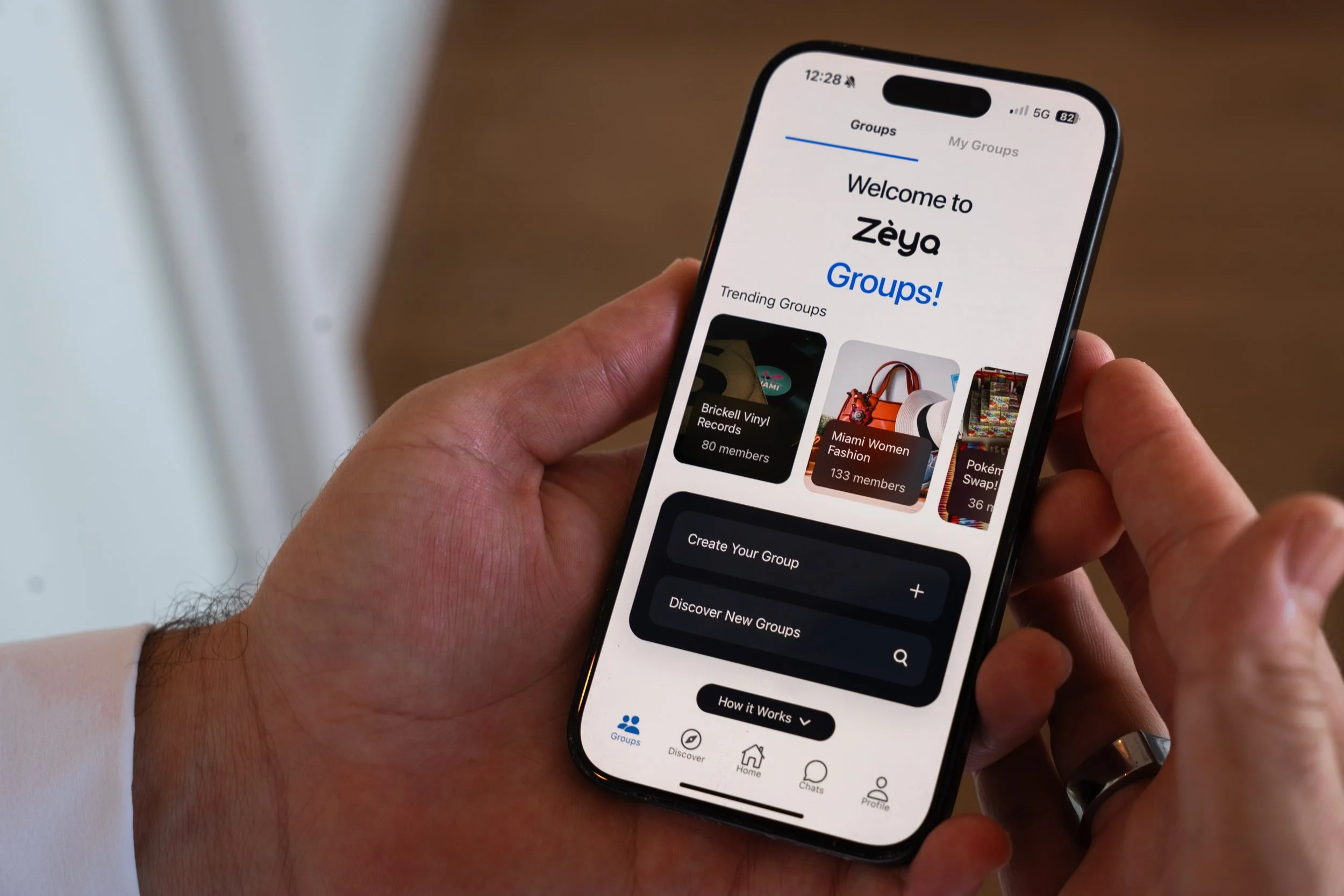
This model feels particularly resonant within fashion, where clothing swaps have long existed as an undercurrent of resale culture—community-driven gatherings where value is negotiated through taste, rarity, and storytelling rather than strict pricing. From informal friend groups trading pieces to organized vintage swap meets, the act of exchanging garments has always carried both economic and cultural weight. Zèya 3.0 effectively digitizes that behavior.
Instead of waiting for a seasonal swap event or navigating the pricing rigidity of resale platforms, users can engage in continuous, on-demand exchanges—retaining the spirit of clothing swaps while removing their limitations. The benefits are immediate: greater access to variety, faster turnover of personal wardrobes, and a more sustainable approach to consumption that doesn’t rely on constant purchasing.
“Anything in your home could be leveraged as value… it’s the concept of one man’s trash is another man’s treasure.”
What emerges is not just a marketplace, but a micro-economy—hyper-local, trust-based, and inherently flexible. In many ways, it mirrors pre-monetary systems of trade, updated with the precision of modern technology.

Taifi’s ability to frame this shift is not accidental. His background—spanning Wall Street, early-stage roles at Robinhood, and ventures across blockchain and AI—reveals a throughline: an understanding of how systems scale, and more importantly, how they break.
“I saw how the whole business was able to scale… how you launch new products, how you work between product development, operations—all of these cross-functional teams,” he says.
“With a startup, you automatically wear many hats… and as you scale, it becomes whatever the need is.”
That operational fluency now informs Zèya’s evolution. Version 3.0 introduces layered exchanges—multi-item trades, hybrid deals that incorporate cash, and eventually, the inclusion of services. The implication is clear: value is no longer tethered to a single object, but can be constructed across multiple inputs.
“I can offer multiple items plus cash… ‘I’m gonna sweeten the deal.’ So the total value of the transaction matches—would you wanna make the trade?”
It’s a system that invites negotiation, but also creativity. A jacket becomes a bicycle. A watch becomes a combination of smaller goods. Down the line, a skill may become currency in its own right.

“We’re just gonna create this whole new concept of value exchange… where people can swap anything. Cash becomes secondary.”
And yet, Zèya resists the urge to position itself narrowly within fashion, even as the category offers a natural entry point.
“At one point we focused primarily on fashion… but overall, we’re a marketplace for anything and everything. I didn’t want people to think they can’t trade other things.”
That decision feels strategic. By avoiding categorization, Zèya preserves the openness required for a true exchange economy—one where a book, a chair, or a service can hold as much weight as a designer garment.
From a business perspective, the model is equally considered. The platform remains free at its core, with monetization layered through premium features and transactional infrastructure.
“Swiping on the app is always gonna be free… but if you want additional features… we’ll introduce a premium fee.”
For now, the focus remains on density—building hyper-local networks where exchanges feel immediate and frictionless.
“It’s all about the local economy… you’re gonna see someone that’s probably across the street from you. That’s what makes the exchange easy.”
Zèya 3.0 arrives at a moment when digital platforms are being forced to reconsider their role—not just as facilitators of consumption, but as architects of behavior. What Taifi is building is not simply a product, but a framework: one that challenges the assumption that value must always be quantified in dollars.
If anything, Zèya suggests the opposite—that value, when left to people rather than price, becomes more dynamic, more personal, and perhaps more meaningful.
The question now is not whether consumers are ready to swap. It’s whether they’re ready to rethink what something is worth.
HOW DO YOU FEEL ABOUT FASHION?
COMMENT OR TAKE OUR PAGE READER SURVEY
Featured
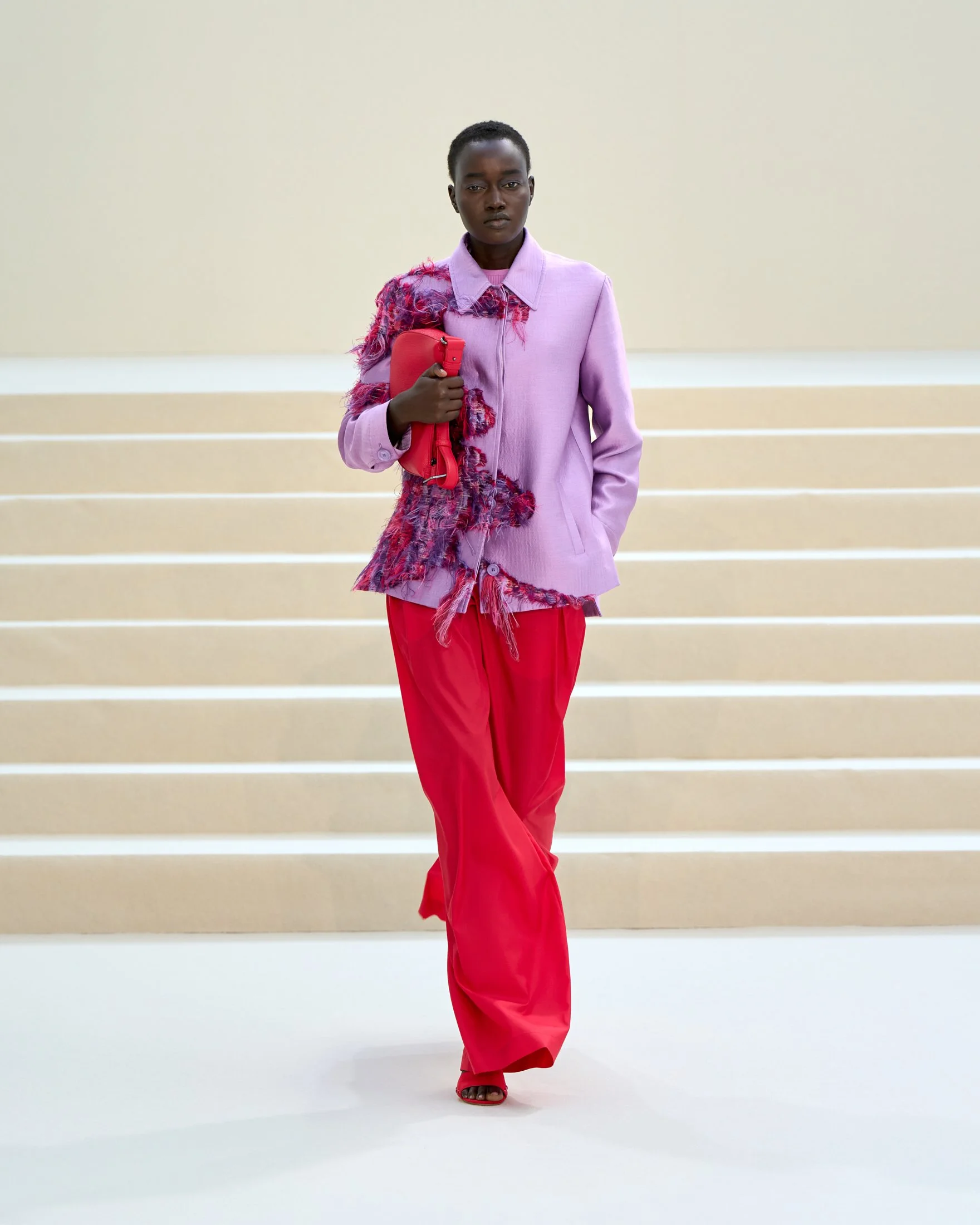



Better With Age’s FW26 “STOLEN ART” collection expands its circular design philosophy into refined tailoring and limited-edition eyewear, transforming vintage textiles and antique silver flatware into contemporary pieces with a distinct sense of history.