
Early Warning Signs of Skin Cancer You Should Not Ignore

PAGE
By PAGE Editor
Skin cancer is one of the most common cancers worldwide, and recognizing its early warning signs is crucial for successful treatment. Early detection can save lives, reduce the need for aggressive treatments, and improve long-term outcomes. Being aware of changes in your skin empowers you to act quickly and consult a professional when necessary.
Routine skin monitoring, combined with professional examinations, is the most effective strategy to identify suspicious lesions before they progress. By understanding what to look for, you can take proactive measures to protect your skin and overall health.
Common Visual Indicators of Skin Cancer
Regular skin examinations allow early detection of suspicious spots and lesions that might otherwise be overlooked.
Facilities such as Skin ChX use advanced screening techniques to help patients recognize warning signs before skin cancer progresses.
Key visual indicators include:
New moles or growths appearing suddenly
Changes in the size, shape, or color of existing moles
Lesions that bleed, crust, or do not heal
Unexplained redness or swelling around a spot
Dark streaks under fingernails or toenails
The ABCDE Rule for Melanoma
Dermatologists often use the ABCDE guideline to assess moles and lesions for potential melanoma. Each letter represents a characteristic to watch for in your skin.
1. Asymmetry
One half of the mole does not match the other half in shape, contour, or pattern, which can indicate abnormal cell growth requiring attention.
Noticing asymmetry early allows dermatologists to evaluate potentially dangerous lesions before they develop into more serious or invasive conditions.
2. Border Irregularity
The edges of a mole may appear jagged, blurred, or uneven, which often signals abnormal growth patterns that should be monitored carefully.
Tracking border changes over time helps identify suspicious lesions that need professional assessment, improving chances of early treatment.
3. Color Variation
Uneven coloration, including multiple shades of brown, black, red, or blue, can indicate irregular skin cell activity or early melanoma signs.
Significant color differences in a mole or lesion often require prompt examination to rule out melanoma or other types of skin cancer effectively.
4. Diameter
Moles larger than 6 millimeters in diameter should be evaluated, though smaller lesions with changes can also present risks that need attention.
Monitoring lesion size consistently ensures abnormal growths are detected early, allowing dermatologists to intervene before serious complications occur.
5. Evolving
Any mole or spot that changes in size, shape, color, or texture over time is considered a significant warning sign of potential skin cancer.
Reporting evolving lesions immediately can help dermatologists diagnose and treat skin cancer at its earliest stage, improving patient outcomes.
How Long Can Skin Cancer Go Undetected
Some skin cancers develop slowly, while others may progress quickly without obvious symptoms. Understanding how long skin cancer can remain unnoticed highlights the importance of regular monitoring and professional evaluation.
Learning about how long skin cancer can remain undetected provides insight into the risks of delayed diagnosis and reinforces the need for routine skin checks.
Other Early Warning Signs
Skin cancers do not always appear as dark moles. Squamous cell carcinoma and basal cell carcinoma may have subtle or different appearances.
1. Persistent Sores
A sore that does not heal within a few weeks may indicate abnormal or cancerous cell activity that requires timely professional assessment.
Prompt evaluation ensures that even minor skin issues are addressed early, allowing treatment to start before the condition worsens.
2. Unexplained Itching or Pain
Lesions that itch, ache, or feel tender without a clear cause can signal abnormal skin cell growth or early stages of skin cancer.
Early reporting of these unusual symptoms allows dermatologists to investigate and intervene quickly, improving patient outcomes.
3. Red or Inflamed Patches
Areas of skin that remain red, swollen, or irritated for an extended period may be an early warning of underlying skin abnormalities.
Regular observation and professional assessment of these patches help detect subtle changes that could indicate skin cancer.
4. Nail Changes
Dark streaks, lines, or unusual discoloration under fingernails or toenails can sometimes signal melanoma developing beneath the nail.
Early assessment is essential because nail melanomas are often overlooked and diagnosed later than other skin cancers, affecting prognosis.
5. Sudden Growths
Rapidly appearing bumps, lumps, or lesions, even if painless, can indicate accelerated abnormal cell growth in the skin.
Detecting these sudden changes early allows dermatologists to intervene promptly, preventing progression and ensuring better outcomes.
Preventive Measures and Screening
Early detection is the most effective way to reduce complications and mortality. Regular skin checks with a dermatologist can identify suspicious lesions before they become serious.
Practical steps for preventive care:
Conduct monthly self-examinations
Track moles and lesions using photos for changes over time
Apply sunscreen and wear protective clothing
Schedule annual dermatologist visits
Participate in community or workplace screening programs
Skin Cancer Table Overview
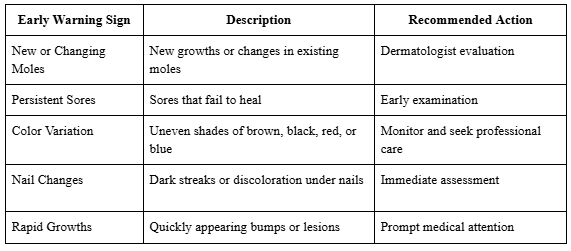
When to See a Dermatologist
Knowing when to seek professional advice is critical. Early consultation increases chances of successful treatment and reduces risk of serious complications.
Red flags for immediate consultation:
Rapidly growing or evolving spots
Sores that do not heal
Lesions that bleed, ooze, or crust
Persistent pain or itching
Conclusion
Recognizing early warning signs of skin cancer is essential for timely treatment and improved survival rates. Regular monitoring, preventive measures, and professional evaluation ensure suspicious lesions are addressed quickly. Being proactive with skin health empowers individuals, reduces complications, and supports better long-term outcomes.
HOW DO YOU FEEL ABOUT FASHION?
COMMENT OR TAKE OUR PAGE READER SURVEY
Featured




For many people, the end of the workday does not always mean the beginning of recovery.