
How Smart Systems Are Simplifying Everyday Business Operations

PAGE
By PAGE Editor
Every day, business operations are full of moving parts. Teams need to manage stock, suppliers, orders, deliveries, customer updates, reporting, and internal communication, often simultaneously. When these tasks depend on manual work, small delays and errors can quickly affect the whole business.
Smart systems are helping companies simplify that complexity. By automating routine tasks, connecting data, and improving visibility, they make daily operations easier to manage and more consistent as businesses grow.
For companies that handle inventory, products, fulfillment, or stock movement, Warehouse Management Software can support smarter stock workflows by helping teams track goods from receiving to storage, picking, packing, and dispatch.
Smart systems simplify operations by giving teams clearer information, fewer manual tasks, and faster action.
Why Everyday Operations Become Difficult to Manage
Most business operations do not become complicated all at once. Complexity builds gradually. A company adds more customers, launches more products, works with more suppliers, expands into new markets, or opens new locations.
At first, teams may manage these changes with spreadsheets, emails, shared folders, and messaging apps. These tools can be useful, but they often create disconnected information. One team may update a spreadsheet while another works from an older version. A supplier update may sit in someone’s inbox. A stock issue may be known by the warehouse but not by sales.
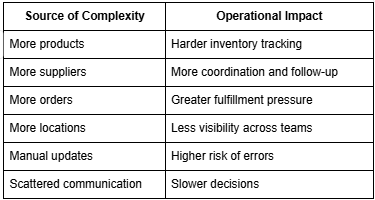
Smart systems help by creating a more organized way to manage daily work.
Automation Reduces Repetitive Tasks
One of the biggest advantages of smart systems is automation. Many business tasks are repetitive but still important. Staff may need to update stock counts, confirm order status, send internal reminders, create reports, or check shipment progress.
When these tasks are done manually, they take time and increase the chance of mistakes. Automation makes them faster and more consistent.
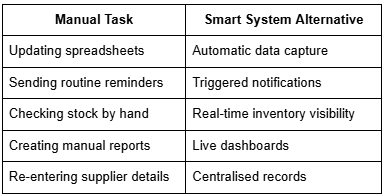
Automation does not remove the need for people. It removes unnecessary admin so people can focus on solving problems, serving customers, and improving the business.
For example, when a product is received into a warehouse, a smart system can update inventory records immediately. When an order is picked and packed, the system can update the order status. When stock reaches a low level, the right team can be alerted before a shortage becomes a problem.
Better Visibility Helps Teams Make Faster Decisions
Businesses cannot manage what they cannot see. When information is delayed or scattered, teams often make decisions based on incomplete details.
Smart systems improve visibility by giving teams access to shared, accurate information. Managers can see stock levels, order progress, supplier updates, warehouse activity, and fulfillment performance without waiting for manual reports.
The faster a team can see what is happening, the faster it can prevent small issues from becoming bigger problems.”
This visibility is especially useful in fast-moving operations. If an item is running low, purchasing teams can act earlier. If a shipment is delayed, customer service can update buyers sooner. If a warehouse area is becoming overloaded, managers can adjust workflows before delays build.
Teams Work Better From One Source of Truth
Many operational problems happen because different teams are working from different information. Sales may think a product is available. The warehouse may know it is out of stock. Customer service may be waiting for a delivery update. Finance may be missing supplier details.
Smart systems reduce this problem by centralizing information.
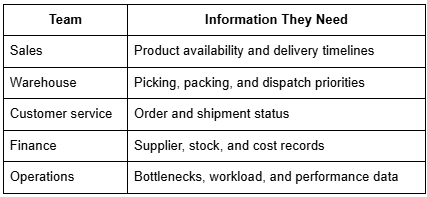
When teams work from one source of truth, communication improves. People spend less time asking for updates and more time acting on reliable information.
This also strengthens accountability. It becomes clearer who owns each task, what has already been completed, and what still needs attention.
Inventory Management Becomes Easier to Control
Inventory is one of the most important areas where smart systems can simplify operations. Poor stock control creates problems across the business. It can lead to overselling, stockouts, excess inventory, delayed orders, and customer complaints.
A smarter inventory process gives teams better control over what is available, where items are stored, and how quickly products are moving.
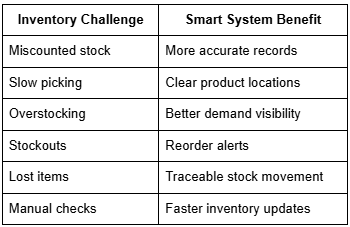
For growing businesses, this matters because inventory becomes harder to manage as product ranges and order volumes increase. A system that tracks stock movement accurately can reduce guesswork and help teams fulfill orders more reliably.
Freight Coordination Becomes More Predictable
Many everyday operations depend on goods arriving when expected. If inbound shipments are delayed, difficult to track, or missing important documentation, the impact can spread quickly.
Warehouses may not be ready to receive goods. Customer orders may be delayed. Production schedules may shift. Sales teams may make promises based on uncertain arrival dates.
Modern freight forwarding systems can support reliable shipment coordination by helping businesses manage goods across suppliers, carriers, warehouses, and destinations.
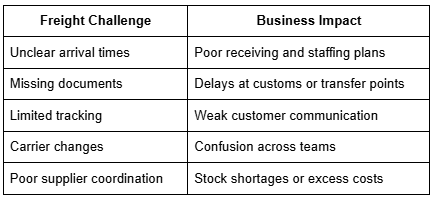
Better freight visibility helps businesses prepare earlier. If a shipment is delayed, teams can adjust plans and communicate clearly. If goods are arriving sooner than expected, the warehouse can make space and schedule receiving work.
Reporting Turns Daily Activity Into Useful Insight
Smart systems do more than manage tasks. They also turn everyday activity into data that leaders can use.
Without reporting, managers may only notice problems after they become serious. With better reporting, they can identify patterns earlier.
Useful operational metrics include:
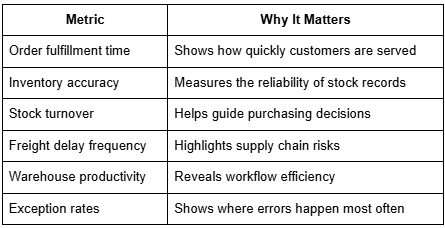
These insights help businesses make decisions based on evidence rather than guesswork. Leaders can adjust staffing, improve supplier relationships, change storage layouts, or automate tasks that create repeated delays.
Smart Systems Improve Customer Experience
Customers may not see the systems a business uses, but they feel the results.
When operations are organized, customers receive more accurate stock information, clearer updates, faster fulfillment, and fewer mistakes. When operations are disorganized, customers experience delays, cancellations, incorrect orders, and poor communication.
Smart systems help businesses keep their promises. They make it easier to know what is available, where an order is in the process, and whether anything needs attention before the customer is affected.
A smoother internal workflow often leads directly to a better external experience.
Simpler Operations Support Business Growth
As businesses grow, complexity naturally increases. More customers, products, suppliers, employees, and locations create more work for teams to manage.
Smart systems support growth by making routine processes repeatable. Instead of relying on memory, manual workarounds, or scattered updates, teams can follow clear workflows backed by accurate data.
This does not make a business less flexible. In many cases, it makes the business more adaptable because teams can see what is happening and respond faster.
The goal of smart systems is not to make operations rigid. It is to make growth easier to manage.
Choosing Where to Start
Businesses do not need to improve every process at once. The best starting point is usually the area creating the most daily friction.
That may be inventory tracking, supplier coordination, order fulfillment, freight visibility, customer updates, or reporting. Once one process becomes clearer and more efficient, the benefits often spread across other parts of the business.
A useful question for leaders is simple: which routine task takes too much time, creates too many errors, or depends too heavily on one person?
The answer often points to where a smart system can create the most value.
Smarter Systems, Simpler Work
Everyday business operations will always involve complexity. Goods need to move, teams need to coordinate, customers need updates, and managers need reliable information. The difference is whether that complexity is handled manually or supported by systems designed for scale.
Smart systems simplify operations by reducing repetitive work, improving visibility, connecting teams, strengthening inventory control, and making freight coordination more predictable.
For modern businesses, operational simplicity is not about doing less. It is about doing the right work with better tools, clearer data, and stronger control. When smart systems are used well, they help teams work faster, make better decisions, and grow with confidence.
HOW DO YOU FEEL ABOUT FASHION?
COMMENT OR TAKE OUR PAGE READER SURVEY
Featured





Video is no longer optional for marketing teams, e-commerce brands, and solo creators.