
How to Choose the Perfect Outfits for Your Engagement Photos
PAGE
By PAGE Editor
Most couples spend weeks picking a photographer and a location, then open their closet the night before and panic. The outfit question tends to get postponed because it feels secondary to everything else on the list. But clothing affects how you look in a frame more than lighting or angles do in many cases, and the wrong fabric or color can pull attention away from the two of you entirely. Getting this right takes some thought, though not as much as you might assume. A few grounding decisions early on will carry you through the rest.
Start With the Setting, Then Work Backward
The location tells you what to wear before anything else does. A downtown area with concrete and glass leans toward structured clothing, fitted silhouettes, and darker tones. A beach or open field works better with softer fabrics and lighter colors. If you are shooting in a garden or park during late afternoon, earthy tones tend to blend well with the surroundings without competing for attention.
Think about what the background will look like behind you. If there is a lot of green, wearing green will flatten the image. If the walls are red brick, avoid red. Your clothing should sit apart from the background enough that you remain the focal point of every shot.
Let Your Ring Inform the Color Story
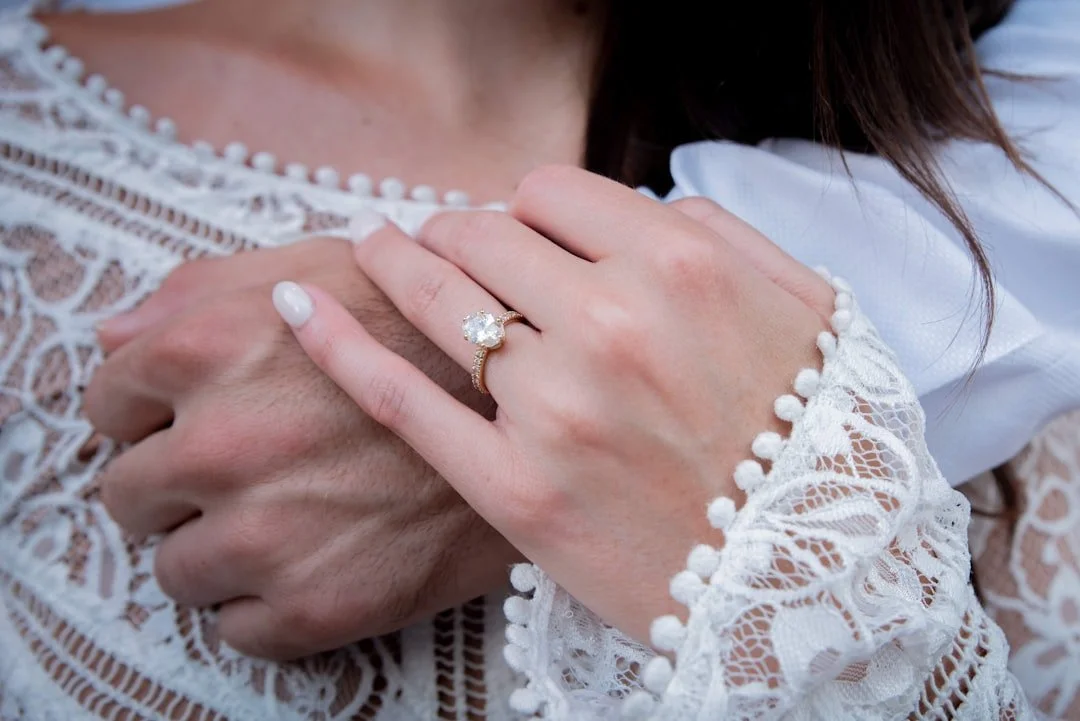
Your ring can guide outfit decisions more than you might expect. A solitaire on a yellow gold band pairs well with warm tones like camel, rust, or deep burgundy, while a pear shaped engagement ring set in platinum tends to complement cooler shades such as slate, navy, or soft ivory. The stone and metal already carry a visual tone worth building around.
According to The Knot, couples should aim for a cohesive color palette that still allows each person room for individuality. Letting the ring set that starting point makes the coordination feel less forced.
Matching Without Looking Like a Uniform
Coordinating outfits does not mean wearing the same color head to toe. You want the 2 outfits to feel like they belong in the same photograph, and you can do that through tone rather than identical hues. If 1 person wears a deep navy suit, the other might wear a cream dress with navy accents or shoes. The Knot recommends embracing a shared theme or cohesive color palette, and that advice holds up well in practice.
A good rule of thumb: keep patterns to 1 person. If someone is wearing a floral blouse or a plaid shirt, the other partner should stick with solids. This keeps the image from getting visually busy and gives the eye a place to rest.
Fabric Matters More Than You Think
Professional photographers regularly advise against thin stripes because they cause a visual distortion on camera known as a moiré effect. The pattern interferes with the sensor and creates a wavy, buzzing look in the final image. Busy prints and very small geometric patterns can cause the same problem.
For summer shoots, linen and cotton photograph well because they catch light softly and move in a natural way. Fall and winter sessions give you more room to layer, and materials like wool and suede add texture that reads well on camera. A structured overcoat during cooler months serves double duty by keeping you warm while adding visual weight to the frame.
Bring 2 Outfits, Not 5
Most couples bring 1 casual and 1 formal option, and that range gives the photographer enough to work with. The casual outfit might be something you would actually wear on a weekend together, like a fitted sweater and good jeans. The formal look could be a tailored suit or a dress with some structure to it. Changing between the 2 gives the final gallery some variety without turning the session into a fashion shoot.
Resist the urge to bring a third or fourth option. Outfit changes eat into shooting time, and every minute spent in the car or behind a tree changing clothes is a minute not spent in good light.
Shoes Deserve Their Own Plan
Comfortable shoes matter, especially if the shoot involves walking across sand, grass, or uneven sidewalks. Heels photograph beautifully during posed, stationary shots, but you will want flats or low-profile shoes for transitions between locations. Bring both pairs. Change when the photographer tells you to. Nobody needs to see you limping through a cobblestone alley in stilettos.
Keep Accessories Minimal
Jewelry, scarves, hats, and watches can all add personality to a photo, but too many accessories create clutter. Pick 1 or 2 pieces that feel intentional. A watch, a pair of earrings, a simple necklace. If you are wearing your engagement ring, that is already the accessory people will look for. Let it do its work without competition.
Classic Over Trendy, Every Time
The Knot makes a specific point about this: keep engagement outfits classic rather than trendy, because what is popular right now likely will not age well in photos. These images will be printed, framed, and shared for years. A bold trend from 2024 might feel dated by 2027. Solid colors, clean lines, and well-fitted clothing have no expiration date. Choose pieces that feel like you on a good day, not pieces that feel like a costume.
The Final Check Before You Leave
Iron or steam everything the night before. Check for loose threads, missing buttons, and visible tags. Try both outfits on together one last time and stand next to each other in front of a full-length mirror. If something feels off, trust that instinct and swap it out. You want to arrive at the shoot feeling settled, not second-guessing a shirt.
HOW DO YOU FEEL ABOUT FASHION?
COMMENT OR TAKE OUR PAGE READER SURVEY
Featured

Desigual Vintage returns to the brand’s 1984 origins for its second limited-edition FW26 collection, reintroducing archival mandalas, expressive graphic prints and asymmetric silhouettes to connect four decades of unconventional design with a new generation of fashion consumers.