
How to Choose the Right Sunglasses for Your Face Shape

PAGE
By PAGE Editor
Finding the right pair of sunglasses is both a science and an art. To choose frames that suit your face, pick shapes that balance your features-sharp, angular frames for round faces to add definition, and softer, curved frames for square faces to soften strong lines-while keeping the lenses inside your "Eyewear Sweet Spot" for good protection and style.
In the end, the most flattering pair is the one that balances your features, sits comfortably on your nose, and fits your personal style.
Many people want to highlight their best features and match their skin tone, but the huge number of options can feel like too much. By learning the basic shape of your face and how different frame shapes work with your features, you can move past guessing.
Whether you like the "mid-century cool" look of Wayfarers or the bold feel of oversized shields, the right fit can anchor your whole wardrobe, protect your eyes, and boost your confidence.
Why Face Shape Matters for Sunglass Selection
Does Frame Shape Really Complement Face Shape?
Traditional eyewear advice says the most flattering look comes from "offsetting" your face shape. If you have soft, rounded features, perfectly round glasses can make your face look even rounder-like putting a round cookie on a round plate.
A frame with sharp, rectangular lines adds the structure your face doesn’t naturally have, which can make your features look more balanced and defined. This idea of contrast appears in styling guides from brands like Warby Parker and Cutler & Gross.
Some modern stylists, such as Peter Nguyen, say these face-shape rules can feel a bit random at times. They argue that the style or mood you want-like the "Top Gun" feel of aviators or the 70s vibe of shield glasses-matters just as much as matching shapes.
Still, for most people just starting to experiment with style, face shape is a reliable starting point. It helps you avoid frames that look "too tiny" or "way too big" on your face. It gives you a simple guide so your eyewear works with your natural symmetry instead of against it.
How Head Size and Eye Placement Influence the Fit
Beyond your chin or forehead shape, your head size plays a big part in how sunglasses fit, but many people ignore it. Head size affects what lens width you need for real sun protection and a clear field of view.
If you have a larger head, your features sit farther apart, so you’ll need wider lenses and frames to keep things in proportion. A very small frame on a large head can look pinched and awkward, while an oversized frame on a narrow face can look like part of a costume.
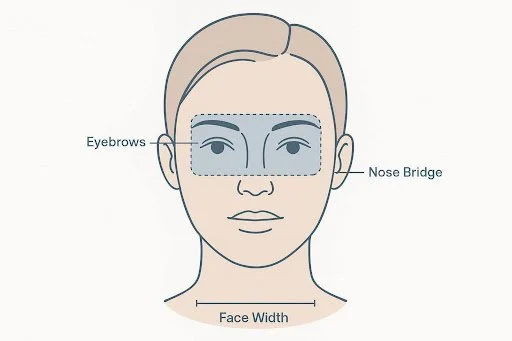
Where your eyes sit on your face also affects what experts call the "Eyewear Sweet Spot." Ideally, your sunglasses should be about as wide as your face and should cover from the middle of your eyebrows to roughly two-thirds of the way down your nose.
When a frame sits in this zone, UV coverage is better and your eyes stay near the center of the lenses. This is not just about looks; it helps with peripheral vision and keeps the weight of the glasses spread evenly across your nose and ears.
How to Identify Your Face Shape
Step-by-Step Guide to Measuring Face Shape
To move beyond guessing, you can figure out your face shape with a simple soft tape measure and a mirror.
Start with your face width: stretch the tape across the widest part of your cheekbones, from just past the outer corner of one eye to the same point on the other side.
Then measure your jawline, starting at the tip of your chin up to the point just below your ear where the jaw turns upward. Double that number to get your full jawline length.
Finally, measure your face length from the middle of your hairline down to the tip of your chin.
Once you have these numbers, compare them to see which parts stand out. If your face length and width are almost the same, you likely have a round or square face. If your face length is much greater than the width, you probably have an oval, rectangle, or oblong face. These numbers are not about hitting some "perfect" measurement; they just show the basic ratios that shape your outline. Knowing whether your forehead is wider than your jaw (heart-shaped) or your cheekbones are the widest point (diamond-shaped) gives you a clear guide for choosing frames that really fit.
Key Features of Common Face Shapes
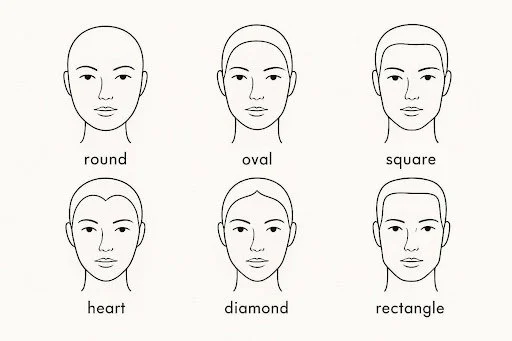
Most faces fall into one of six main shapes.
Round faces have soft curves, full cheeks, and few sharp angles, often looking almost equal in width and length.
Oval faces are often seen as balanced; they are a bit longer than they are wide, with higher cheekbones and a chin slightly narrower than the forehead.
Square faces have a strong jawline and a broad forehead, with the width of the forehead, cheeks, and jaw all fairly similar.
The Heart-shaped face features a wider forehead and cheekbones that narrow down to a pointed or slim chin-sometimes with a widow’s peak.
The Diamond face is less common and has a narrow forehead and jawline with wide, strong cheekbones.
The Rectangle face is like a square face but longer than it is wide, often with a long, straight cheek line. Spotting these details helps you choose sunglasses that either highlight your strong angles or bring balance to softer features.
Sunglasses Styles for Different Face Shapes
Round Face: Best Sunglass Frames
If you have a round face, like Chrissy Teigen or Leonardo DiCaprio, your aim is to add structure. Angular and rectangular frames usually work best. Their straight lines contrast with your natural curves, making your face look slimmer and a bit longer. Navigator frames are especially good because their strong top bar and square bottoms add a solid, architectural feel.
Try to stay away from very round lenses or tiny circular "Harry Potter" styles, since they can make your face look even rounder. Instead, pick frames that are just a bit wider than the widest part of your face. This gives a lifting effect and draws attention up to your brow line. Wayfarers with sharp corners or bold, dark cat-eye frames are also great choices to add height and structure.

Oval Face: Best Sunglass Frames
People with oval faces, like Beyoncé or Jake Gyllenhaal, usually have the easiest time choosing glasses. Because the features are already balanced, almost any style-from classic aviators to big shield frames-can look good. The main rule with an oval face is to keep that balance. Aim for frames that are as wide as, or a little wider than, the broadest part of your face so they don’t throw off your proportions.
You can play with bold patterns and details, but avoid frames so large that they completely dominate your features. Rectangular frames can add a bit of contrast to your soft curves, while square frames bring a modern, structured feel. Since you have a flexible base, you can try fun trends like clear frames or light yellow tints to add a bit of color in spring and summer.
Square Face: Best Sunglass Frames
A square face is strong and striking-think Angelina Jolie or Brad Pitt. To balance a firm jawline and broad forehead, pick sunglasses that soften those angles. Round or oval frames work well because their soft curves offset the sharp lines of your face. Classic aviators (or pilot frames) are another solid choice; their teardrop lenses add a rounded shape that breaks up the boxy look.
Avoid very boxy or geometric frames that copy your jaw shape, as they can make your features look too severe. Go for frames that sit a bit higher on the nose to make your face look slightly longer. Thinner, slimmer frames help by not adding extra visual weight to an already strong bone structure. Lighter or neutral colors can also soften your overall look and make you appear more relaxed and approachable.

Heart-Shaped Face: Best Sunglass Frames
If you have a heart-shaped face, like Reese Witherspoon or Ryan Gosling, you usually have a wider forehead and a narrower chin. You’ll want to balance the top and bottom of your face. Frames that are wider at the top than at the bottom-such as cat-eye or traditional aviators-work nicely because they follow your natural shape. To really balance things out, look for styles with more visual weight at the bottom, like more rounded lower rims.
Rimless or light-colored frames are also a good pick for heart-shaped faces because they won’t make your forehead look wider. Frames with small decorations or a bit of color on the bottom rim help draw the eye downward, which can make your face look more even. The main aim is to highlight your cheekbones while making the gap between the temples seem smaller.
Diamond Face: Best Sunglass Frames
A diamond face is all about bold cheekbones. To balance this shape, choose sunglasses that highlight the brow line and soften the overall structure. Oval and rimless frames are great because they don’t compete with your strong cheeks. Cat-eye frames can also look excellent, as their lifted corners pull attention toward the eyes and away from the narrower forehead and jaw.
Try to avoid narrow or very angular frames, which can make your cheekbones look too sharp or squeezed. Instead, go for frames with some height, which helps fill the space between your cheekbones and temples. This makes your face appear closer to an oval shape and brings things into better balance.
Rectangle Face: Best Sunglass Frames
A rectangle face is longer than it is wide and often has straight, long cheeks. To make it look shorter and more balanced, choose frames that have more vertical depth than horizontal width. Large, oversized square frames can work surprisingly well here, especially if their corners are a bit softened. Rounder frames and aviators are also great options because they break up the long vertical lines.
Avoid small or narrow frames-they will only make your face look even longer. Most non-angular shapes will look good because they add softness to a more angular jaw. Look for frames with thicker rims or a strong keyhole bridge, which pulls focus toward the center of your face and helps visually shorten its length.
Do Triangular Face Shapes Need Special Consideration?
Triangular faces usually have a narrower forehead and a wider jawline, so you need a clear plan to balance them. Your aim is to add width and volume to the upper third of your face to soften the stronger jaw. Square or round oversized frames work especially well. Frames with a bold top bar or decoration along the brow line draw attention upward and make the forehead look wider.
Round frames can be especially flattering on triangular faces because they soften the strong jaw and bring focus to the eyes. Skip very narrow frames, which will only highlight the width of your lower face. Instead, try "top-heavy" styles like clubmasters or semi-rimless glasses that place most of the visual weight at the temples.
Important Features to Consider When Choosing Sunglasses
Frame Size and Lens Coverage
Size is one of the most important practical details in any pair of sunglasses. Frames that are too narrow will look tiny and give poor sun coverage and a limited field of view. Frames that are too wide can look silly and may slide down your nose all day. You want a pair that sits firmly but not tightly, resting comfortably on the bridge of your nose and over your ears.
Lens coverage affects both style and eye health. Lenses that sit within the "Eyewear Sweet Spot" help block UV rays from sneaking in from the sides or top. If you’re active, wraparound styles or larger shield lenses — such as those found at https://www.spyoptic.com/ — usually give the best protection, especially for driving or water sports where glare hits from many angles. Always look for 100% UV protection (often shown as UV400) to protect your eyes over the long term.
Lens Shape and Eyewear Sweet Spot
The outer frame shape is mostly about looks, but the lens shape should follow the "Eyewear Sweet Spot" idea. A slightly rounded frame-not a perfect circle-tends to flatter many people because it follows the natural curve of the lower eye socket. These frames are just a bit rounded at the bottom, so they rest well on the cheeks and give a comfortable field of view.
The top of the frame can be straight or gently curved, but it should roughly follow your brow line. If the frame sits too high above your eyebrows, you can look like you’re always surprised; if it sits too low, it can hide your expressions. Finding the middle point makes the sunglasses feel like part of your face instead of something sitting in front of it. Trying on different sizes is key to finding that "just right" spot.
Material, Durability, and Comfort
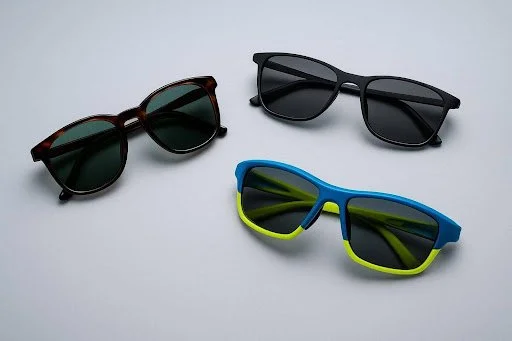
The materials in your sunglasses decide how long they last and how they feel over a full day. Acetate is a popular choice for high-quality frames because it allows deep, rich colors (like tortoise) and is light but sturdy. Titanium is another strong option, offering very high strength with a light feel, which is great if your nose bridge is sensitive or you wear glasses for long periods.
Think about lens features too. Polarized lenses greatly cut glare from flat surfaces like car hoods or water. Tint also matters: gray lenses keep colors true and work well for everyday use, while brown or amber tints increase contrast, which helps for activities like golf or hiking. Spending a bit more on strong, well-made frames helps your perfect fit keep its shape and comfort over time.
Practical Tips for Finding the Perfect Sunglasses
Trying Different Frames Before You Buy
Online guides are helpful, but actually trying on frames is still the best test. Lighting, your skin tone, and even your haircut can change how sunglasses look on you. When you visit a store, bring a friend whose taste you trust. We are often too focused on our own "flaws" to see when a bold frame actually looks good. Try on at least five different shapes-including ones you’re unsure about-to truly see what suits your features.
Think about your daily life while you test frames. If you’re active, gently shake your head to see if the sunglasses stay in place. If you need a pair for work, see how they look with a collared shirt or blazer. Some brands, like Warby Parker, offer home try-on programs so you can wear frames for a few days before deciding. This kind of "test drive" makes it easier to pick a pair you’ll still love weeks and months later.

Adjusting Fit for Maximum Comfort and Protection
Even very expensive sunglasses will look and feel bad if they don’t fit right. Most quality frames can be adjusted by an optician. If the arms are too tight behind your ears or the glasses sit crooked, an optician can gently warm and bend the arms or bridge to fit your face. If you have a flatter nose bridge, choose frames with adjustable metal nose pads (like the Cutler & Gross 1198) so you can raise or lower how they sit.
Don’t accept a "good enough" fit. If the glasses pinch your temples, you may end up with headaches. If they’re too loose, you’ll keep pushing them up, which smudges lenses and ruins the cool factor. A proper fit spreads the weight across three main contact points: the bridge of your nose and the tops of both ears. When these are balanced, you’ll almost forget you’re wearing them.
Quick Reference: Matching Sunglasses to Face Shape at a Glance
If you’re short on time, use this quick reference chart to start your search based on the most common face-shape suggestions:
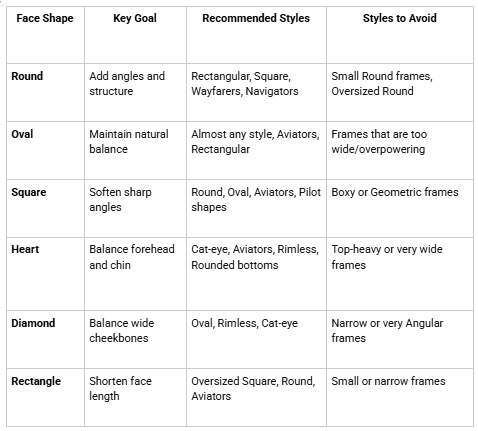
Beyond these shape rules, remember that sunglasses are a strong form of self-expression. They can suggest mystery, confidence, creativity, or ease. A round face might traditionally "work best" with square frames, but you might still pick round frames to lean into a relaxed or artistic style. These guidelines give you a a starting point, but how you feel in the mirror matters most.
Along with style, always make eye health a priority; a fashionable pair without proper UV protection is a poor choice for your long-term vision. A well-made pair of sunglasses protects your eyes and becomes a key part of your personal look at the same time.
HOW DO YOU FEEL ABOUT FASHION?
COMMENT OR TAKE OUR PAGE READER SURVEY
Featured





What does a DMC in Prague do for corporate groups? What it handles, when you need one, and the questions to ask before you sign.