
How to Prepare for Your Motorbike Learner’s Test in New Zealand
PAGE
By PAGE Editor
I still remember sitting in the testing centre lobby with sweaty palms, wondering if I had studied enough. The hardest part was not the questions. It was not knowing what to expect.
If you are getting ready to ride in New Zealand, you have two steps before you can legally ride on your learner licence. First comes the off-road Basic Handling Skills Test, or BHST. Then comes the computer-based theory test at a licensing agent.
The good news is that both tests feel much easier when you know the format ahead of time. A simple seven-day plan can help you walk in calm and walk out with a temporary licence in your hand.
Harlem World Magazine also shares travel and community stories from around the world.
Key Takeaways
Start with the big rules so the rest of your prep feels simple.
Book your BHST first. You cannot apply for the learner stage until you pass this off-road skills test, so lock it in early.
Study the official Road Code and practise real questions. The theory test has 35 multiple-choice questions, and you need at least 32 correct. Short daily sessions work better than last-minute cramming.
Know your learner conditions. You must ride a Learner Approved Motorcycle Scheme, or LAMS, approved bike, display an L plate on the rear, stay off the road between 10 pm and 5 am, carry no passengers, and never tow.
Bring the right documents and fee. No ID or BHST certificate means no test. The combined learner application and theory fee is $90.60.
Consider CBTA. Competency Based Training and Assessment is the only official way to reduce the minimum time between licence stages.
Understand the NZ Licensing Pathway
Seeing the full journey helps you plan each step without surprises.
The Three Stages
New Zealand uses a graduated system. You start on a learner licence, move to restricted, and then finish on a full licence. You must be at least 16 years old to begin.
Two Ways to Progress
The standard path means holding each licence for a minimum time and then passing a practical test. The faster path uses Competency Based Training and Assessment, or CBTA, to reduce that waiting time.
If you like a steady pace, the standard path works fine. If you want to move sooner and your riding is already solid, CBTA is worth planning for early.
Step 1: Pass the Basic Handling Skills Test
You need smooth low-speed control before you go anywhere near public roads.
What the BHST Covers
The test has four stages. Stage one is a basic turn and stop. Stage two is a figure eight and park. Stage three links multiple figure eights together. Stage four adds more speed and an emergency stop.
During each task, assessors watch for head checks, signalling, lateral position, throttle and brake control, safe speed, and smooth parking movements. You are not being marked on style. You are being marked on control, observation, and calm inputs.
How to Practise
Book two or three short sessions with an approved instructor, or practise in a private area with cones. Focus on clutch and throttle balance at walking pace, smooth progressive braking, and turning your head for every check. Wear full protective gear every time.
Common mistakes are looking down, rushing the clutch, and grabbing the front brake. Slow down, look where you want to go, and keep your arms relaxed. Many training providers can supply a LAMS bike, so ask when you book.
Step 2: Book and Pass Your Learner Theory Test
The theory test gets easier when you prepare for the way it asks questions.
Most people do better with short daily study than one long cram session. Practice quizzes help, but check tricky answers against the official Road Code so you do not learn the wrong habit.
The Format
It is a computer-based test with 35 multiple-choice questions drawn at random. You need at least 32 correct to pass. Questions cover road rules, signs, hazard awareness, and motorcycle-specific situations.
Languages and Support
The test is available in more than one language. If you need reading help or another kind of support, contact your licensing agent early so they have time to arrange it.
What Trips People Up
A lot of questions look simple, but the wording can be close. Watch for words such as safest, best, and must. When two answers seem possible, pick the one that gives you more space, more time, or better visibility.
If You Do Not Pass
You can rebook and try again. If you fail twice on the same day, you must wait 10 working days before your next attempt. Use that gap to drill the topics that caused the most mistakes.
Seven-Day Study Plan
Short daily reps beat one long cramming session every time.
Day 1: Skim the Road Code overview and list your weakest topics.
Day 2: Study signs and signals. Use flashcards and say the answers out loud.
Day 3: Focus on intersections, roundabouts, and right-of-way rules.
Day 4: Review lane position, following distances, and hazard scanning.
Day 5: Study speed management, road conditions, and braking distance.
Day 6: Take a full timed mock test and review every wrong answer carefully.
Day 7 should be light review only. Sleep well, drink water, and pack your documents. If one topic keeps coming up, spend 15 extra minutes there instead of rereading the whole Road Code.
What to Bring to the Licensing Agent
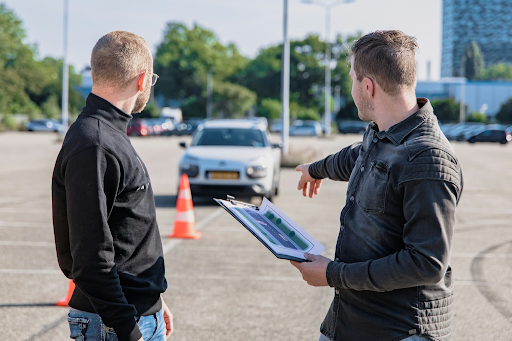
No documents means no test.
Pack your approved identity documents, BHST certificate, glasses or contacts if your licence requires them, and payment of $90.60 for the combined learner application and theory test fee. Aim to arrive at least 15 minutes early and silence your phone before you go in.
Make sure the name on your BHST certificate matches your ID. It also helps to check accepted payment methods before you leave home, so nothing delays your booking on the day.
Know Your Learner Conditions
Breaking these rules is a fast way to pick up fines and demerit points.
Ride only a LAMS-approved motorcycle.
Display an L plate clearly on the rear of your bike at all times.
Do not ride between 10 pm and 5 am.
Do not carry any passengers.
Do not tow another vehicle.
Breaching these conditions can lead to 25 to 35 demerit points and a $100 infringement fee. These rules still apply on a short trip or a quiet road near home. Your learner licence stays valid for 10 years, but if it expires before you move on, you must renew it to keep riding legally. If you ever ride overseas, remember that motorcycle laws vary by country and state, so always check the local conditions before you head out.
Choose a Safe First Bike with LAMS
Start with a bike that feels manageable and legal, not one that only looks exciting.
What LAMS Means in Practice
Motorcycles up to 250 cc are generally allowed unless they appear on the prohibited list. Models between 251 cc and 660 cc may still qualify if they stay in standard form and meet the power-to-weight threshold of less than 150 kilowatts per tonne.
How to Check
Look up the exact model and variant on the NZTA LAMS list before you buy. Small suffix differences matter, so check the full model name, not just the badge on the fairing.
Modification Warning
Any change that increases the power-to-weight ratio can cancel LAMS approval. Keep the bike standard until you hold a full licence. Spend your money on good gear and basic insurance before you spend it on accessories.
Fit matters just as much as compliance. Sit on the bike before you buy it. You should be able to hold it upright, reach the controls easily, and put at least one foot down with confidence.
Fast-Track With CBTA
CBTA is the only official way to reduce the minimum time at each stage.
It is not a loophole. It is a skills-based route that rewards safe riding and good judgment on the road.
CBTA 6R
Once you hold your learner licence and feel confident, you can sit the CBTA 6R assessment. If you pass and you are at least 16 and a half, you can apply for your restricted licence right away.
CBTA 6F
After nine months on your restricted licence, you can sit CBTA 6F. You can then apply for a full licence once you have held restricted for at least 12 months and meet the age rules. A coaching session before each assessment helps a lot of riders pass on the first try.
If you want coaching and a clear booking path in Canterbury or Otago, it helps to use one guide that explains the learner stage, local training options, booking steps, and what to practise first so the whole process feels less confusing. Ornsby Motorcycle Training can help you compare the process and prepare for your motorbike learners test with more confidence.
Test-Day Game Plan
Control the parts you can control and let the rest go.
The night before, pack your ID, BHST certificate, payment method, glasses or contacts, a snack, and water. In the morning, arrive early and take a few slow breaths before you start.
Do not rush. Read each question all the way through, answer the easy ones first, and come back to anything that feels unclear. A calm pass is better than a fast mistake.
If you pass, you leave with a temporary licence while the photo card arrives by post. If you do not pass, book the next available slot and spend extra time on your weak spots instead of starting from scratch.
Budget and Timeline
Expect one fixed fee now and a few variable costs after that.
The official learner application plus theory test fee is $90.60. BHST and riding course prices vary by provider and region, so compare what is included before you book.
The test fee is only one part of the cost. A helmet, a leather jacket, gloves, boots, fuel, basic insurance, and regular maintenance add up quickly. If money is tight, pay for fit and safety first, then add extras later.
Conclusion
A calm plan beats last-minute panic.
You now have a clear week-long prep plan, a document checklist, and a simple view of the rules that keep you legal on the road. Pass the BHST, aim for 32 out of 35 in the theory test, and stick to your learner conditions. If you want to move faster, CBTA gives you a proven next step.
FAQs
These quick answers cover the rules new riders ask about most.
Do I need to display an L plate on my bike?
Yes. An L plate must be clearly visible on the rear of your motorcycle, moped, or ATV for the full time you hold a learner licence. Riding without one can lead to demerit points and a fine.
Can I ride at night while I am learning?
No. You are not allowed to ride between 10 pm and 5 am while on a learner licence. That restriction is there to reduce risk during low-visibility hours.
Can I carry a friend as a passenger during this stage?
No. Carrying passengers is not allowed on a learner licence. You must ride solo until you move to a stage that permits passengers.
How soon can I move to the next stage if I use CBTA?
With CBTA 6R, you can apply for your restricted licence as soon as you pass the assessment and are at least 16 and a half years old. There is no waiting period at the learner stage when you use that pathway.
HOW DO YOU FEEL ABOUT FASHION?
COMMENT OR TAKE OUR PAGE READER SURVEY
Featured




Deep clean, seal, and protect your tile & grout in Oceanside, CA. Bring the original shine back to your floors. Request a quote today!