
The Rise of Rice Water Skincare Signals a Broader Shift Toward Ingredient-Led Beauty
PAGE
By PAGE Editor
What was once a centuries-old ritual rooted in East Asian beauty traditions has re-emerged as a global skincare phenomenon—this time powered not by heritage alone, but by search engines, social media, and a new generation of cost-conscious consumers. Rice water, the starchy byproduct of boiling rice, is now at the center of one of beauty’s most telling cultural pivots.
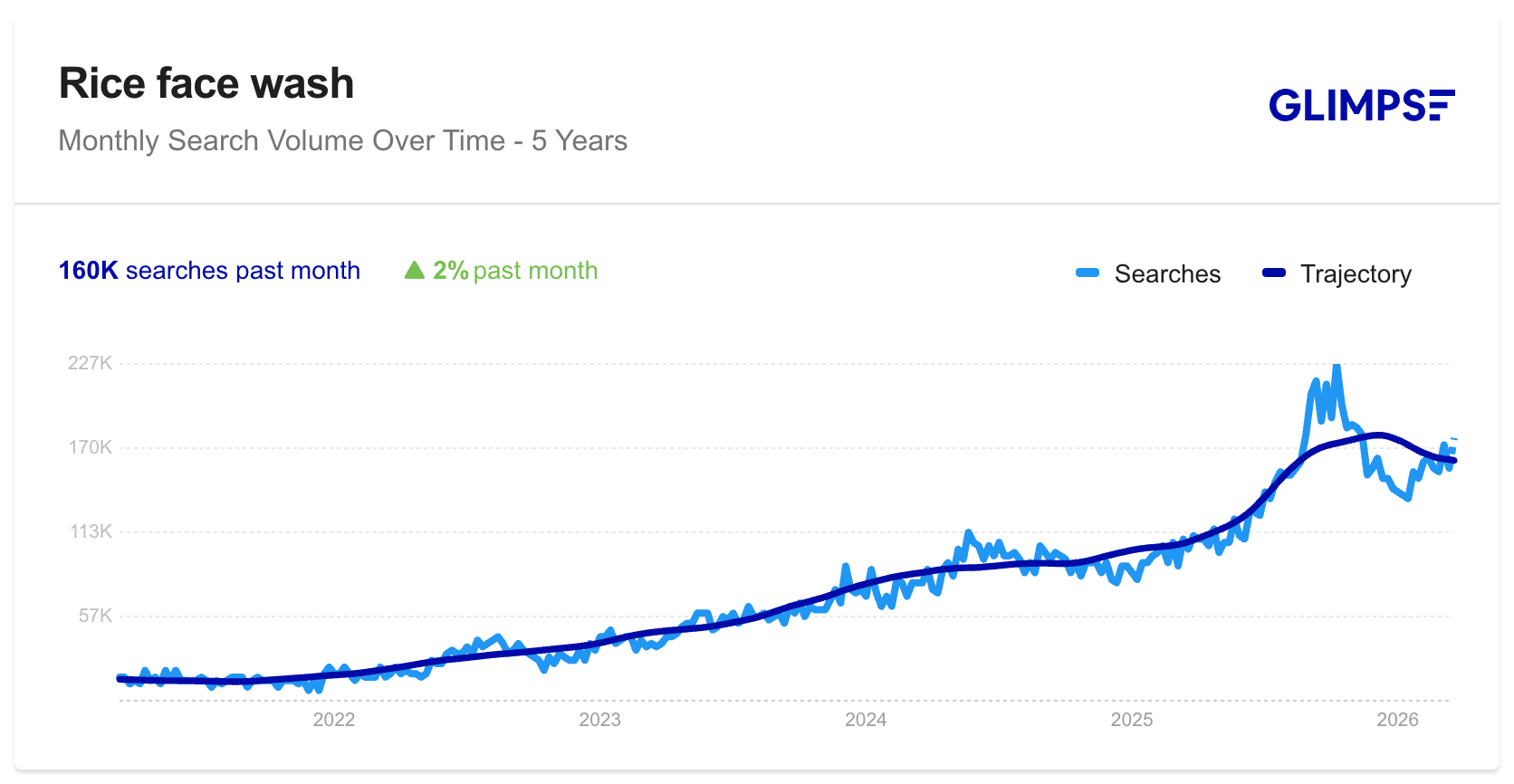
According to new data from Fresha, global searches for “rice face wash” have climbed to approximately 160,000 per month, reflecting steady growth over the past five years. The surge underscores a larger behavioral shift: consumers are no longer simply buying products—they are dissecting ingredients, experimenting at home, and redefining what constitutes an effective skincare routine.
At its core, the appeal of rice water is both economic and ideological. It is accessible, low-cost, and perceived as “natural”—a trifecta that resonates in an era shaped by inflation, transparency, and wellness-driven consumption. But its popularity also reflects a deeper recalibration of trust. Consumers are increasingly looking beyond brand messaging and toward individual components, favoring simplicity over complexity.
Danielle Louise, a beauty expert affiliated with Fresha, frames the trend as part of a growing ingredient-first mindset. Consumers, she notes, are becoming more literate in what they apply to their skin, seeking solutions that feel both intuitive and minimally processed. Rice water, in that context, becomes less of a product and more of a concept—one that promises efficacy without the friction of commercialization.
Yet the narrative is not without nuance. While rice water contains amino acids and starches that can offer light hydration, temporary brightening, and mild soothing effects, its benefits are often overstated in digital spaces. Its functionality remains limited, particularly when removed from a structured routine.
Crucially, experts caution against positioning rice water as a replacement for foundational skincare steps. It lacks the surfactants necessary to remove SPF, oil, or makeup effectively, making it an inadequate cleanser despite its popularity under that label. Overuse, particularly on acne-prone or sensitive skin, can also lead to buildup or irritation—an outcome that runs counter to the simplicity it promises.
This tension—between accessibility and efficacy—is where the trend becomes most instructive. The rise of rice water is not just about a single ingredient, but about a broader redefinition of beauty itself. Consumers are shifting from rigid, multi-step regimens toward flexible, personalized routines built around perceived needs and individual experimentation.
But as Louise points out, there is a critical distinction between enhancement and replacement. DIY skincare, while empowering, operates best as a supplement—not a substitute—for clinically sound practices. The fundamentals remain unchanged: cleansing, targeted treatment, and sun protection continue to anchor any effective routine.
In that sense, rice water’s staying power will likely depend on how it is contextualized. As an additive—something that complements rather than replaces—it aligns with the evolving ethos of modern skincare. As a standalone solution, it falls short.
Ultimately, the real story isn’t the resurgence of rice water itself, but what it represents: a consumer base that is more informed, more experimental, and more willing to challenge the conventions that once defined the beauty industry. In that landscape, even the simplest ingredients can carry complex implications.
HOW DO YOU FEEL ABOUT FASHION?
COMMENT OR TAKE OUR PAGE READER SURVEY
Featured





BAPE® brings its streetwear legacy into the ring with UNDEFEATED’s wrestling-inspired Fall/Winter 2026 collection while expanding its design vocabulary through the TYPE 10 BAPEX®, an automatic timepiece that translates the brand’s signature camouflage into contemporary watchmaking.