
Why Cotton Lace Is the Fabric Bohemian Wedding Dresses Were Built On
PAGE
By PAGE Editor
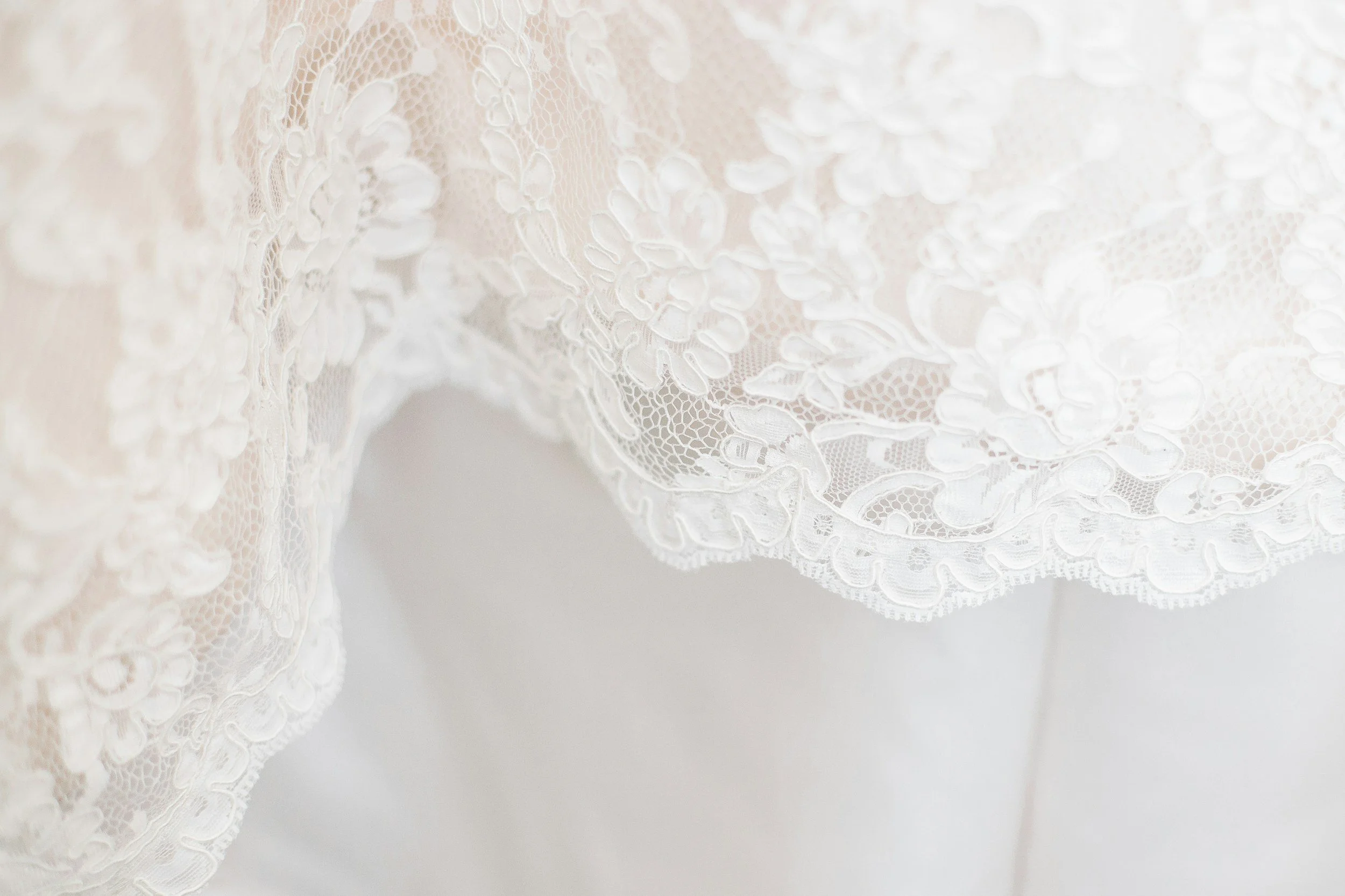
Cotton lace predates every bohemian bridal trend by more than a century. Before tulle overlays, before synthetic stretch lace, before 3D appliqué became a runway fixture, there was cotton. Woven on slow looms. Cut by hand. Stitched into garments that moved with the body instead of against it.
When brides search for a bohemian lace wedding dress, they are often drawn to the aesthetic first: the soft drape, the visible texture, the way lace catches natural light during an outdoor ceremony. What most don't realize is that the fabric itself determines whether the dress delivers on that feeling or just photographs well.
The Difference Is in the Fiber
Synthetic lace, typically polyester or nylon, is engineered for consistency. Every repeat is identical. The finish is uniform. It holds its shape well, which makes it efficient to produce at scale. It is also nonporous. In warm weather, it traps heat against the skin. Over the course of a six-hour wedding day, that matters.
Cotton lace breathes. The fiber absorbs moisture and releases it, which means it stays comfortable against the body through ceremony, portraits, reception, and dancing. Cotton also softens with wear rather than degrading. A cotton lace wedding dress stored properly will look the same in twenty years. A polyester lace dress stored the same way often yellows.
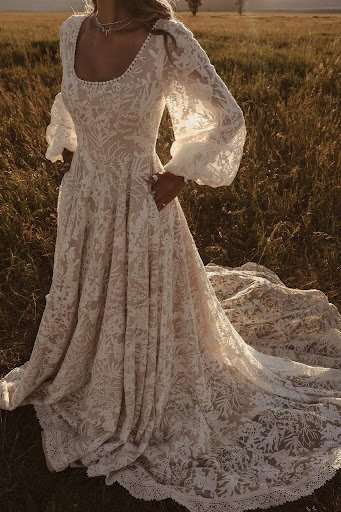
For brides choosing a boho lace wedding dress for an outdoor setting, whether that is a California coastline, a mountain meadow, or a backyard garden, the fabric needs to perform in uncontrolled conditions. Wind, heat, humidity, uneven ground. Cotton lace handles all of it because it was designed for real wear, not climate-controlled showrooms.
Why Texture Matters More Than Embellishment
One of the hallmarks of bohemian bridal design is visible craftsmanship. The lace pattern should be something you can feel with your fingers, not just see in a photograph. Cotton lace achieves this naturally because the fiber has a matte, organic texture that synthetic fabrics imitate but never replicate.
In our California atelier, we select cotton laces for each dress based on how they drape across the body at different angles. A lace that looks beautiful on a flat table may not move well on a bride who is walking, turning, or lifting her arms to embrace someone. The weight, stretch, and hand of the lace all affect how the finished dress feels.
This is where the difference between a bohemian chic wedding dress and a costume becomes clear. A dress that looks bohemian in photos but feels stiff and synthetic on the body is a costume. A dress that feels like a second skin and happens to photograph beautifully is the real thing.
What to Ask When Dress Shopping
If you are shopping for a bohemian lace wedding dress, whether online or in a bridal boutique, ask these questions:
What is the lace made of? If the answer is "polyester blend" or "synthetic," that tells you something about how the dress will feel over a long day. If the answer is "cotton" or "cotton blend," you are looking at a fundamentally different garment.
Where is the dress made? Mass production requires consistent materials that behave predictably in a factory setting. Synthetic lace meets that requirement. Cotton lace requires more careful handling, which is why it is more commonly used by independent ateliers and made-to-order designers who work at smaller scale.
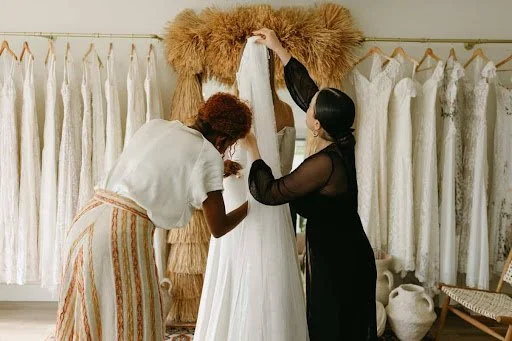
Can I feel the lace before I commit? If you are buying online, a home try-on program lets you evaluate the fabric in person before placing an order. This matters more for lace dresses than for any other style because lace is experienced through touch as much as sight.
How Cotton Lace Photographs
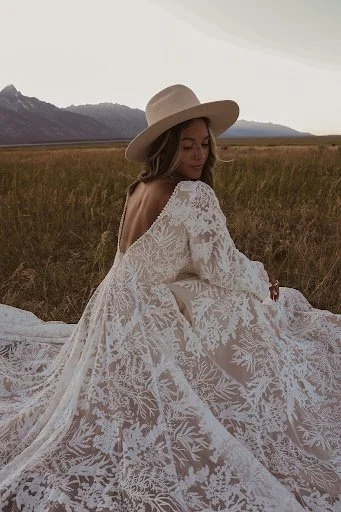
Brides often overlook this, but fabric determines how a dress appears in every image from the day. Synthetic lace has a reflective quality under direct light. Flash photography and midday sun produce a sheen on polyester that flattens the lace pattern and makes the dress look one-dimensional. Cotton lace absorbs light instead of reflecting it. The result is depth. The individual motifs in the lace remain visible even in bright conditions, and the texture reads clearly whether the photographer is shooting in open shade, golden hour, or candlelight at the reception.
For brides planning outdoor ceremonies, especially in California, Hawaii, or anywhere with strong natural light, this is not a minor difference. A cotton lace gown will look textured and dimensional in the exact conditions where synthetic lace washes out. The same quality that makes cotton lace comfortable to wear also makes it a more photogenic material.
Cotton Lace in Context
The bohemian bridal movement began in California in the early 2010s as a rejection of heavy, structured bridal gowns. Brides wanted something lighter, more personal, more connected to natural settings. Cotton lace was the obvious material for that shift because it already embodied the values the movement was built on: comfort, craft, and authenticity.
More than a decade later, the boho wedding dress category has expanded to include tulle, chiffon, crepe, and every synthetic lace variation available. That expansion is not inherently negative. More options means more brides can find something that suits their vision. But the original material, cotton lace, remains the benchmark for brides who prioritize how the dress feels over how it trends.
The fabric is the foundation. Everything else follows from it.
Yanique is the founder and designer of Dreamers & Lovers, a California-based bohemian bridal atelier handcrafting cotton lace wedding dresses since 2012. The brand operates a showroom in Riviera Village, Redondo Beach and offers a nationwide home try-on program.
HOW DO YOU FEEL ABOUT FASHION?
COMMENT OR TAKE OUR PAGE READER SURVEY
Featured




Jackets have always been an important part of fashion.