
Creating Equitable Spaces: Accessibility in Education Design
PAGE
By PAGE Editor
One of the most important (but overlooked) aspects of modern learning is education design and accessibility.
Every student should feel like they could walk into a classroom and feel like it was made for them. But here's the thing…
With very few exceptions, schools and institutions were built decades ago. And haven't changed since. Students today are more diverse than ever. They come from different backgrounds and have all sorts of physical, sensory and cognitive needs that modern classrooms aren't built for.
And that creates huge problems like:
Students with disabilities getting left behind
Schools not meeting accessibility standards
Students not learning to the best of their ability
That doesn't have to be the case. When schools build equitable spaces with every student in mind, amazing things happen. Here's how to do it.
What you'll pick up:
Why Accessibility In Education Design Matters
The Role Of Collapsible Exam Tables In Inclusive Classrooms
3 Key Design Principles For Accessible Learning Spaces
How To Get Started With Accessibility In Education Design
Why Accessibility In Education Design Matters
There's a lot of complicated data out there about why accessibility is important.
But let's be honest… you wouldn't make it through all of it. So let's keep this quick.
Here's the situation.
Around 1.3 billion people in the world suffer from some form of disability. That's 16% of the global population. 1 in every 6 people you've ever met.
Across education specifically, 19.6% of all school pupils in England are recorded as having special educational needs as of January 2025.
That's nearly 1 in 5 students.
If you really wanted to delve deeper, you could highlight that:
Children with Special Educational Needs actually make up 23.6% of pupils in SEN support. (The largest category of SEN)
Boys are more likely to have special educational needs than girls (11.1% vs 8.5%)
Some regions in England have higher percentages of students with special educational needs than others.
But you get the picture.
ACCESSIBILITY IS IMPORTANT!
When schools design classrooms that put students at the heart of everything, everybody wins. Students with disabilities aren't left behind trying to adapt to a one size fits all learning environment. Learning outcomes are improved across the board.
Think of it like optimising a website. Make the foundations solid and everything else falls into place.
The Role Of Collapsible Exam Tables In Inclusive Classrooms
For many schools and institutions, one of the biggest barriers to accessibility is the furniture they have (or have been provided with) for students.
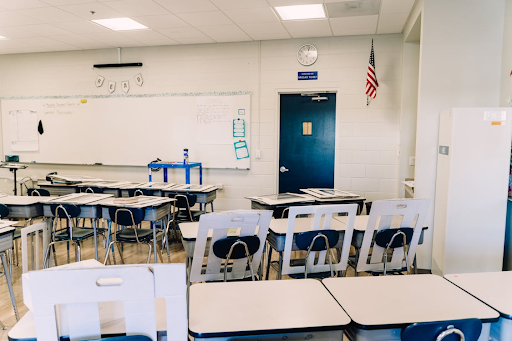
Banish the images of traditional school desks and chairs from your mind. The focus should be on classroom furniture that can accommodate ANY student's needs.
If a school isn't providing flexible furniture that can move, adapt and support any layout needed… then it's doing it wrong.
That's where collapsible exam tables come in.
They are:
Super easy to move around and store
Can be set up in minutes by staff
Provide all students with the space they need
Think about the barriers that traditionally stocked exam halls and classrooms present.
Wheelchair users. Students who use mobility devices. Children who require extra equipment or supervision. Collapsible exam tables allow all of these students (and many more) to take their seat and get on with what they need to do.
Not convinced yet? Here are a few more benefits…
Why collapsible tables should be the number one priority
When it comes to choosing the right exam desk options for accessible classrooms and exam halls, collapsible tables should be at the top of the priority list. They are:
Versatile – There's not just one setup for a classroom. Move desks around to create more space where it's needed. Provide more aisle room for wheelchair users. Create clusters so students can group together.
Space-saving – When furniture can be taken out and stored away at the flick of a button, suddenly rooms feel bigger and more spacious.
Easy to configure – Schools and institutions used to spend hours moving bulky exam desks around and setting them back up again. Collapsible tables literally fold away into nothing.
You're not stuck with clunky furniture anymore.
Collapsible tables are the future of accessible education. They open up a world of possibilities that old stock never could.
3 Key Design Principles For Accessible Learning Spaces
Grab a pen and paper. It's time to make some notes.
Creating accessible learning environments isn't as simple as buying a load of collapsible tables.
Of course, these are where you'll start. But teaching accessibility needs to come from the ground up.
Let's look at 3 key areas you should be considering when designing equitable spaces for learning.
Universal Design For Learning (UDL)
UDL is an educational framework that guides you to design learning environments that meet the needs of all students.
Sounds great in theory. So what does that actually look like?
Well when you build schools and classrooms using UDL principles. You'll create spaces that:
Allow for diverse ways of student engagement
Have flexible furniture and workspace options
Consider the sensory elements of the space
One of the biggest mistakes educational institutions make is trying to retrofit accessibility into old buildings. This is expensive. Time-consuming. And limits how far the accessibility journey can actually go.
Designing with UDL from the start will save time and money in the long run.
Physical Accessibility
This one should hopefully go without saying… but all physical spaces need to be accessible.
Wheelchair users should be able to comfortably navigate the school environment. Which means thinking about:
Desk height
Doorway width
Accessibility of facilities
Things that most people wouldn't even think about.
But when you start thinking about how students with disabilities interact with the building around them. It's clear that these are areas that need serious consideration.
Physical disability isn't always visible either. Buying adjustable height tables will allow all students to comfortably sit and reach their workspace.
Sensory Considerations
This is the big gap that most schools have in their accessibility plan.
Students with special educational needs aren't the only ones who benefit from sensory learning environments.
Providing spaces that consider lighting, noise and even room temperature can dramatically increase how well students engage with a classroom.
Where possible avoid fluorescent lighting.
Use softer materials on walls and floors to reduce echoing.
Provide clear signage with high contrast colours.
Create 'quiet zones' for students to take breaks.
How To Get Started With Accessible Education Design
Education design and accessibility is wide-ranging. So where do you actually begin?
Like so many things… with small steps.
Audit the school. Take a critical look at the school or institution and make a list of everything that is and isn't accessible. Hallways? Check. Entrances? Check. How long does it take to get from the car park to the 1st class? Time it. This info is gold.
Ask the students. If a school is serious about making accessible changes, then ask the people that matter most what they think. Students with disabilities will use the facilities everyday. They (and their parents) will notice problems that might have been missed.
Start with high impact changes. There's no magic to wave a wand and fix everything. Start with quick wins that will benefit more students. Replace old non-adjustable furniture with flexible options. Improve lighting. Ensure all hallway spaces are clear of obstruction.
Implement into the culture. Making a school more accessible isn't a 1 month project. It's a change of culture. Every time new equipment needs to be purchased or areas need renovation... accessibility should be considered.
Pulling It All Together
Started somewhere. Anywhere.
Making an institution more accessible starts with taking that first step. Listening to students and teaching staff and implementing change where possible.
Accessibility in education design is more than just buying a couple of collapsible tables. But those tables could be the first step in the journey to creating equitable spaces.
HOW DO YOU FEEL ABOUT FASHION?
COMMENT OR TAKE OUR PAGE READER SURVEY
Featured





BAPE® brings its streetwear legacy into the ring with UNDEFEATED’s wrestling-inspired Fall/Winter 2026 collection while expanding its design vocabulary through the TYPE 10 BAPEX®, an automatic timepiece that translates the brand’s signature camouflage into contemporary watchmaking.