
How to Build a Notecard Writing Habit
PAGE
By PAGE Editor
Busy days can make staying connected feel harder than it should. Messages are sent quickly, read quickly, and often forgotten just as quickly. Many people use notecards as a simple way to stay connected when everyday communication feels rushed or forgettable.
Writing a short note does not need to become a big task. It works best when it becomes a small, natural habit that fits into your life. With the right setup, sending handwritten notes can feel simple, steady, and meaningful.
Why a Notecard Habit Matters
Strong connections are often built through small, consistent actions. A handwritten note gives you a way to pause and reach out with more care. It turns a passing thought into something someone can actually hold onto.
This habit also helps you become more aware of the people in your life. Instead of waiting for a big occasion, you start noticing smaller moments worth acknowledging. That awareness makes the connection feel more natural over time.
Start by Keeping Cards Visible
One of the easiest ways to build the habit is to keep your cards somewhere you can see them. A desk, kitchen drawer, bedside table, or entryway can all work well. When blank cards are within reach, you are more likely to use them.
The goal is to remove friction. If you have to search for stationery every time you want to write, the habit becomes harder to keep. Keeping everything nearby makes the process feel simple.
Choose One Small Moment Each Week
You do not need to write several notes at once. Start with one small moment each week that feels worth acknowledging. It could be a kind gesture, a helpful conversation, or someone who has been on your mind.
This keeps the habit manageable. One thoughtful note is enough to build consistency without putting pressure on. Over time, that small weekly action can become something you look forward to.
Use Thank You Notes as a Starting Point
Thank you notes are one of the easiest ways to begin. When someone helps you, gives you a gift, hosts you, or offers support, a short message can go a long way. These moments already give you a clear reason to write.
The message does not need to be long or formal. Mention what you appreciated and why it mattered to you. A few sincere sentences can feel more meaningful than a polished message that sounds forced.
Write When Someone Comes to Mind
Sometimes there is no special occasion, and that is perfectly fine. If someone comes to mind during the day, that can be enough reason to send a simple note. These unexpected messages often feel the most personal.
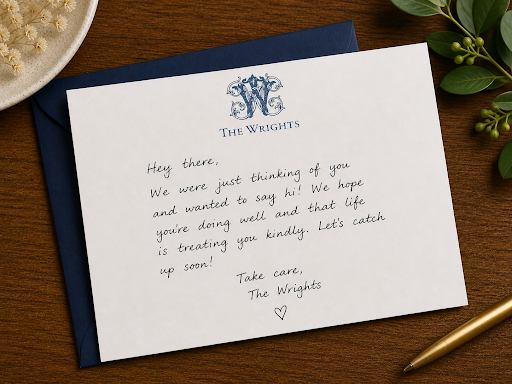
A short handwritten card can say, “I was thinking of you,” in a way that feels warm and lasting. It does not ask for anything in return. It simply lets someone know they matter.
Know What to Write Before You Start
Many people avoid writing notes because they do not know what to say. The easiest way to begin is with one clear thought. You might start with appreciation, encouragement, congratulations, or a simple check-in.
From there, add one specific detail. Mention the moment, gesture, or memory that made you want to write. That small detail makes the note feel personal instead of generic.
Keep the Message Natural
A handwritten note should sound like you. It does not need to be formal, poetic, or perfectly worded. In most cases, a natural tone feels more genuine.
Imagine you are speaking directly to the person. Write a few sentences the way you would say them out loud. This keeps the message warm, clear, and easy to read.
What to Keep Nearby for Writing Notes
Keeping a small set of blank cards nearby makes it easier to write when the moment feels right. Simple designs, quality paper, a comfortable pen, and a few stamps can remove the small barriers that often stop people from following through. The easier the setup feels, the more likely you are to keep the habit going.
Stationery sets can also be helpful if you like having a few options ready. Thank you cards are useful for appreciation, while blank cards work for almost any message. Having both nearby gives you flexibility without complicating the process.
Make It Part of a Quiet Routine
Writing notes often feels easiest during calm moments. You might write one on Sunday evening, after your morning coffee, or at the end of the week when you reflect on the people you connected with. A regular time can help the habit feel more natural.
This does not need to become a strict schedule. It simply gives you a gentle reminder to pause and write. Over time, the routine becomes easier to maintain.
Let the Habit Grow Naturally
A notecard habit should feel simple, not forced. You may start with one card a week and later find yourself writing more often. The habit grows best when it fits naturally into your life.
As you continue, you may begin noticing more moments worth writing about. A kind word, a small favor, or a meaningful conversation can all become reasons to reach out. That awareness is part of what makes the habit valuable.
A Simple Way to Stay Connected
Building a notecard writing habit is really about making connections easier. It gives you a simple way to act on thoughtful moments instead of letting them pass. A few sincere sentences can make someone feel remembered and appreciated.
You do not need a complicated system to begin. Keep a few cards nearby, choose one small moment, and write naturally. Over time, this simple habit can make your everyday relationships feel more present and personal.
HOW DO YOU FEEL ABOUT FASHION?
COMMENT OR TAKE OUR PAGE READER SURVEY
Featured




Having a friends with benefits relationship is a great idea, if you find the right person for it.