
Why Does Creating One Good Piece of Content Still Take All Day?
PAGE
By PAGE Editor
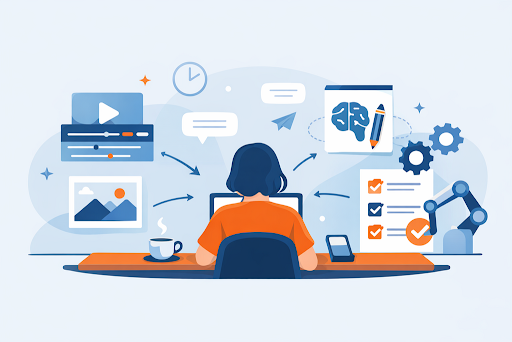
A few years ago, turning a single idea into usable content was still painfully slow.
You needed one tool for images, another for video, another for editing, and then a whole separate system just to keep the workflow moving.
Most people did not fail because they lacked ideas.
They failed because the process was too fragmented.
Fast forward to now, and the gap between idea and execution is getting much smaller.
Modern AI tools can already help people produce:
short video drafts
clean visual concepts
restyled product images
multiple creative variations
repetitive workflow steps that used to eat up the whole day
And that is exactly why so many creators, solo founders, marketers, and small teams are asking the same question:
Why does content creation still feel harder than it should?
The answer is simple.
The problem is no longer access to tools.
The problem is knowing how to connect them into a usable system.
That is where things start to change.
Some people now draft quick motion concepts in Vidmix AI, shape supporting visuals in other tools, and move faster than teams that still rely on scattered manual steps.
Let me break down what is really happening, why these tools matter, where they still fall short, and how beginners can use them without getting overwhelmed.
What Is an AI Content Workflow Tool?
An AI content workflow tool is not just one app that does one thing.
It is part of a larger process that helps turn an idea into assets you can actually publish.
That might include:
turning text into visual concepts
turning still images into motion
creating multiple design directions quickly
reducing repetitive tasks that slow down output
The biggest shift is not that AI can make something.
The biggest shift is that AI can help you keep moving.
For most creators, speed matters almost as much as quality.
If an idea takes too long to execute, the moment is gone.
Why Does This Problem Keep Showing Up?
A lot of people assume content bottlenecks come from lack of creativity.
That is usually not true.
What actually happens is much more ordinary.
You have an idea for a launch, a short video, a landing page, a social post, or a client concept.
Then the work begins.
You need a visual direction.
You need a better version of the visual.
You need motion.
You need variations.
You need captions.
You need follow up tasks done without babysitting every step.
By the time all of that is finished, the original idea feels old.
This is why so many people feel busy but still inconsistent.
They are stuck in production drag.
How Good Are These Tools Now?
Much better than most people realize.
Not perfect.
But good enough to remove a huge amount of friction.
Today, the better tools can help with:
Fast visual ideation
You can go from blank page to usable concept in minutes instead of hours.
Image transformation
Instead of starting over, you can rework an existing image into a different style or direction.
Short form motion output
Simple static ideas can now become moving scenes suitable for testing concepts and hooks.
Variation at scale
You no longer need to manually rebuild every option from scratch.
Workflow continuity
Tasks that used to be forgotten or delayed can now be passed into a more consistent system.
That last point matters more than people think.
Creativity does not only break when inspiration is missing.
It also breaks when the process is messy.
Why Are More People Building Around AI Workflows?
Because the old way is expensive in ways that do not always show up on a budget sheet.
1. Time gets wasted first
Before money becomes the issue, time becomes the issue.
Manual back and forth kills momentum.
2. Small teams need more output
Founders, creators, and lean marketing teams are all expected to publish more than before.
They do not have the luxury of slow production cycles.
3. Early testing matters
People do not want to invest heavily before they know what works.
They want draft quality content fast so they can test angles, hooks, styles, and offers.
4. The gap between idea and publish is now a competitive edge
Speed is no longer just convenience.
It is leverage.
What Features Actually Matter Most?
After looking at how people really use these tools, the most valuable features are not always the flashy ones.
1. Prompt based generation
You need to be able to describe what you want in plain language and get a usable first draft.
2. Image to image flexibility
Sometimes the fastest path is not making something new.
It is improving what you already have.
That is one reason tools like Nano Pro AI fit naturally into modern creative workflows. People use them when they need fresh image directions, cleaner concept outputs, or quick restyling without rebuilding the whole asset from zero.
3. Fast output speed
If the tool is powerful but slow, people stop using it.
Fast feedback loops matter.
4. Multiple variations
A single result is rarely enough.
Good workflows depend on comparison.
5. Reliable handoff into action
Once a creative asset is ready, someone still has to organize the next step.
That is where automation starts to matter.
Best Use Cases Right Now
1. Launch content for solo founders
A founder with one idea can now create a visual draft, a short motion concept, and a repeatable execution path without needing a full team on day one.
2. Social media testing
Instead of posting one version and hoping for the best, creators can test several directions faster.
3. Product storytelling
Brands can move from a plain feature explanation to more visual storytelling with less friction.
4. Client concepting
Freelancers and agencies can present rough directions faster, which makes approval cycles easier.
5. Operational follow through
Many creative projects do not fail at the idea stage. They fail at the follow through stage.
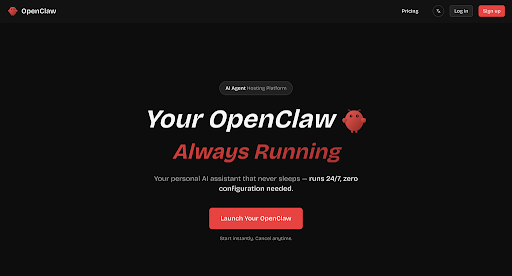
That is why some teams bring in OpenClaw when they want repetitive digital work to keep moving in the background instead of relying on manual reminders and scattered execution.
What Are the Real Limitations?
This part matters because a lot of AI content writing skips the honest answer.
These tools can save time, but they do not remove judgment.
1. First drafts still need taste
AI can generate options.
It cannot decide what is truly strong for your audience.
2. Not every output is brand ready
Some results are usable immediately.
Others still need editing, selection, or refinement.
3. Too many options can slow people down
More variation is helpful until it becomes a new form of indecision.
4. Workflow matters more than any single tool
People often expect one platform to do everything.
That is usually the wrong expectation.
The better question is this:
Where does each tool save the most time inside the full process?
How Should Beginners Use These Tools?
If you are just starting, keep it simple.
Step 1: Start with one real task
Do not begin with a vague goal like make better content.
Begin with something clear.
For example:
I need one short video concept for this product.
I need three image directions for this campaign.
I need repetitive follow up steps to stop eating my afternoon.
Step 2: Build one small chain
Pick one tool for motion.
Pick one tool for visuals.
Pick one system for repetitive execution.
That is enough to start.
Step 3: Compare outputs, do not worship outputs
Your job is not to love every result.
Your job is to find the strongest result quickly.
Step 4: Refine only what deserves refinement
Do not polish weak ideas.
Test first.
Improve what already shows promise.
Step 5: Repeat the workflow
The real value appears when the process becomes repeatable.
How Are More Advanced Users Thinking About It?
Experienced users are usually not asking whether AI is good or bad.
They are asking where it fits best.
That leads to better decisions.
For ideation
They use AI to create starting points faster.
For variation
They generate multiple directions before choosing one path.
For rough motion
They test hooks and sequences before investing in bigger production.
For repetitive digital work
They reduce the amount of mental energy spent on tasks that should not require constant human attention.
This is why the strongest workflows are rarely built around one magic tool.
They are built around role clarity.
One tool handles motion.
One handles visuals.
One keeps the machine moving.
Will AI Replace Creative Teams?
No.
But it will change what good teams spend time on.
AI is very good at reducing blank page friction.
It is very good at giving people something to react to.
It is very good at speeding up the first eighty percent.
But human taste still decides:
what is worth publishing
what actually fits the brand
what should be cut
what message deserves more emphasis
what story feels real
AI can accelerate output.
It does not replace discernment.
What Happens Next?
The next stage is not just better generation.
It is better continuity.
That means:
More connected workflows
People will expect creative tools to work more naturally with operational systems.
Better personalization
Outputs will start to reflect a creator's own style more consistently.
Stronger motion quality
Short videos will become more useful for everyday publishing, not just experiments.
More practical automation
The real winners will be people who combine creativity with dependable follow through.
Final Thoughts: Why Does Content Still Feel Slow for So Many People?
Because most people are still solving the problem one piece at a time.
One image here.
One video there.
One forgotten task somewhere else.
The bigger shift is not about using AI once.
It is about creating a system where ideas move forward with less resistance.
That is why this conversation matters now.
Not because tools suddenly became magical.
But because for the first time, ordinary creators and small teams can build workflows that feel lighter, faster, and more realistic to maintain.
And once that happens, the real question is no longer whether AI can help.
The real question is this:
How much faster could you move if your ideas stopped getting stuck in the middle?
HOW DO YOU FEEL ABOUT FASHION?
COMMENT OR TAKE OUR PAGE READER SURVEY
Featured





When parents evaluate physical learning kits or STEM toys on an ecommerce storefront, they make purchase decisions under acute time pressure and cognitive overload.