
From Streetwear to Steering Wheels: The Cultural Crossover Driving Automotive Aesthetics
PAGE
By PAGE Editor
Introduction: When Fashion Leaves the Pavement
In recent years, the boundaries between fashion and automotive design have started to blur in ways that would have seemed unlikely a decade ago. Cars are no longer just engineered products defined by performance and reliability; they are cultural objects shaped by identity, aesthetics, and self-expression.
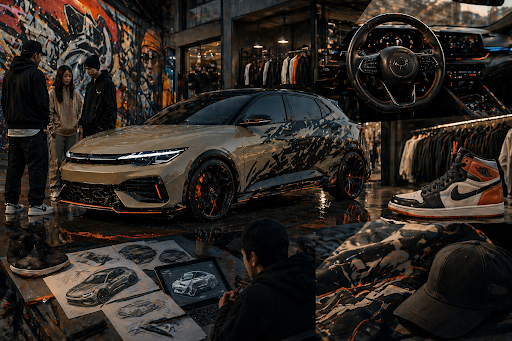
Much like streetwear transformed from niche subculture into a global design language, car customisation is following a similar trajectory. What once lived in underground scenes—limited sneaker drops, bold graphics, collaborative branding—now influences how vehicles are styled, configured, and even marketed.
Today’s drivers, particularly younger audiences, are not simply choosing cars. They are curating extensions of personal identity.
Streetwear as a Design Language for Cars
Streetwear has always thrived on symbolism: limited runs, visual identity, and cultural alignment. Brands like Supreme, Palace, and Off-White built entire ecosystems around scarcity and recognisable aesthetics. That same logic is increasingly visible in automotive design.
Manufacturers are borrowing from fashion playbooks, introducing limited-edition trims, bold colour palettes, and interior detailing that feels closer to sneaker design than traditional car upholstery. Matte finishes, contrast stitching, and graphic-inspired trims now signal individuality in the same way a rare pair of trainers might.
Even colour selection has shifted. Instead of conservative metallics dominating the market, buyers are increasingly drawn to muted earth tones, neon accents, and monochromatic schemes that echo streetwear collections.
The Influence of Youth Identity on Vehicle Customisation
For younger drivers, particularly Gen Z and younger millennials, cars are part of a broader identity ecosystem that includes clothing, social media presence, and digital aesthetics. A vehicle is no longer just a means of transport—it is a visual statement that must align with personal branding.
This shift has led to a rise in subtle but meaningful customisation. Instead of extreme body kits or loud modifications, many drivers now prefer refined changes: interior ambient lighting, upgraded wheels with minimalist design, or software-driven dashboard customisation in EVs.
Electric vehicles have accelerated this trend. With fewer mechanical constraints, EV interiors act like blank canvases. Clean dashboards, digital interfaces, and modular design allow for greater personal expression without traditional automotive limitations.
Social Media and the Aestheticisation of Driving
Platforms like Instagram, TikTok, and YouTube have fundamentally changed how cars are perceived. A vehicle is now as likely to be judged on how it looks in a parked street shot as it is on driving performance.
This has led to what some designers call “static appeal”—the idea that a car must look compelling even when it is not moving. Lighting design, silhouette recognition, and interior photogenic qualities are now central considerations in both aftermarket customisation and OEM design.
Car meets, once informal gatherings of enthusiasts, now function as curated visual events. Vehicles are staged, photographed, and shared as part of a wider cultural feed that blends fashion, music, and automotive identity.
Branding, Personalisation, and the New Automotive Luxury
Luxury in the automotive world is also being redefined. It is no longer just about horsepower or badge prestige, but about how uniquely a vehicle reflects its owner.
Brands are responding with increasingly personalised options. From configurable interior themes to digital avatars in infotainment systems, the focus is shifting towards emotional connection rather than pure specification.
Interestingly, even smaller details like registration styling and plate presentation have become part of this identity-driven approach. For drivers investing in personalisation, companies like Number 1 Plates have seen growing interest from motorists who want their vehicles to feel more cohesive and visually aligned with their overall aesthetic choices.
It’s a subtle example of how even traditionally functional elements of a car are being absorbed into the wider culture of design expression.
The Rise of “Curated Mobility”
One of the most notable shifts in automotive culture is the idea of curated mobility. Instead of owning a car as a static asset, drivers increasingly treat it as a flexible expression of lifestyle.
This is visible in everything from seasonal vehicle changes (switching wheel sets or interior themes) to software-based customisation in modern infotainment systems. The car becomes a rotating platform for identity rather than a fixed object.
This mirrors fashion cycles, where wardrobes evolve continuously rather than remaining static. The influence of sneaker culture—where drops, collaborations, and rarity define value—is particularly evident in how automotive brands release limited trims and special editions.
Where Automotive Design Is Heading Next
Looking ahead, the convergence between fashion, technology, and automotive design is likely to deepen further. As vehicles become more software-defined, aesthetic updates may become as common as app updates. Interiors could shift themes the way smartphones change wallpapers.
We are also likely to see more collaborations between automotive manufacturers and fashion houses, extending beyond marketing into genuine design input. These partnerships will shape not only the exterior appearance of cars but also the sensory experience of driving itself.
At the same time, personalisation will become more accessible, allowing a wider range of drivers to engage with design choices that were once reserved for luxury segments.
Conclusion: Cars as Cultural Objects
The evolution of automotive aesthetics reflects a broader cultural shift. Cars are no longer isolated machines; they are part of a network of identity signals that includes fashion, digital presence, and lifestyle choices.
Streetwear didn’t just change clothing—it changed how people think about expression. That mindset has now reached the automotive world, reshaping everything from interior design to exterior styling.
As this crossover continues, vehicles will increasingly reflect not just where people go, but who they are becoming.
HOW DO YOU FEEL ABOUT FASHION?
COMMENT OR TAKE OUR PAGE READER SURVEY
Featured




Video is no longer optional for marketing teams, e-commerce brands, and solo creators.