
Liquidity as Luxury: How Bunjang’s Recommerce-Literate Generation Is Rewriting the Rules of Luxury
PAGE
By PAGE Editor
In the traditional luxury playbook, ownership was the endgame. Acquisition signaled arrival. But according to the 2025 K-Luxury Secondhand Report from Bunjang, Korea’s leading tech-driven recommerce platform, that paradigm is shifting rapidly. Today’s most sophisticated consumers are not collecting—they are circulating.
Bunjang’s year-end report calls them the “Recommerce-Literate” generation: consumers who treat luxury less like a possession and more like a portfolio. Their wardrobes operate with the logic of markets—curated carefully, experienced briefly, and liquidated strategically.
It’s a model that reframes luxury consumption as a form of asset management.
From Secondhand to Asset Strategy
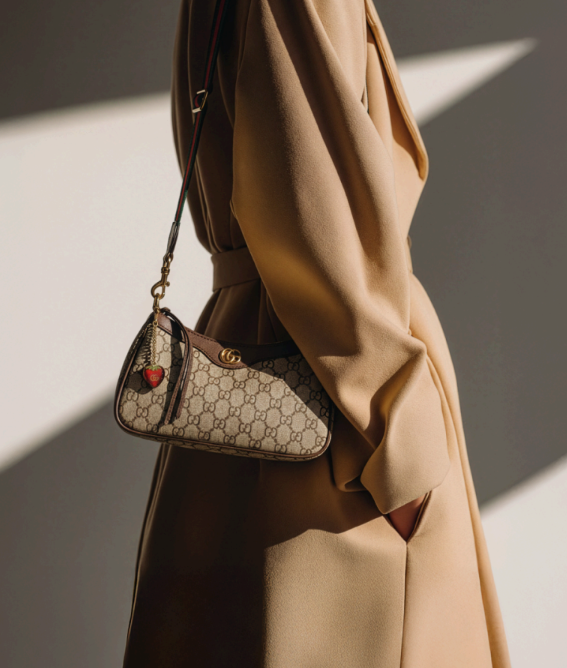
Bunjang’s 2025 data reveals a structural evolution in the Korean luxury resale market—from price-driven transactions to a value-oriented exchange ecosystem. High-end goods are now managed with the same strategic rigor as financial assets.
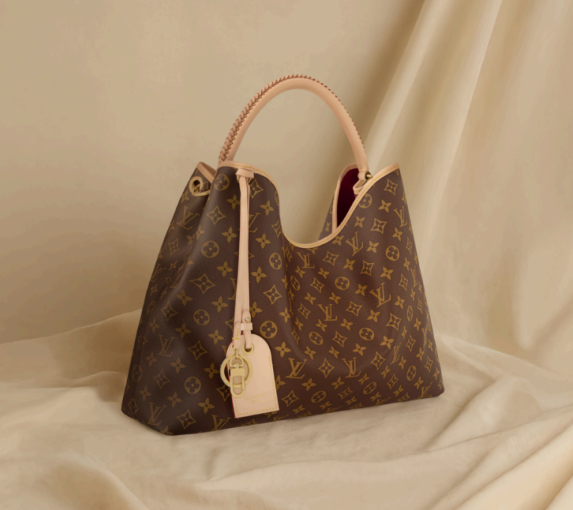
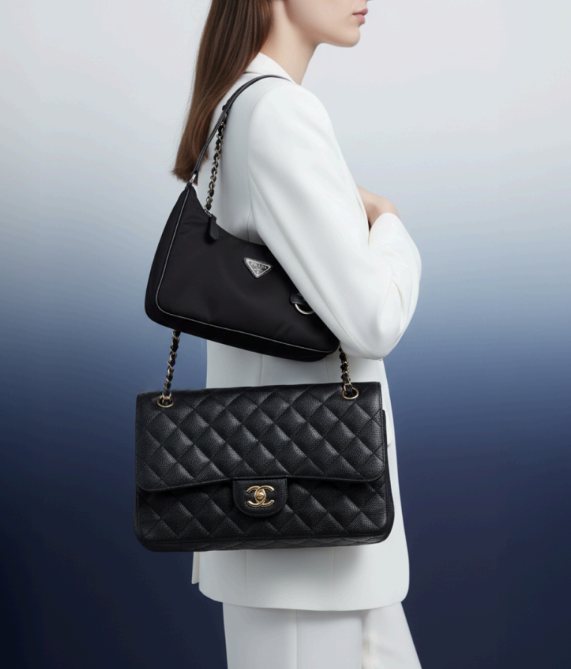
Consumers increasingly calculate resale potential before the first purchase. A buyer considering a bag from Chanel or Louis Vuitton is not simply assessing taste; they are assessing liquidity.
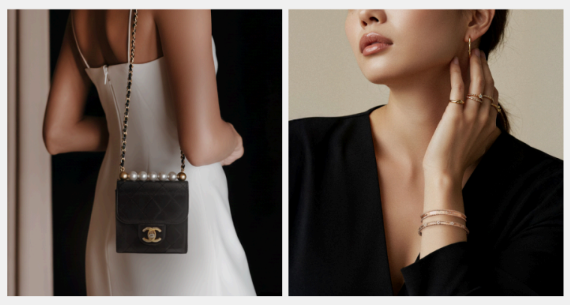
The numbers reinforce the shift. Jewelry has emerged as the fastest-growing asset category on the platform, with transaction volume rising 384% year-over-year and GMV climbing 381%. Platform-wide listings surpassed 39 million annually, while overall transaction volume increased 52%.
In other words, recommerce is no longer a niche behavior—it’s a structural layer of the luxury economy.
Speed as the New Intelligence
If liquidity defines the recommerce era, speed is its signal of literacy.
A Bulgari B.zero1 White Gold Necklace sold in just 53.39 seconds. A Saint Laurent Matelassé shoulder bag moved in under seventy seconds. A Salvatore Ferragamo Iconic Top Handle followed soon after.
For recommerce-literate buyers, these rapid-fire transactions are not impulse decisions—they are evidence of real-time market fluency. Scarcity signals are analyzed instantly. Capital is deployed decisively.
Seconds, in this context, are a measure of expertise.
Wishlists as Market Signals
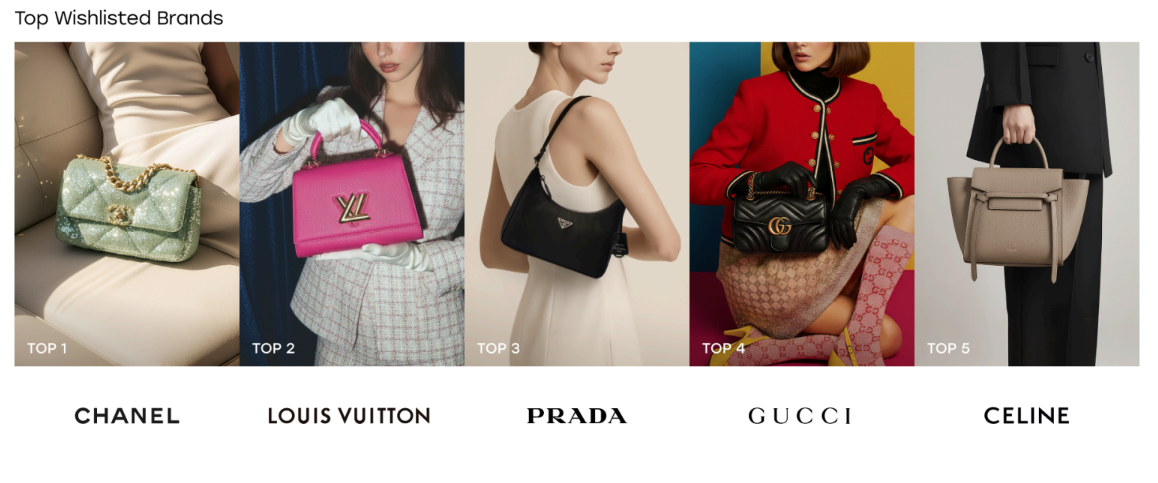
With more than 110,000 daily listings, Bunjang’s wishlist data has become a powerful barometer of brand desirability.
The hierarchy remains familiar. Chanel, Louis Vuitton, and Prada dominate user demand rankings.
Louis Vuitton, in particular, has emerged as the gateway asset of the recommerce ecosystem. Its balance of global recognition, relatively accessible entry pricing, and strong resale liquidity positions it as a “safe-haven currency” for new entrants navigating luxury markets.
In cultural terms, these brands retain prestige. In financial terms, they retain confidence.
Mapping the Geography of Luxury Circulation
The movement of luxury across South Korea reveals a distinct geography of recommerce behavior.
Gangnam leads the country in total sales and gross merchandise value, functioning as the primary supply hub where high-end goods enter circulation. Songpa follows as a stronghold for jewelry and watches, reflecting an eco-conscious and value-oriented consumption mindset. Meanwhile, Haeundae stands out for accessories, signaling demand for aesthetic experimentation.
Taken together, the pattern suggests a fundamental reframing: luxury is no longer something to store—it is something to manage.
A Global Value Corridor
Recommerce literacy is no longer confined to domestic markets. The United States has emerged as the largest overseas destination for luxury goods traded through Bunjang, accounting for 51.7% of cross-border transactions.
Among the most sought-after items shipped stateside are pieces from Chanel, Louis Vuitton, Visvim, and Tom Ford.
This global circulation has transformed Bunjang from a domestic resale marketplace into a luxury value corridor, connecting Korea’s high-quality supply with deep international demand.
From Demographics to Literacy
Perhaps the most striking insight from the report is that recommerce behavior is no longer defined by age.
Consumers in their 20s tend to operate as scarcity hunters, motivated by individuality and the thrill of discovery. Buyers in their 30s gravitate toward heritage brands and credibility. Those in their 40s increasingly approach luxury as a store of wealth.
But across generations, literacy—not age—determines participation.
A 25-year-old seller trading a Louis Vuitton bag to a 29-year-old buyer, or a vintage Rolex watch moving from a younger owner to a 73-year-old collector, illustrates a marketplace defined by knowledge rather than demographics.
Fighting the Rise of Superfakes
As recommerce scales globally, so does the sophistication of counterfeit goods. To address the rise of luxury “superfakes,” Bunjang is introducing laboratory-grade authentication infrastructure to the U.S. market through its proprietary system, Corelytics™.
Developed by Bunjang’s deep-tech subsidiary Insightview Tech, Corelytics integrates human expertise with spectroscopy and artificial intelligence to analyze the material composition of luxury goods. Using portable X-ray fluorescence (XRF), the system examines metals, leather, and hardware through non-destructive testing, identifying molecular and elemental inconsistencies invisible to the human eye.
“Counterfeiters have nearly perfected visual imitation,” said Jina Kim, Ph.D., CEO of Insightview Tech. “Authentication must move beyond human judgment. By integrating spectroscopy and a deep learning model directly into commerce, Corelytics sets a new scientific standard for trust in luxury recommerce.”
The framework was presented at Pittcon 2026, one of the world’s leading conferences for laboratory science and analytical chemistry, signaling a shift toward science-based authentication as infrastructure in the resale economy.
Since launching authentication in 2022, Bunjang has seen luxury transactions on the platform more than double—from roughly 50,000 in 2023 to over 105,000 in 2025. Among the highest-value items verified are a Rolex GMT-Master II in yellow gold and rare handbags from Hermès.
The Industry Beyond Ownership
Luxury resale is no longer a secondary channel. It is rapidly becoming a parallel industry—one built on transparency, liquidity, and technological trust.
Founded in 2011, Bunjang now facilitates more than one million transactions monthly and reports nearly KRW 1 trillion in annual gross merchandise value across its domestic platform, Bungae Market, and its international marketplace, Bunjang Global.
For a generation fluent in digital markets and economic pragmatism, recommerce is not compromise. It is optimization.
Luxury, in this new era, is measured not by what sits in a closet—but by how efficiently it moves.
HOW DO YOU FEEL ABOUT FASHION?
COMMENT OR TAKE OUR PAGE READER SURVEY
Featured



Flyknit and leather sit at opposite ends of the handbag world, and buyers get pushed into picking a side too early. One sounds modern and light. The other sounds premium and safe.